Showing posts with label Angelina Jolie. Show all posts

Monday, November 8, 2021

Eternals (2021)

If Dune was big, Eternals is a lot. It’s a lot of characters, a lot of exposition, and – for many in the audience – a lot of time on Wikipedia afterward. While the film is biting off so very much more than it can chew, director Chloé Zhao goes for broke in ambition, so while the film isn’t failing, it is (appropriately enough) stumbling in the way of so much of the later work of its original creator, Jack Kirby.

Ten Eternals have been living on earth for the last 7,000 years, gently nudging the evolution of society and sparing humanity from the monstrous Deviants. After being apart for 500 years, Sersi (Gemma Chan), Ikaris (Richard Madden), and Sprite (Lia McHugh) discover that the Deviants are reconvening when one of the Eternals is killed. The trio sets off to reassemble their team before the Deviants can strike again.

Eternals has earned the dubious distinction of being the first entry in the Marvel Cinematic Universe to receive a “Rotten” rating on Rotten Tomatoes – whatever that’s worth. I went into the film knowing it was largely divisive, but having heard Zhao talk glowingly about drawing inspiration from Man of Steel, I was willing to give Eternals the benefit of the doubt. Yet the moment that I realized Eternals was in trouble was the moment that I realized that the film would indeed have ten main characters, two underbaked and disparate villains, and a whole host of forward-reaching Marvel Universe teases that are nigh indecipherable within the context of the film. If you’re deep into the comics, you’ll be able to sort out a few of these references, but I myself had to rely on the excited whispers of the guy a few rows back to unpack one cameo – and I literally have a Ph.D. in this stuff.

Perhaps Eternals would have been better suited as a television show, giving six to eight hours of space for these characters and the fascinating flashbacks that fill in many of the blanks. Indeed, the movie is structured like a few of the better episodes of Lost, giving us deep layered mythology to help introduce and explain characters that are about to become very significant. For example, we see the Eternals part ways with Druig (Barry Keoghan) in the 1500s shortly before the other Eternals reunite with him in the present day; throughout, the film weaves in the complicated romantic history between Sersi and Ikaris. Any one of these Eternals could have been a fine pivot point for the story, or perhaps Zhao might have gone with an audience surrogate like Dane Whitman (Kit Harington) appears to be before he disappears altogether from the film. Instead, Zhao selects for herself the unenviable role of juggler, keeping a dozen plates spinning at once.


To be fair, Eternals is never quite boring, save for the beginning of the third act (which, after Shang-Chi, is beginning to become a pattern for the MCU’s fourth Phase). It is sweepingly ambitious, spanning from the birth of the universe until today. And like the original Kirby comics, it seems to hold the greater Marvel Universe at bay; outside of passing references to Thanos, Doctor Strange, and the fallen heroes of Endgame, Eternals restricts its greater MCU ties to a pair of post-credits scenes. One can imagine how the Eternals fit into the larger picture (which is going more cosmic than I think most of us had predicted), but overall it’d be just as easy to consider Eternals as a one-off errant venture in speculative sci-fi. One wonders what the film’s critical (mis)fortunes might have to do with the future of the Eternals themselves.


Yet as the credits rolled – after a finale which might as well have been a post-credits scene all its own – I couldn’t help but think of Jack Kirby, and not only because he (finally) gets a solo on-screen credit. Any comics fan would rightly feel a thrill in seeing “Based on the MARVEL COMICS by JACK KIRBY,” but I was thinking more particularly of the way Kirby ended his comics – or rather did not end them, as the case more often ended up being. Kirby was fairly driven off Fantastic Four, and his “Fourth World Saga” at DC was ignominiously cancelled, resurrected, and edited until its conclusion lost its weight. Likewise, it was a small miracle that Kirby was allowed twenty issues of The Eternals, which combined pulp conspiracy theories with high cosmic melodrama until the audience either lost patience or lost the plot. Put another way, Kirby – especially in his later years – tended to have ambitions which far exceeded his sales figures. For a comics reader like me, Kirby’s million-ideas-an-issue attitude is invigorating and fascinating, but I can understand why Joe Popcorn might reject it when Zhao takes the same approach for two hours and thirty-some minutes. It’s a lot to take in, and Kirby’s style can leave one feeling a bit like the unfortunate Irina Spalko from Indiana Jones and the Kingdom of the Crystal Skull, whose mind (spoilers) fairly combusts under the strain of learning too much at once.


Like Kirby, Zhao is grasping for so much at once, and you can’t help but feel she should have been given more space to do it. As with Kirby’s work, you wish it would keep going and going until it makes sense, but then again that’s part of the charm. There’s something fundamentally ineffable about a movie with ten protagonists from the planet Olympia, in service to an unknowable Celestial god with goals and obligations beyond human comprehension. When you try to cram something like that into a mere cinematic franchise, something’s bound to give. For some moviegoers, it’s their own tolerance for the strange, and Eternals is such a concentrated dose that even I had problems accessing it. I left the theater scratching my head, and that doesn’t happen often, especially when I’ve read the source material. 


Eternals is rated PG-13 for “fantasy violence and action, some language and brief sexuality.” Directed by Chloé Zhao. Written by Chloé Zhao, Patrick Burleigh, Ryan Firpo, and Kaz Firpo. Based on the Marvel Comics by Jack Kirby. Starring Gemma Chan, Richard Madden, Kumail Nanjiani, Lia McHugh, Brian Tyree Henry, Lauren Ridloff, Barry Keoghan, Don Lee, Harish Patel, Kit Harington, Salma Hayek, and Angelina Jolie.

Thursday, June 19, 2014

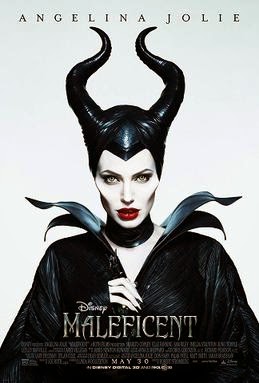
Maleficent (2014)

I won’t bury the lead on this one:  Maleficent is not an unwatchable film, but it is colossally disappointing.

And I won’t do the usual plot summary bit here because the plot of the film is essentially a “sympathy for the devil” take on Disney’s 1959 animated Sleeping Beauty, starring Angelina Jolie as the eponymous fairy queen who’s betrayed by the kingdom of men before she curses the young princess Aurora (Elle Fanning).  While this sounds like a prime opportunity to reinvent the story, promising us the version of the fairy tale we hadn’t heard before, Maleficent very much amounts to a pulled punch.

I’ll start with the good news, and it’s probably something you’ve already heard because nearly every film critic agrees:  Jolie is perfectly cast as Maleficent; she does a phenomenal job delighting in her own wickedness, she walks with the grace of a fairy queen, and her delivery captures flawlessly the intonations Eleanor Audley brought to the original.  And there’s a curious moment near the middle of the film where Maleficent restages the curse scene from the original Sleeping Beauty animated film.  I say curious because it is unequivocally one of the best moments in the entire film, and it leads me to wonder why Disney bothered with all the trappings of a retelling and didn’t just opt for a straight remake. 

I hate to be cynical, but frankly this film is aimed at the grungy Hot Topic crowd, who are probably going to love it.  Maleficent is part of Disney’s recent push to reinvent classic films, as with Tim Burton’s Alice in Wonderland and the upcoming Kenneth Branagh Cinderella (March 2015), but it’s not as successful as Wonderland was because it never commits to a core idea – or rather, it commits to too many.  Angelina Jolie is so good that her character deserves a better vehicle, one more certain of what it wanted to do with the character.  Either Disney should have given us the true between-the-scenes take on what Maleficent was up to, or it should have given us a truly sympathetic portrait of Maleficent the misunderstood.  Instead, the film tries to give us both, and the result is a film that never fully invests to itself.

It’s a cop-out to boot – either you want us to sympathize with the character or you don’t (or, if you’re Breaking Bad, spend six years exploring that gray area).  The film’s conclusion that Maleficent was both a hero and a villain is, truthfully, an evasion.  You do see the hand of uncredited rewriter Paul Dini here; he famously brought pathos to the backstories of many Batman villains in the early 1990s animated series, though the fact that only Linda Woolverton gets screenwriting credit suggests why Disney’s Maleficent can’t do in 97 minutes what Batman’s “Heart of Ice” did in 20.  (I’m referring, of course, to the definitive rebranding of Mr. Freeze as a tragic villain out to avenge his cryo-frozen wife.)

Honestly, I’m not sure if the bigger problem with the film is a studio that wants to have its fairy cake and eat it too, or if first-time director Robert Stromberg is juggling too much at once.  The film does have a very appealing look, and the shots are very interesting.  The special effects look good, especially the climactic dragon battle.  Interestingly, the film also participates in Disney’s recent trend of rejecting “love at first sight” and backing away from “love conquers all.”  With Frozen and Brave, Maleficent makes three films where the studio offers a self-reflexive critique of its early, easier boy-meets-girl narratives.  The difference is, however, that by now we’ve already seen this new spin, and the film doesn’t really break any new ground on that front.

Maybe I’m just being excessively vitriolic because I haven’t written a truly bad review in a while, and the bile’s built up.  I will say that I’m not sorry to have seen it.  I’m a fantastic Disney shill and will watch just about anything the studio puts out, and although it may not sound like it I truly do not begrudge Maleficent the ninety-plus minutes I spent watching it.  It’s fine for what it is, but it’s impossible to watch the movie and not see snippets of a much grander, more ambitious project.  But, as the film states explicitly, ambition is supposed to be bad, and so the result is a somewhat neutered update on a fairy tale which, this very update proves, didn’t need updating in the first place – at least, not the kind of halfhearted updating we’ve been given.

Maleficent is rated PG for “sequences of fantasy action and violence, including frightening images.”  The scene after Maleficent’s wings are taken is disturbing – many are reading it as a rape metaphor – and some blood is seen on her back.  As for frightening images, there’s nothing scarier than what a conventional Disney film offers; there is some swordfighting, and iron is seen to burn fairies in a few scenes.