That does it for this week’s edition of “Monday at the Movies.” We’ll see you here next week!
 The Godfather: Part
III (1990) – Part III has become
a kind of punchline, shorthand for the unnecessary and subpar sequel. Even Francis Ford Coppola has tried to
distance himself by labeling this merely an “epilogue.” To be sure, Part III has its flaws – first, it is not the brilliance of The Godfather, nor does it enhance the
original as Part II did. Second, Robert Duvall is absent, courtesy of
a contract dispute. Third, Sofia Coppola
as Michael’s daughter... well, you’ve heard all the jokes, and they’re all
accurate. But the film has its
positives, too, often neglected in the dead faint to insult the film. Seeing Michael make good on his promises to
legitimize is satisfying, and Andy Garcia’s role as Vincent Mancini (the
illegitimate son of Sonny Corleone) ought to have been a star-making one, since
his work is compelling and entertaining with a respectful dash of James Caan
thrown in for appropriate measure. I had
said that Part II was a sequel to a
film that didn’t need one, but Part III
is a sequel – pardon, epilogue – that doesn’t quite fit with the rest of the
franchise. Al Pacino in particular,
genius that he was in the earlier films, seems inconsistent; he’s more bluster
a la Devil’s Advocate than the quiet
man we last saw on the park bench at the end of Part II. Where Talia Shire
successfully navigates the interim to portray Connie as, at last, her father’s
daughter, it’s difficult to see a more happy-go-lucky Michael with only
glimpses of how tortured he ought to be.
Part III isn’t enjoyable in
the way that the first two are, although it’s fun to see the way that it
reflects and refracts its predecessors; we have a mass execution of the dons, a
romantic confession in a kitchen, a trip to Italy, a passing of the torch
complete with ring kissing, and Diane Keaton still left in the doorframe, but
they mean different things here and serve as fun nods to those in the
know. Ultimately, the film concludes as
every Godfather film ought to – a
bloody settling of accounts – and Pacino all but redeems himself at the tragic
opera finale. Forget Fredo – it was you,
Al; you broke my heart. Required
viewing, if only to conclude the saga, but there’s a reason it never stands
shoulder to shoulder with its older, more sophisticated brothers.
The Godfather: Part
III (1990) – Part III has become
a kind of punchline, shorthand for the unnecessary and subpar sequel. Even Francis Ford Coppola has tried to
distance himself by labeling this merely an “epilogue.” To be sure, Part III has its flaws – first, it is not the brilliance of The Godfather, nor does it enhance the
original as Part II did. Second, Robert Duvall is absent, courtesy of
a contract dispute. Third, Sofia Coppola
as Michael’s daughter... well, you’ve heard all the jokes, and they’re all
accurate. But the film has its
positives, too, often neglected in the dead faint to insult the film. Seeing Michael make good on his promises to
legitimize is satisfying, and Andy Garcia’s role as Vincent Mancini (the
illegitimate son of Sonny Corleone) ought to have been a star-making one, since
his work is compelling and entertaining with a respectful dash of James Caan
thrown in for appropriate measure. I had
said that Part II was a sequel to a
film that didn’t need one, but Part III
is a sequel – pardon, epilogue – that doesn’t quite fit with the rest of the
franchise. Al Pacino in particular,
genius that he was in the earlier films, seems inconsistent; he’s more bluster
a la Devil’s Advocate than the quiet
man we last saw on the park bench at the end of Part II. Where Talia Shire
successfully navigates the interim to portray Connie as, at last, her father’s
daughter, it’s difficult to see a more happy-go-lucky Michael with only
glimpses of how tortured he ought to be.
Part III isn’t enjoyable in
the way that the first two are, although it’s fun to see the way that it
reflects and refracts its predecessors; we have a mass execution of the dons, a
romantic confession in a kitchen, a trip to Italy, a passing of the torch
complete with ring kissing, and Diane Keaton still left in the doorframe, but
they mean different things here and serve as fun nods to those in the
know. Ultimately, the film concludes as
every Godfather film ought to – a
bloody settling of accounts – and Pacino all but redeems himself at the tragic
opera finale. Forget Fredo – it was you,
Al; you broke my heart. Required
viewing, if only to conclude the saga, but there’s a reason it never stands
shoulder to shoulder with its older, more sophisticated brothers. Midnight in Paris
(2011) – It surprises me that this is the first Woody Allen film I’ve
reviewed on this blog, since I’ve practically lived the movie Annie Hall (right down to the awkward
primary school education of a precocious bespectacled redhead) and love a whole
host of his other films (especially Play
It Again, Sam; The Purple Rose of Cairo;
and Match Point). And on the advice of so many of my colleagues
who know literature like I do, I checked out Midnight in Paris on the strength of the premise: Owen Wilson plays the stock Woody Allen
character who roams the streets of Paris and slips through time into the 1920s
to meet literary icons like F. Scott Fitzgerald (Tom “Loki” Hiddleston), Ernest
Hemingway (a spot-on Corey Stoll), and Gertrude Stein (Kathy Bates). Unfortunately, Midnight in Paris is a film that never quite lives up to its
conceit; it’s a fantastic idea, don’t get me wrong, but it’s mismanaged and
underutilized. I’d much rather see a
Hiddleston/Stoll buddy biopic of Fitzgerald and Hemingway than the Owen Wilson
movie we get. Premise aside, there’s not
much original here: Wilson plays the
same Woody Allen character we’ve seen a million times, Rachel McAdams is Regina
George, all grown up; Michael Sheen plays the cuckolding academic, another
Allen-trope; and Wilson’s life-changing revelation is as plain as... well, the
nose on his face. The best parts of the
movie are the scenes when the writers take center stage, but these moments are
not frequent enough, and indeed not all of them work (although Adrien Brody as
Salvador Dalí is quite entertaining); all told, Midnight in Paris is a bit like an episode of Saturday Night Live – a few good sketches worth rewatching but
overall less than enjoyable.
Midnight in Paris
(2011) – It surprises me that this is the first Woody Allen film I’ve
reviewed on this blog, since I’ve practically lived the movie Annie Hall (right down to the awkward
primary school education of a precocious bespectacled redhead) and love a whole
host of his other films (especially Play
It Again, Sam; The Purple Rose of Cairo;
and Match Point). And on the advice of so many of my colleagues
who know literature like I do, I checked out Midnight in Paris on the strength of the premise: Owen Wilson plays the stock Woody Allen
character who roams the streets of Paris and slips through time into the 1920s
to meet literary icons like F. Scott Fitzgerald (Tom “Loki” Hiddleston), Ernest
Hemingway (a spot-on Corey Stoll), and Gertrude Stein (Kathy Bates). Unfortunately, Midnight in Paris is a film that never quite lives up to its
conceit; it’s a fantastic idea, don’t get me wrong, but it’s mismanaged and
underutilized. I’d much rather see a
Hiddleston/Stoll buddy biopic of Fitzgerald and Hemingway than the Owen Wilson
movie we get. Premise aside, there’s not
much original here: Wilson plays the
same Woody Allen character we’ve seen a million times, Rachel McAdams is Regina
George, all grown up; Michael Sheen plays the cuckolding academic, another
Allen-trope; and Wilson’s life-changing revelation is as plain as... well, the
nose on his face. The best parts of the
movie are the scenes when the writers take center stage, but these moments are
not frequent enough, and indeed not all of them work (although Adrien Brody as
Salvador Dalí is quite entertaining); all told, Midnight in Paris is a bit like an episode of Saturday Night Live – a few good sketches worth rewatching but
overall less than enjoyable. Mr. Deeds Goes to
Town (1936) – The combination of Frank Capra and Gary Cooper is enough to
get my butt in the seat. I’ve long been
nostalgic for the simpler world Capra’s films present, and I’ve made holiday
traditions out of It’s a Wonderful Life
and Arsenic and Old Lace. And after High
Noon and especially The Fountainhead,
Gary Cooper can do no wrong in my eyes. Here
Cooper plays simple man Longfellow Deeds, an aspirant poet who inherits $20
million (upwards of $311 million today) and finds that all that glitters isn’t
quite golden. Like later Capra/Cooper
joint Meet John Doe (1941), Deeds becomes
the center of a media frenzy, courtesy of romantic interest and newspaper spy
Babe Bennett (Jean Arthur). In the final
analysis, Mr. Deeds isn’t my favorite
Capra film (Arsenic and Old Lace
takes that cake, meaning I should probably get around to reviewing it on here). There are parts that take a bit too long for
anything to happen, and the slapstick comedy isn’t as prevalent here as I might
have liked on a Sunday evening.
Moreover, almost all of the characters in the film are extremely
unlikeable, even Bennett, who doesn’t atone for her sins until the very end of
the picture. Fortunately, though, Cooper
is one of those actors who’s so charismatic that his hard work redeems many of
a film’s flaws; his performance here is consistently and satisfactorily
compelling, charmingly entertaining and touchingly empathetic. To paraphrase former dean of American pop
culture Tony Soprano, “Whatever happened to Gary Cooper?”
Mr. Deeds Goes to
Town (1936) – The combination of Frank Capra and Gary Cooper is enough to
get my butt in the seat. I’ve long been
nostalgic for the simpler world Capra’s films present, and I’ve made holiday
traditions out of It’s a Wonderful Life
and Arsenic and Old Lace. And after High
Noon and especially The Fountainhead,
Gary Cooper can do no wrong in my eyes. Here
Cooper plays simple man Longfellow Deeds, an aspirant poet who inherits $20
million (upwards of $311 million today) and finds that all that glitters isn’t
quite golden. Like later Capra/Cooper
joint Meet John Doe (1941), Deeds becomes
the center of a media frenzy, courtesy of romantic interest and newspaper spy
Babe Bennett (Jean Arthur). In the final
analysis, Mr. Deeds isn’t my favorite
Capra film (Arsenic and Old Lace
takes that cake, meaning I should probably get around to reviewing it on here). There are parts that take a bit too long for
anything to happen, and the slapstick comedy isn’t as prevalent here as I might
have liked on a Sunday evening.
Moreover, almost all of the characters in the film are extremely
unlikeable, even Bennett, who doesn’t atone for her sins until the very end of
the picture. Fortunately, though, Cooper
is one of those actors who’s so charismatic that his hard work redeems many of
a film’s flaws; his performance here is consistently and satisfactorily
compelling, charmingly entertaining and touchingly empathetic. To paraphrase former dean of American pop
culture Tony Soprano, “Whatever happened to Gary Cooper?” Superman III (1983)
– First things first, this is not a Superman movie. Unlike the two films that preceded it, Superman III doesn’t star Christopher
Reeve as the Man of Steel, even though he finally gets top billing. Rather, this is a Richard Pryor movie in
which his character, Gus Gorman, attempts to pull one over on Superman by
manipulating computers, weather satellites, and giant foam cowboy hats. The greatest compliment I paid the RichardDonner cut of Superman II was that it
excised a lot of Richard Lester’s slapstick inclinations; unfortunately, those
inclinations are given full rein here, most egregiously in the moment when
Pryor skis down the side of a skyscraper while wearing a pink tablecloth as a
cape. It’s a real shame, because there’s
a great Superman movie in here somewhere.
Reeve is doing continually solid work as the Last Son of Krypton,
especially when defective Kryptonite transforms him into a dark reflection of
himself. What’s more, his scenes
opposite Annette O’Toole as former flame Lana Lang are a fulfilling fill-in for
his relationship with the absent Lois Lane (a shame, since Margot Kidder’s
portrayal is definitive). But Lester’s
priorities are clear; he’s more interested in Pryor’s twitchy brand of humor
than in superheroics, more in the villains than in the film’s ostensible hero. Worse, the villains on which the film focuses
are nowhere near as interesting as the posthuman-converting computer, an
apparent riff on the comics’ Brainiac; I’d much rather have seen Superman
square off against an army of robot people than the would-be moguls
herein. When the chips are down, color
me a Donner fan. It’ll take a lot of
work out of Zack Snyder next year to make me a true believer.
Superman III (1983)
– First things first, this is not a Superman movie. Unlike the two films that preceded it, Superman III doesn’t star Christopher
Reeve as the Man of Steel, even though he finally gets top billing. Rather, this is a Richard Pryor movie in
which his character, Gus Gorman, attempts to pull one over on Superman by
manipulating computers, weather satellites, and giant foam cowboy hats. The greatest compliment I paid the RichardDonner cut of Superman II was that it
excised a lot of Richard Lester’s slapstick inclinations; unfortunately, those
inclinations are given full rein here, most egregiously in the moment when
Pryor skis down the side of a skyscraper while wearing a pink tablecloth as a
cape. It’s a real shame, because there’s
a great Superman movie in here somewhere.
Reeve is doing continually solid work as the Last Son of Krypton,
especially when defective Kryptonite transforms him into a dark reflection of
himself. What’s more, his scenes
opposite Annette O’Toole as former flame Lana Lang are a fulfilling fill-in for
his relationship with the absent Lois Lane (a shame, since Margot Kidder’s
portrayal is definitive). But Lester’s
priorities are clear; he’s more interested in Pryor’s twitchy brand of humor
than in superheroics, more in the villains than in the film’s ostensible hero. Worse, the villains on which the film focuses
are nowhere near as interesting as the posthuman-converting computer, an
apparent riff on the comics’ Brainiac; I’d much rather have seen Superman
square off against an army of robot people than the would-be moguls
herein. When the chips are down, color
me a Donner fan. It’ll take a lot of
work out of Zack Snyder next year to make me a true believer. The vote is in: I like Richard Donner's version better.
 Superman II: The Richard Donner Cut is rated PG "for sequences of action violence, some language and brief mild sensuality." In terms of objectionable content, it's exactly identical to the original film, although the removal of comic relief may make the violence seem a little more unrelenting - which isn't a bad thing in my opinion. I doubt that Kryptonian criminals hot out of exile would stop to arm-wrestle a few yokels.
 I've always had the impression that Superman II is, with Spider-Man 2 and The Dark Knight, widely (perhaps almost universally) regarded as a comic book sequel that's better than its predecessor. I'm not entirely convinced by that statement, but only because I'm not certain that Superman II exceeds its predecessor. It certainly soars equally as high, but there are a few missteps which seem to be newcomer director Richard Lester's fault (I'll know more after I screen the Richard Donner cut). Don't get me wrong, though; Superman II is nevertheless fantastically compelling.
 Like its forebearer, Superman II is rated PG, although without an explanatory note. It's on the whole very similar to the first film in terms of violence (that is, bloodlessly cartoonish), although this one introduces a snippet of bare-shouldered cuddling, the implications of which parents may not approve for their children.
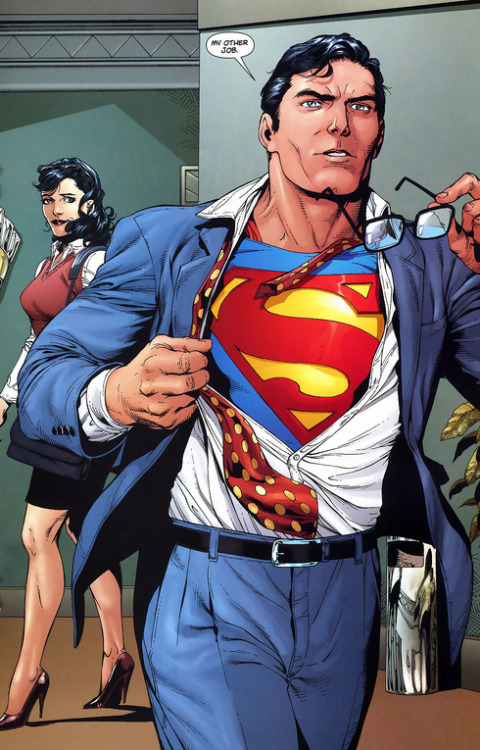
 After hearing word that Christopher Nolan is godfathering a reboot of the Superman franchise, it occurred to me that I'd never actually seen the original Superman beginning to end in one sitting. I'd seen Superman II and knew most of the major twists in the first film, but watching it all in one go was a wild experience for me, an avowed comic book fan. Though Batman is still #1 for me, Superman: The Movie (redundant title aside; it's as though I titled this review "Superman: The Movie: The Review," which maybe I should have) is a movie that reminds us all what's iconic about the character - and faithfully and lovingly represents that on the screen.
 Superman: The Movie is rated PG "for peril, some mild sensuality and language." There's nothing the kiddies haven't seen on a Saturday morning cartoon here, although some of Miss Teschmacher's clothing is a titch revealing - but then again, it is a comic book movie.