Showing posts with label 1970s. Show all posts

Friday, April 30, 2021

April of the Apes: Battle for the Planet of the Apes (1973)

Even if it weren’t the end of a franchise, Battle for the Planet of the Apes would be a strange beast. It’s a post-apocalyptic fable that seeks both to foreshadow an apocalypse to come and to assure the audience that the future is brighter than we think. That tension, between the planet of the apes to come and the planet the apes hope to create, gets brushed away in favor of a shoot-’em-up finale against uninspiring adversaries.

Battle picks up after the talking chimpanzee Caesar (Roddy McDowall) has successfully led apes to revolt against humankind, which has largely destroyed itself in an ensuing nuclear war. In search of guidance, Caesar follows the human MacDonald (Austin Stoker) and the orangutan philosopher Virgil (Paul Williams) into the ruins of the Forbidden City, where a recording of his parents exists. While the gorilla General Aldo (Claude Akins) foments unrest in Caesar’s absence, the ape king and his allies discover a band of irradiated humans living underground, led by Caesar’s old nemesis Kolp (Severn Darden).


I’ve said throughout this “April of the Apes” (and I hate to belabor the point) that the franchise is supposed to be a closed-loop time travel story, but Battle seems to hope that this inevitability won’t be the case. Virgil opines that the apes are blind travelers down a timestream with many paths, with no guarantee that the future will repeat itself this time around. Similarly, a framing sequence involving the Lawgiver (played by John Huston, who is quite plainly slumming it) rejects the ape supremacy of Conquest of the Planet of the Apes, positing instead a utopia in which the children of man and ape may commune in peace. Yet despite the film’s trajectory toward a happy ending – and not the dystopia Dr. Zaius invoked – Battle (and by extension the entire franchise) ends with a statue of Caesar, weeping. Is the future written, or can we change our destiny? The film isn’t saying, yet it hopes to have it both ways.


It might seem unfair to expect this franchise to take a stance on weighty philosophical issues, but let’s not forget Rod Serling was at the helm of the first (and still best) film. This sort of sci-fi fable was exactly in his wheelhouse, and I can’t help but feel Serling would have embraced the dysfunction of dystopia, discomfiting though it might have been for audiences. Indeed, Battle is practically a cop-out in the name of happily-ever-after, still attempting nonetheless to sneak a bite of its dystopian cake. Battle is confused about what it wants to be, beyond being an excuse to trot out those impressive simian special effects one last time.


Make no mistake, those effects still hold up (though some of the ape voices seem more muffled this time around; perhaps the bean-counters skimped on the ADR sessions). McDowall continues to do masterful work under all those prosthetics, twitching and stooping his way to a very engaging protagonist. As Virgil, the apparent antecedent to Dr. Zaius, Paul Williams is fascinating, proving that vocal color is one of the keys to a good ape performance; fans of the blog may recall his impeccable turn as The Penguin on Batman: The Animated Series, and his film debut here is just as fun listening as his fowl fiendish felon. And as the film’s ape antagonist, Claude Akins is suitably gruff in the role of General Aldo, reminiscent of General Ursus from Beneath the Planet of the Apes but with a more revolutionary bent that makes him a fitting adversary for Caesar. The film’s chilling finale, in which the apes discover the violation of their central tenet – “ape shall never kill ape” – is grounds enough for an impressive franchise finale, with the assembled apes murmuring, “Ape has killed ape, ape has killed ape” over and over.


If the film had only focused on Aldo, it would have made for a very fascinating examination of ape society on the cusp of change. Aldo’s militant anti-human position puts him at compelling loggerheads with Caesar, and the political/military jousting therein is among the film’s best features. However, the film spends too much time on the human villains, who are creatively lifeless and without motivation beyond run-of-the-mill mustache twirling. As excited as a continuity wonk like myself ought to be at seeing Kolp, of all characters, return, Severn Darden’s performance isn’t exactly animated, and it’s very hard to be threatened by a militia that rides into battle in a dirty school bus. Mad Max: Fury Road, this isn’t. (But how much better might that George Miller film have been if Tom Hardy played an ape? Sound off in the comments: what movies would improve if they starred apes?)


Just about the only good reason to include the underground humans comes in the film’s extended edition. Where the unrated cut of Conquest completely changed that film’s ending – and, I’d argue, the tenor of the entire franchise – the extended cut of Battle only embellishes here and there, but it does close the loop on one of the most baffling elements of the Apes series. You may recall the psychic bomb-worshipping mutants from Beneath the Planet of the Apes, and Battle explains how that death cult came to be, introducing the first Mendez (Beneath featured Mendez XXVI). This restored scene provides little more than a frisson of continuity, but I suppose it’s enough to justify this subplot’s existence. I’ve never felt that the mutants fit into the Apes cosmology, but Battle makes an effort to integrate them more deliberately, tying them more organically into the rise of the apes.


Despite concluding on a battlefield, Battle is more than a bit boring. Its visual spectacle is a bit of a letdown after the more visceral ape riot of Conquest, and its plot never quite goes anywhere. For all the magnificent ape characters in the film, it’s not unwatchable, but nor would I say it’s highly rewatchable. It is, I might argue, the Godfather III of the series, essential only as an epilogue after the franchise has long since said its piece. Perhaps it is better to remember Caesar for his thousand-yard stare, gazing over the ape insurgence of Conquest, much like Michael Corleone watching Lake Tahoe eddy before him when all his enemies are defeated; apes and mobsters alike do not age well. Put another way, this is a Battle that need not have been fought, and it is hard to imagine anyone winning.


Battle for the Planet of the Apes is rated G. Directed by J. Lee Thompson. Written by Paul Dehn, John William Corrington, and Joyce Hooper Corrington. Starring Roddy McDowall, Claude Akins, Natalie Trundy, Severn Darden, Lew Ayres, Paul Williams, and John Huston.

Friday, April 23, 2021

April of the Apes: Conquest of the Planet of the Apes (1972)

When it comes to Conquest of the Planet of the Apes – the fourth installment in the simian time-travel franchise – I can’t quite say whether I would have preferred the title to be Panic on the Planet of the Apes or Riot for the Planet of the Apes. (The conquest, you see, happens largely off-screen, after this movie ends.) It’s certainly the most violent of the Apes films, particularly in the unrated version that found its way onto Blu-Ray, and at times it seems as though the violence is merely an end in itself. But for all its low-budget sturm und brutish allegorical drangConquest is a compelling installment in a perennially strange series.

Twenty years after his parents arrived on earth, the talking chimpanzee Caesar (Roddy McDowall) has been hiding from the government under the protection of circus owner Armando (Ricardo Montalbán). While the rest of the world domesticates apes to replace the dogs and cats that perished in a global pandemic, Caesar becomes the unlikely hero of a revolution after his secret is uncovered by the forces of the sinister Governor Breck (Don Murray).


Conquest is somewhat unique among the Apes films in that it exists in two different versions: there’s the 1972 theatrical release and the more recent (and, as far as I can tell, fan-preferred) unrated version that debuted on Blu-Ray circa 2009. While the differences are largely negligible, with the unrated version featuring more graphic and startling shots of blood and violence, the ending is bracingly different. I’ll throw up a spoiler warning, although I wonder whether it’s possible to spoil a closed-loop time travel story: in the theatrical release, Caesar heeds his better angels and talks his fellow apes out of violence, while in the unrated version, Caesar embraces the use of force and encourages the gorillas to execute Governor Breck.


When I first saw Conquest ages ago, it was the theatrical version, but having watched the unrated cut for “April of the Apes,” I can’t imagine going back. The darker, more fatalistic ending gives Roddy McDowall the centerpiece he deserves; in a dramatic monologue that is equal parts Shylock and Richard III, McDowall mouths a somber and grim portrait of humanity, invoking the darkest chapters of American history while positing himself as a Darwinian emperor ape. In this closing soliloquy, dark and chilling enough to elevate the entire film, McDowall’s Caesar reminded me very much of another science-fiction fable of revolt – HBO’s Westworld. And like the violent delights of the android theme park, the precarious peace of Conquest’s earth, Caesar insists, would have violent and inevitable ends. (One also cannot ignore the unanticipated lasting potency of the film’s civil rights metaphor, all the more heated in 2021, when Caesar’s essential thesis revolves around which lives matter.)


While McDowall is doing simian Shakespeare, the rest of the film is bogged down by cheap effects and on-the-nose metaphors. The first two Apes films featured an incredible prosthetics technique by John Chambers, but by the time we get to Conquest, we’re lucky if more than two apes at once are sporting that innovative makeup effect; instead, the bulk of the cast is sadly restricted to low-budget pullover masks, at once inexpressive and unconvincing. It’s a plus for Caesar, who stands out all the more, but it is overall to the film’s detriment, especially since the film does not invest much time in ape characters like Natalie Trundy’s Lisa (who, in the theatrical version, masters the power of speech in time to soften Caesar’s hardened heart).


Similarly, the villains of the film are thoroughly undercooked, evil for the sake of being evil without much in the way of motivation or character development. Doubtless the makers of the Andy Serkis mo-cap trilogy took note, as this was something the Serkis films greatly improved upon, particularly with Woody Harrelson’s unsettling Colonel in War for the Planet of the Apes. In Conquest, though, the antagonists are little more than Nazi stormtroopers, callously engaging in barbaric modes of torture without the self-awareness to realize that their shiny black boots and crisp black clothing telegraph their inherent villainy to the world. There’s a shining moment of insight when MacDonald (Hari Rhodes) chooses a side and turns against the other humans, but the film bludgeons the point home when MacDonald and Caesar repeatedly call attention to the fact that the black MacDonald is “a descendant of slaves.”


So much of Conquest of the Planet of the Apes isn’t subtle, though perhaps that’s asking too much of a franchise that involved Rod Serling only once. Still, like Escape from the Planet of the Apes, there is something of The Twilight Zone in Conquest, particularly in the darker unrated cut. There is a tragic sense of inevitability as the series winds down; in attempting to avert the planet of the apes, the human slavers end up creating it. There can be no peace through subjugation, the film warns, yet it is a lesson that Caesar seems not to have learned. Like Ben Affleck’s Batman, Caesar is blinded by his rage and his pain – yet the film is stronger and more chilling without the theatrical cut’s moralizing (and ultimately inert) denouement. While it’s very short and subsumes substance for spectacle, one can’t help but be won over by Conquest’s potent go-for-the-jugular approach – but none of it would work if it weren’t for Roddy McDowall treating this sci-fi hokum like Elizabethan tragedy.


Put another way, this might not be how we imagined the birth of the planet of the apes (nor does it quite align with the versions we heard from Cornelius or Dr. Zaius), but in the moments when it stays out of its own way Conquest is very nearly better than a fourth film with no budget has any right to be.


Conquest of the Planet of the Apes is rated PG. Directed by J. Lee Thompson. Written by Paul Dehn. Starring Roddy McDowall, Don Murray, Natalie Trundy, Severn Darden, Hari Rhodes, and Ricardo Montalbán.

Friday, April 16, 2021

April of the Apes: Escape from the Planet of the Apes (1971)

After a disappointing outing that dared to venture Beneath the Planet of the Apes – to say nothing of the sequel-proof ending to that film – the Apes franchise manages to strike silver, if not outright gold, with Escape from the Planet of the Apes. It might be the second-best of the franchise, at once advancing the narrative while self-reflexively examining its central conceits about human nature and destiny.

When Colonel Taylor’s spaceship washes up in 1973, the world is stunned to see three apes emerge from the craft. Cornelius (Roddy McDowall), Zira (Kim Hunter), and Dr. Milo (Sal Mineo) convince the astonished Dr. Lewis Dixon (Bradford Dillman) that they come from the distant future, but Dr. Otto Hasslein (Eric Braeden) fears that the apes have come to bring about that same dystopian future. Dr. Hasslein’s theories are all the more troubling given the ticking clock of Zira’s pregnancy. Will her baby be the future of man’s relation to ape, or will that infant ape bring about the ruin of human civilization?


Make no mistake, Escape from the Planet of the Apes is bonkers. Three talking apes step out of a spacecraft and into a groovy fish-out-of-water farce with all of the unmistakable window dressing of the 1970s. Despite Taylor’s perpetual disbelief in the original film, the rest of the world seems to take to the apes rather well, all things considered. This angle allows the film to focus less on the fact of the apes than on their significance; as humanity oohs and ahhs over the ooh-ooh ahh-ahh crowd, we get to see humanity’s absurdity reflected back at them. Cornelius observes a human boxing match and its attendant throng of exuberant spectators. “Beastly!” he murmurs to himself.


The real fun of Escape is watching Roddy McDowall and Kim Hunter perfect their ape schtick, with the film’s full attention this time. (As Dr. Milo, Sal Mineo’s performance is punishingly brief, and it’s a frustrating tease to read production notes that describe him as the ape Leonardo da Vinci.) As a pair, the two are surprisingly touching, doting and romantic as the best screen couples can be. Despite the unusual make-up effects, these performers are so graceful and deft that one almost forgets we’re not watching talented chimpanzees at play. Indeed, I couldn’t help but wonder whether Cornelius could have had a long career appearing as, say, Hamlet or Willy Loman, with Zira doing the talk show circuit. The franchise’s greatest strength remains, then, the ability of its very talented ape performers to sell a ludicrous concept with limited makeup effects. (The Serkis trilogy, meanwhile, similarly succeeded best when it allowed us to forget that those apes were the product of pixels and computer code.)


Though Rod Serling had nothing to do with this film, you can’t help but feel his brand of cynical allegory at work. I’m reminded especially of an episode of The Twilight Zone, “The Gift,” in which a messianic alien is met with fear and hostility until the humans kill him and destroy the gift he brings – not black magic or a dangerous weapon, but a cure for cancer. In much the same way, our pacifist apes are greeted with suspicion from the moment of their arrival. It’s great fun to watch Zira in particular flip the script on the scientists who suppose her to be mute and mindless, while the humans never quite realize they are the butt of Cornelius’s droll observations. In this satirical vein, as in the montage where human fashion has never looked more preposterous than on a chimp, Escape strikes all the right notes when it comes to dark humor. 


Escape is also a grimly successful satire when it comes to the subject of American politics and the corrupting influence of power. On the one hand, you have William Windom as a willfully ineffectual President, slave to an upcoming election and his own refusal to take a stance on the ape issue. He delegates his rational mind to the will of a committee, agreeing to be their puppet in exchange for taking no responsibility. (He’s almost a Randian caricature of a politician, a surprising polar opposite to contemporary portrayals of then-sitting President Richard Nixon.) His counterpart Dr. Hasslein, who takes advantage of his committee seat to wield undue power in the Oval Office. Though Braeden reportedly did not care for this role, dubbing it stereotypical, Hasslein is the classic science-fiction archetype of a power-hungry philosopher, dictating military policy in judging the fate of the apes. 


In fact, though Escape is a suitable title given the film’s opening, Fate of the Planet of the Apes might have been equally apt. While the apes are attempting to escape the fate of their planet, the humans are likewise afraid that their fate will be that of the apes. Similarly, the film poses the question of whether this is a closed-loop time travel story, whether the future can be changed, or whether – as Ricardo Montalbán postulates in a memorable cameo – all this is in fact decided by the will of God. It’s heady stuff, the kind of intense sci-fi subject matter that made the original film such a watchable experience. Though dolled up in the trappings of the 1970s – and make no mistake, this film lacks only a disco dance montage – Escape is a worthy successor to the franchise, and it’s intriguing for once to see an Apes film with a clear-cut tease for a sequel. Who knew the word “mama” could be so potent?


Escape from the Planet of the Apes is rated G. Directed by Don Taylor. Written by Paul Dehn. Starring Roddy McDowall, Kim Hunter, Bradford Dillman, Natalie Trundy, Eric Braeden, Sal Mineo, and Ricardo Montalbán.

Friday, April 9, 2021

April of the Apes: Beneath the Planet of the Apes (1970)

I mentioned last week that Planet of the Apes felt like a spiritual successor to the Universal Classic Monsters, with prodigious makeup effects and a weighty morality fable. Imagine my surprise, then, to cue up Beneath the Planet of the Apes and find the film begins with a five-minute recap, reairing the least forgettable moment of the original film – the ending. The recap reel was a feature in too many of the Universal Monsters features to count, and that feeling of déjà vu persists into the film itself, which repeats so much of what we have already seen; as Pink Floyd once said, isn’t this where we came in?

Beneath the Planet of the Apes picks up moments after Taylor (Charlton Heston) and Nova (Linda Harrison) make their fateful discovery in the Forbidden Zone. Just as Taylor disappears, a second spacecraft lands, bringing astronaut Brent (James Franciscus) to the planet of the apes. While Brent sets off in search of Taylor, aided by the chimpanzee scientists Cornelius and Zira (David Watson, Kim Hunter), Dr. Zaius (Maurice Evans) and General Ursus (James Gregory) mount an expedition into the Forbidden Zone in search of food. What they find in the Forbidden Zone, though, is worse than starvation – a horrible reminder of what created this planet in the first place.


Devising a sequel to Planet of the Apes would have been an unwelcome challenge for nearly anyone. Rod Serling and original novelist Pierre Boulle both took a stab at it, their pitches ultimately rejected by the studio. (Serling made several pitches, some involving a second crew of astronauts and a second time/space voyage for Taylor, while Boulle wrote a screenplay called Planet of the Men, in which Taylor led an uprising of humans against the apes.) Equally challenging was Charlton Heston’s disinterest in doing a sequel and the story limitations he required for his participation (prefiguring, in a way, Harrison Ford’s love/hate relationship with reprising his role as Han Solo on three separate occasions). One senses, then, the herculean task of extending the Ape Saga, and the forces who bring us Beneath do not appear to have risen to the undertaking.


Beneath the Planet of the Apes was, after the Star Wars films, among the first sequels I ever saw, and it taught me a valuable lesson – sequels are almost never as good as the original. (More shared territory, it seems, from Monster March.) I said last week that there was nothing about Planet of the Apes that demanded a sequel, especially given the film’s game-changer ending that makes the final statement on the planet. Planet of the Apes was a totality, tied in a bow by its Rod Serling ending; it had much in common with an extended episode of The Twilight Zone, and I can think of very few Twilight Zone episodes that would have been much improved by a sequel.


Still, there was room to grow. There was the looming question of what would happen to Zira and Cornelius once Dr. Zaius returned to Ape City, though disappointingly the film never quite explores that. Instead, it’s monkey business as usual, and there’s no mention of the trio’s experience in the Forbidden Zone (which is, perhaps, how Dr. Zaius would want things, anyway). Unfortunately for Beneath, Zira and Cornelius are shunted to the side rather quickly. With McDowall away directing his own film, the brief recasting of Cornelius is distracting, especially given the inclusion of recap footage featuring McDowall, and David Watson, though competent, lacks the vocal color McDowall brought to Cornelius. However, we welcome seeing Zira, who becomes a kind of franchise den mother, but she’s given nothing much to do besides perform cursory assistance to newcomer Brent.


When it comes to the subject of Brent, he is lamentably little more than a bargain basement version of Taylor – a fair-haired bearded human who comes from the stars and is mystified by the planet he’s discovered. After losing his crew, he meets up with Nova, journeys to Ape City, befriends our chimpanzee scientists, and makes his way into the Forbidden Zone, where he learns the dark secret of the planet of the apes. It reads familiar because it is familiar: it is exactly the journey Taylor undergoes in Planet of the Apes, but James Franciscus lacks the screen presence of Charlton Heston, to say nothing of how unengaging it is to see a new protagonist tread the same boards one more time.


Beneath the Planet of the Apes is not exactly a remake, though, for it adds something substantially new to the franchise. I’m not speaking merely of the gorilla General Ursus, who is an intriguing foil for Dr. Zaius and for the humans (“The only good human,” he growls, “is a dead human!”). Ursus is good hammy fun, and I do wish we’d seen more of him in the franchise beyond this one film. But I’m speaking particularly of the answer to the question posited by the film’s title – what really is beneath the planet of the apes? The answer is a gang of mutated humans with psychic powers, grotesque scarring, and a church of death which worships the last atomic bomb in existence. I have never liked these characters, and I still feel they’re out of place in this franchise. For one, the morality fable is even more on the nose with their inclusion; yes, we know atomic weaponry is no good, very bad, don’t do. This allegorical unsubtlety, coupled with the low-budget sci-fi makeup and set decorations, would seem to belong more properly to something like the original Star Trek series. Moreover, every moment we spend with the mutants is a moment we don’t get to spend with the apes, and that’s a criminal offense in my book. 


Planet of the Apes is ultimately a franchise that zags when you think it will zig – not because the story merits a zag but often because the zag is more cost-effective and will extend the life of the franchise into a strange new direction. I promised not to spoil the ending of the first Planet, and I certainly won’t give away the ending to Beneath, which almost feels like a sporting challenge to the writers of any possible third film. “Let’s see you get out of this one!” scripter Paul Dehn seems to say. It’s an anti-cliffhanger from which there seems to be no escape, and yet a scant year later, we would see exactly that – an Escape from the Planet of the Apes, scavenged from the literal detritus of the preceding two films.


Beneath the Planet of the Apes is rated G. Directed by Ted Post. Written by Paul Dehn and Mort Abrahams. Starring James Franciscus, Kim Hunter, Maurice Evans, Linda Harrison, James Gregory, David Watson, and Charlton Heston.

Friday, December 18, 2015

The Star Wars Holiday Special (1978)

Last night while the rest of the world slept, fans across the country were united in projecting their hopes, dreams, and imaginations against the latest – and, some have said, greatest – Star Wars film.

This is not a review of that film. This is a review written by a very confused, very dissatisfied Star Wars fan who, for the first and likely last time in his life, inflicted upon himself the horror, the horror, that is The Star Wars Holiday Special from 1978.

Any attempt to summarize the plot of The Star Wars Holiday Special, such as it is, would be doomed to inevitable failure. Suffice it to say that something has happened to prevent Han Solo (Harrison Ford) and Chewbacca (Peter Mayhew) from attending some kind of festivity (the nebulously defined “Life Day”), leading the audience to be held captive for a series of bizarre and senseless vignettes which can only loosely be defined as tangentially relevant to the Star Wars universe, including the sale of a mustache groomer, a Wookiee cooking/drag show, a kaleidoscopic sex drug, and the first appearance of Boba Fett, which is in no way, shape, or form worth sitting through this monstrosity.

To say that this film is unwatchable by modern standards would be to pay The Star Wars Holiday Special a compliment. It is, in fact, unwatchable by any standards of any generation ever. Ten minutes in, I was already not sure whether what I had seen – an interminably long segment which consists of an apparent Married With Children script done entirely in Wookiee-speak followed by a hallucinatory juggling act with Chewbacca’s bloated son Lumpy as voyeur – was actually real or whether I had somehow died on the way home that evening and dreamt up the rest.

The Holiday Special – a poor name indeed, for it is neither festive nor special –  is so catastrophically mystifying that it is a great wonder that Star Wars became the fan-fueled juggernaut that it is today. One wonders how many fans looked at this thing and never returned to that galaxy far, far away, for fear of getting another Holiday Special as recompense for their entertainment dollar. After twenty-five minutes, I felt so insensate that I wondered if Jar Jar Binks might show up as the least offensive thing on the screen. That’s right; a racist cartoon rabbit would not only fit in perfectly in the milieu of the Holiday Special, but might actually have been the most entertaining part of it. Wrap the ethical centers of your brain around that one.

Thirty minutes in, I had to go to the bathroom. I considered leaving it run in my absence, wondering if it would make a difference. I started asking myself a lot of questions. Would I miss anything of merit? (No.) How the hell did they get Art Carney to appear in this travesty? Was this still canon, in the wake of the Great Disney Purge? Had it ever been canon? What had become of my life that I was thinking so deeply about this thing at eleven at night? Could I ever enjoy anything ever again?

Halfway through the Holiday Special, my computer abruptly restarted itself. A scan of my computer revealed no corrupted processes, no viruses, no malware. It is as if my computer refused to suffer any further indignity by playing a moment more of the Holiday Special than was absolutely necessary, as if it wished to spare me the perpetual suffering. As I verified that my computer wasn’t irreparably damaged by the experience, I found myself at a crossroads. I could go to bed, post the review as if I’d seen the whole thing. No one would know. No one would ever have to know, and I’d probably be doing myself a favor. But, equal parts stubborn and honest, I soldiered on.

Thank heavens I did. Not because the animated segment lived up to any expectations at all. No, I’m thankful I didn’t give up so that I’m never tempted to sit through this thing again. I can now say that I’ve watched the first appearance of Boba Fett, and the cartoon episode which interrupts the Holiday Special is as shambolic, plotless, and pointless as anything else in the ninety-some minutes of my life I’m never getting back. Then there’s a strange scene in which Bea Arthur cuddles with a hamster while tending bar at the Mos Eisley Cantina, in which the set and the costuming look even cheaper than their playfully hokey appearance in the original Star Wars film.

It’s at this moment in the Holiday Special that my mind returns to inquisition. Is this thing meant to be funny? Coherent? It’s certainly neither, though there are moments that playact at the former. In short, what the hell is this thing supposed to be, and on what level did anyone look at the finished product and say, “Yep, that’s something I want the rest of the world to see”? If this film was so much as shown a picture of a cohesive narrative, it wasn’t looking. It’s as if George Lucas had a child with David Lynch, and then that child were given a box of Star Wars action figures and a Betamax video camera, and then that child snorted a tremendous amount of cocaine and passed out. The Star Wars Holiday Special is that fever dream.

Thank God I’m going to see The Force Awakens in a matter of hours. I had said of the new film, “It can’t be worse than The Phantom Menace.” What I should have said was, “It can’t be as unfathomably inaccessible as The Star Wars Holiday Special.”

The Star Wars Holiday Special is rated why are you even still reading this.

Monday, June 29, 2015

The Top 10 Star Wars Musical Moments

Having just completed my most recent semimonthly rewatch of the Star Wars trilogy (that’s the Original variety, naturally), and in anticipation of The Force Awakens this December, I present another Top Ten list.  No, not a Top Ten ranking of the films in existence – the correct answer, by the way, is 5, 4, 6, 3, 2, Clone Wars, 1 – but a more musically minded listing.

The task was arduous, though, and I couldn’t bear to throw that many children to the wolves. Rather than rank the ten best tracks from 797 minutes of movies, I’m going to break this down by film. Here we present the first in an ongoing series of lists, “The Top 10 Star Wars Musical Moments!” (Look at it this way, you’re getting more posts – one for each movie!)

A note on sources:  we’re talking, of course, about the music composed by John Williams and performed by the London Symphony Orchestra. For source/cue division, I’m using both the 1993 four-disc “Anthology” box set and the 2004 two-disc “Special Edition” reissue editions, so track listings may vary for those playing the home game.

10. “Imperial Attack”
 Before we had “The Imperial March,” we had to “settle” for this motif for the evil Empire. And I say “settle” in scare quotes because even when John Williams outdoes himself as he would in Empire Strikes Back, the original ain’t bad, either. Bassoons and trombones – the lower end of the brass section – dominate, with the occasional four-note punctuation mark indicating a transition to the Death Star. Those four notes also herald the first appearance of Darth Vader on screen, so it sets the tone wonderfully for the antagonists of the film.

9. “Destruction of Alderaan”
 Here’s perhaps an offbeat choice for a Top 10 list, but I’ve always found it deliciously effective in its place. At the moment when Princess Leia is asked to betray the Rebellion to save her homeworld of Alderaan, the music spirals into confusion before the militaristic notes of the Empire take over and blast the planet to smithereens. It’s a small moment musically – only about a minute long – but Williams smartly conveys the murderous power of the Death Star in the construction of the score.

8. “The Little People Work”
 I’ve always been partial to this, ostensibly a theme song for the Jawas. Played on reedy instruments with a swirling and ambling quality, this is a crystallized example of Williams’s ability to communicate musically, one of those moments that works equally well without dialogue – indeed, the film has none, aside from the occasional nonverbal jabber and cry of “Utinni!” It tells us so much about the Jawas, implying a life of scavenging and work-as-play while inviting us just what awaits our repossessed droid companions.

7. “The Throne Room”
 This wonderful announcement of accomplishment fits just brilliantly at the end of a grand epic as at the conclusion of a long night of paper drafting (take it from someone who’s experienced both). It’s impossible not to recall the wry infectious grins of Luke and Han as they receive their medals, nor can a listener not feel a swell of pride through this ostentatious reworking of the “Force theme” (see below). Its reuse at the end of Revenge of the Sith’s soundtrack suggests that Williams regarded this as proper ceremony for the end of a long journey.

6. “The Battle of Yavin”
 You might think it cheating to put a ten-minute action cue on a Top 10 list (honey, wait’ll you see what I do for The Empire Strikes Back), but the entire climax of the film succeeds on the back of Williams’s score. The fighter pilots’ run on the Death Star is tense enough with death-by-turbolaser lurking around every swoop and dive, but it’s the Williams score that draws out the tension, kindly pausing to mourn the death of a fighter with an honorific fanfare before giving us that relentless bum-bum-bum as the final moments of the battle are decided. Finally, a wonderful breath of relief when the Death Star explodes is announced by the piece’s twinkling last notes. And it works just as well without the visuals – in your car, for one.

5. “Rescue of the Princess”
 Here we’ve got a collision of motifs – Luke’s theme, Leia’s theme, and the Imperial fanfare – in a medley that communicates the entire plot of the film. Luke’s theme creeps into the Empire’s, encounters Leia, and blasts back through the Empire to freedom. That Williams conveys this as well as, if not better than, the film proper is testament to his genius. It’s a nice climax of sorts for Luke’s heroic journey – he rescues the princess in a sweeping moment of majesty – but ends with a reminder that the real battle is yet to come.

4. “Ben’s Death/TIE Fighter Attack”
 After a kind of musical prologue representing the tragic moment in which Luke witnesses the death of his mentor, this smaller action cue gives us a relentless sense of impending danger and nonstop science-fiction action to underscore the well-directed attack sequence. It’s worth noting that when Family Guy did their spoof of Star Wars, they really didn’t have a joke to go with this scene other than Peter Griffin as Han Solo singing along to the score. This has always been my favorite action cue from A New Hope, in part because of its appearance during the Death Star run of Star Tours.

3. “Cantina Band”
 The mere fact that you’re already hearing this infectious Benny-Goodman-in-space tune in your head justifies its presence on this list.

2. “Main Title”
 From the epic fanfare blast that opens the film, John Williams’s score sets the stage for the saga to come. With the equivalent of a brass drumroll building to the instantly iconic main theme, the “Star Wars” theme defined for a generation what science fiction scores ought to sound like. It would, of course, go on to recur in each subsequent installment, but never to such great effect as upon its debut. When Marvel Comics unveiled their new Star Wars comics, they did so with a full page of “A long time ago...” followed by a two-page spread of the “Star Wars” logo over a starry background; while some might have found that a waste of three pages, I felt chills move up my arms because the comic captured precisely what the film did, and as I heard the John Williams score in my head I murmured to myself, “This is Star Wars.”

1. “Binary Sunset”
Naming the main title my #1 moment might have been a bit too predictable, but I can safely say that no musical moment defines the first film – and perhaps the entire saga – better than “Binary Sunset.” Utilizing the “Force Theme” to great effect, Williams captures the longing of Luke Skywalker and the promise of the great adventure that awaits him. It’s combined poetically with the image of the eponymous twin suns setting, allowing the genre atmosphere to collide with the plot mechanics and the technical splendor. The Force Awakens needs a “Binary Sunset” moment, a single image with a piece of music that distills the entire filmic experience.

Hit the comments section to tell me your favorite Star Wars musical moment! And be sure to subscribe up above to make sure you don’t miss my “Top 10 Empire Strikes Back Musical Moments!”

Sunday, May 4, 2014

Star Wars (1977)

Even if you strip away all the bells and whistles of the myriad “Special Edition” rereleases, at the core of Star Wars (now known also as Episode IV – A New Hope) is what I’m ready to label a “perfect movie,” a deft example of genre-(re)defining science fiction that never hits a sour note as it tells a relatively simple story with graceful aplomb.

Luke Skywalker (Mark Hamill) is a farmboy with dreams of space travel when the Rebellion against the malevolent Empire arrives on his doorstep in the form of two droids – R2-D2 and C-3PO – carrying data that could spell the end of the Empire’s latest technological terror, the Death Star.  Luke and his new mentor Ben Kenobi (Alec Guinness) charter the Millennium Falcon, captained by roguish Han Solo (Harrison Ford) and his Wookiee copilot Chewbacca, though their flight is derailed by an effort to rescue Princess Leia (Carrie Fisher) from the very embodiment of evil, Darth Vader (movements by David Prowse, voice by James Earl Jones).

After all the disappointment we’ve endured over the last few hours’ worth of reviews, it’s amazingly easy to fall back in love with the franchise from the very opening shot of two starships in combat – which brilliantly tells us everything we need to know without a single word of dialogue:  an enormous Star Destroyer bearing down on the miniscule and outgunned fleeing Rebel ship.

I do want to judge the Original Trilogy on its own merits and not quite in comparison to its prequel successors, but Star Wars does such a deft job of storytelling that it’s a wonder this is the same George Lucas who would later inflict Jar Jar Binks and ultimately meaningless political posturing upon us.  Star Wars is elegant in its simplicity – there are good guys and there are bad guys, and any special effects in the film are entirely at the service of the plot (rather than the other way around).

In fact, even before Lucas went in and revised the films with all his computer trickery (some of which is actually an improvement, especially the scene between Jabba and Han, which was absent from the initial theatrical release), Star Wars has aged spectacularly well.  Though I’ve seen the movie umpteen times by now, this most recent rewatch still captured all the movie magic for me, and it’s probably the most fun I’ve had with a movie since Captain America: The Winter Soldier.  There’s action, adventure, humor, romance (even if it’s uncomfortable knowing that Luke and Leia are related), a remarkably tight screenplay, and a slew of first-rate performances – the constellation required for a perfect movie.  And let’s not forget the John Williams score, the (mostly) unsung hero of the series, which swoops and soars when it needs to but pulls out the heavy brass lines when villainy is afoot.

If the film feels in any way familiar, remember that Star Wars distilled preexisting myth narratives and simultaneously reinvented them; it’s impossible to imagine a film in the mythic realm that hasn’t been influenced by this classic tale.  Even without the prequels, the introduction of Darth Vader, gliding over the bodies of fallen Rebel soldiers, is instantly iconic, and Jones’s vocal performance is genuinely chilling.  The rest of the cast, too, are doing pitch-perfect character work – Hamill naïve but determined, Ford charismatic yet cocky, Fisher resolute and courageous, and Sir Alec Guinness as the scene-stealer among them all, wise and pragmatic.  Each of these roles is legendary, but the addition of all of them together in a tightly-plotted and intensely focused screenplay results in... well, how many ways can I say “perfect movie”?

Science fiction at an undeniable apex, Star Wars proves a worthy inauguration to a long-lasting franchise, even nearly forty years after the fact.  Take it on its own or as the first/fourth chapter in a longer narrative; Star Wars is a perfect film.

Star Wars is rated PG for “sci-fi violence and brief mild language.”  A few folks get blasted by laser fire and explosions (both in person and in spaceships); one is choked to death, and another is briefly choked by The Force.  A planet and a space station explode, killing all aboard.  The expletives are of the “damn” and “hell” variety.

We’ll be back in two hours with (Star Wars: Episode V –) The Empire Strikes Back!

Thursday, November 7, 2013

Moonraker (1979)

Consistently ranked among the worst of the James Bond films, Moonraker is that rare movie on which I gave up the first time.  A few years ago, after about forty minutes, I couldn’t take it anymore, but after revisiting the film for this review series, I can safely report that I made the wrong move – but only by about twenty minutes.  There’s actually about an hour’s worth of good material in Moonraker before the film descends into a weird self-parodying science-fiction cartoon, a totally bland mess of a movie.

After a space shuttle mysteriously disappears, James Bond (Roger Moore) investigates Hugo Drax (Michael Lonsdale), the creator of said shuttle. Bond quickly forms an alliance with the beautiful astronaut Holly Goodhead (Lois Chiles) while uncovering Drax’s plan to foster a new master race in outer space – aided by Bond’s returning nemesis Jaws (Richard Kiel).

If the plot sounds exactly like The Spy Who Loved Me by way of Star Wars, don’t adjust your sets; what you’re detecting is a bizarre self-plagiarism that shoots for the moon, misses, and lands not among the stars but in a place devoid of the thrills and sincerity that made Spy a success.  The self-evident lack of creativity damages the film by drawing attention to its faults; what Spy did well, Moonraker bungles, and what Spy bungled, Moonraker outright fails.  Where Stromberg was a little droll yet maniacal, Drax is literally boring, mumbling his lines, shuffling his feet, and never really making eye contact with anyone.  As Drax’s opposite number, Moore is trying – he really is – but Moore’s level of tongue-in-cheek only casts too much light on the inherently absurd film before us.

The film’s greatest sins could encompass a post all their own, though among them are an apparent misunderstanding of the physics of deep space, the whiplash-inducing tonal shift into science fiction once the NASA cavalry arrive with laser guns, and the film’s unforgivable mistreatment of Jaws.  Arguably the major find of the franchise, Jaws was a colossal contributing factor to Spy’s success; the scowl, the physicality, and those teeth all combined into an unforgettable character, which Kiel deftly brought to life.  But the promise contained in Jaws’s pre-credits appearance – really a great opener, in which Bond, Jaws, and another airman battle over two parachutes in free fall – tragically flops when the film demotes Jaws first to a Wile E. Coyote caricature, hapless yet indestructible, before shoehorning him into both an uninspiring romantic subplot and (spoiler warning?) an utterly unconvincing redemption plot.

It’s really a shame, because there’s a skeleton of a great Bond movie in there somewhere, and if we hadn’t just seen the exact same plot in Spy Who Loved Me it’d be a winner; it keeps the sleuthing intact, and the idea that Holly Goodhead is secretly a CIA agent is a clever twist that Chiles pulls off well.  Indeed, it’s almost disappointing that Bond successfully beds her, since her apparent resistance of Bond’s charms is such a compelling angle – a step, perhaps, toward the franchise’s later moves away from the “Bond girl” trope (best embodied, literally, by Britt Ekland’s bikini in The Man with the Golden Gun).

Is Moonraker the worst Bond ever?  I’m not ready to go quite that far – it is, unmistakably, a movie that is difficult to enjoy, at best tepid and uninspiring and at worst viciously schlocky and pretty much bad.  It’s in strong competition with Diamonds Are Forever for my least favorite Bond thus far, and it’s the first entry for which I’ve really agreed with the popular consensus that finds Moore’s Bond guilty of crimes against moviegoers.  And for once, in spite of my usually optimistic outlook, I’m rather uneasy about the future of the franchise; where Diamonds Are Forever might have been shrugged off as Connery’s unenthusiastic last hurrah, we still have three more outings with Roger Moore.

Moonraker is rated PG.  The violence is really quite cartoony, replete with laser guns in the film’s final battle; Bond beds three women, but there’s nothing shown below the shoulders.

James Bond and The Cinema King will return in a review of For Your Eyes Only (1981) on December 7, 2013!

Monday, October 7, 2013

The Spy Who Loved Me (1977)

The Spy Who Loved Me is a big moment for this reviewer – it’s #10 in the canon, the first (in sequence) Bond film I’d never seen before this review series, it introduces the iconic nemesis Jaws, and it’s consistently ranked as Roger Moore’s best entry as Agent 007.  Goldfinger’s not in any danger of being dethroned as the top Bond flick, but I’d say Spy is about as good as Moore has gotten thus far.  Third time, as they say, is the charm.

As British and Soviet submarines go missing, James Bond (Moore) is dispatched to find out how the subs are being tracked, while his opposite number in the KGB, Anya “XXX” Amasova (Barbara Bach), does the same.  Amid tussles with the steel-toothed crony Jaws (Richard Kiel), 007 and XXX uncover the plot of madman Karl Stromberg (Curt Jurgens) to develop a master race dwelling in an underwater biosphere.

It sounds kind of hokey to type out like that – and indeed there is something implausible in the big scheme – but the execution works because it plays much closer to director Lewis Gilbert’s last Bond outing, You Only Live Twice (which saw Blofeld stealing rockets to hold the world hostage).  And as the tenth Bond film in fifteen years, this one is populated with what feel like shout-outs to some of the series’ greatest hits:  XXX references Tracy Bond, Stromberg’s lair recalls Dr. No’s aquarium dining room, and Jaws plays very successfully like an update of silent butler Oddjob.  These little nods add up to a rewarding experience that winks endearingly at the audience, as all good Bond films ought to.

Another great thing about Spy is how well Moore comes into the role.  I’ve given Moore positive marks in his first two outings as the top superspy, but those notes always came with the caveat that he was no Sean Connery.  With Spy, Moore fully steps out of Connery’s shadow and comes up with a Bond that is quite original and wholly his.  He’s light when he needs to be (including a great scene where he zings off one-liners as Amasova attempts to drive stick) and romantic enough to make his seductions plausible.  Better, though, Moore deftly makes the shift to action hero, at home in hand-to-hand combat with the titanic Jaws and mastering the cold-blooded disdain that Bond ought to have when confronting megalomaniacs like Stromberg.

It’s only a shame that the other actors in the film don’t kill it like Moore does.  In the unfortunate tradition of most “Bond girls,” Barbara Bach is badly miscast with an inconsistent Russian accent to match.  It’s clear she was cast more for her décolletage than her delivery, to the film’s detriment; the plotline in which she comes to realize that Bond killed her lover (in a stellar pre-credits sequence involving ski jumps and the most British parachute ever) would have been much better served in the hands of a defter actress – or at least an actress who can emote beyond doe-eyed.  (I wonder what someone like Julie Christie could have brought to the role.)

Additionally, I wasn’t sold by Curt Jurgens as the villain, since he overplays the grandiloquence of the character without leveling in much menace.  His part in the film is small, restricted to his base of operations; in almost every scene Stromberg is seated at his dinner table, which subconsciously suggests that he might have been phoning it in a bit.  Jurgens is far from the franchise’s best villain, though the creative team manages to make his nutty scheme bearable if not plausible.  (Sidebar:  Apparently James Mason was considered for the role – what a loss for moviegoers everywhere that he wasn’t hired!)  Wisely, it seems, the film relies more on Jaws, an unstoppable physical force, a silent giant with a great visual hook.

With a lackluster villain and an uninspiring Bond girl – arguably two-thirds of the Bond formula – it’s even more surprising that the film works as well as it does.  Perhaps Moore gets a bad rap, since it’s predominantly his shoulders upon which the film rests and succeeds.  He’s a fine Bond here, and the decision to set much of the film in the Middle East gives a unique and intriguing atmosphere that makes the film eminently watchable. 


The Spy Who Loved Me is rated PG.  The “nudity” in the opening credits is a little clearer than it usually is, and in addition to Bond seducing two women we see one naked from the side through hazy shower glass.  There are explosions galore, a few fist/gunfights, and one of Bond’s coldest kills ever (though no blood is seen).

James Bond and The Cinema King will return in a review of Moonraker (1979) on November 7, 2013!  And I’ll be back on Thursday for a review of Alfonso Cuarón’s Gravity – stay tuned!

Saturday, September 7, 2013

The Man with the Golden Gun (1974)

After a lackluster debut in Live and Let Die, Roger Moore’s tenure as Bond was off to an inauspicious start, peppered with inopportune humor and a dated sensibility.  Though not quite perfect, The Man with the Golden Gun vastly improves on its predecessor for a more than enjoyable second outing with Moore.

James Bond (Moore) receives a death threat from legendary assassin Francisco Scaramanga (Christopher Lee), who vows to kill 007 with a bullet from his golden gun.  Facing a mandatory leave of absence from MI6, Bond instead opts to pursue Scaramanga across Asia, a quest less-than-ably assisted by secret agent Mary Goodnight (Britt Ekland).  But on Scaramanga’s secret island base – under the custodial care of his henchman Nick Nack (Hervé Villechaize) – Bond discovers Scaramanga’s real motives in the midst of a duel quite literally to the death.

I had good things to say about Roger Moore in Live and Let Die: surprising even myself, considering his reputation as an unpalatable Bond for today’s grim-n-gritty crowd.  Fortunately, those still stand with Golden Gun.  Moore’s Bond is different than Connery’s, less aggressive and more suave; he remains entirely capable, compelling, and convincing as an able-bodied (in every sense of the word) secret agent.  He delivers the one-liners with the right placement of his tongue in his cheek, but he’s equally at home firing a pistol or pursuing clues (more on those later).

More importantly, though, Christopher Lee is a phenomenally first-rate Bond villain as Scaramanga.  More than atoning for Live and Let Die’s rather limp villainous cast, Lee is the baddie we deserve – perhaps no surprise, considering his impressive thespian résumé.  Indeed, with anyone else wielding the titular golden gun, this film might have been a dull entry in the canon, but Lee’s presence elevates the picture into another stratosphere.  It helps that the character is exceptionally well-written, with fascinating motivations (even amid a slightly hokey technosabotage subplot) and – if we’re being totally honest – a really cool gimmick in the form of that some-assembly-required firearm.  Lee and Moore play off each other quite well; in a parallel universe somewhere, there’s a version of this film starring Sean Connery opposite Lee, but for now this one will do (although the Steve Coogan/Rob Brydon reinterpretation ain’t bad, either).

The less said about Britt Ekland, the better; she’s the worst kind of Bond Girl, the kind whose irrelevance to the plot is thrown into sharp relief whenever the screenwriters shoehorn her into a romantic scene with Bond.  Perhaps worse, it’s apparent that Ekland was not cast on the strengths of her audition tape; instead, it seems she was cast solely for the wardrobe change in the third act which restricts her to a skimpy bikini and makes her literally the butt of a joke about her incompetence as a field agent.  Similar jeers go to Clifton James as Sheriff J.W. Pepper, apparently on vacation in Thailand; this boorish caricature of a performance feels entirely out of place in this film, a brutal swerve toward lowbrow comic relief that’s as out of place as Larry the Cable Guy would have been in Skyfall.  (Please, Lord, don’t let any important decision makers see that idea.)

Ultimately what redeems The Man with the Golden Gun – Lee aside, of course – is director Guy Hamilton’s navigation of a screenplay that takes him back to his Goldfinger roots.  Like most of my favorite Bond movies, this one involves Bond searching out clues and evidence; neither he nor the audience has all the pieces when the film starts.  This air of mystery that Hamilton cultivates, even amid the irritating supporting cast and the grotesquely misplaced slapstick comedy, makes The Man with the Golden Gun an engrossing feature film, one that plays to the strengths of its leads and its director.  Compared to Live and Let Die, Golden Gun ends up being Moore’s (and Hamilton’s) finer hour.

But I hear the next one is even better?

The Man with the Golden Gun is rated PG.  The standard amount of gunplay occurs in this film, though a few headshots with bloody trickles are shown.  Bond seduces two women; two women are seen naked, though one is behind frosted glass, and the other is implied to be skinny-dipping.

James Bond and The Cinema King will return in a review of The Spy Who Loved Me (1977) on October 7, 2013!  (And would you believe I’ve actually never seen this one before?)

Wednesday, August 7, 2013

Live and Let Die (1973)

Replacing Sean Connery is a tall order; George Lazenby already tried it, with mostly successful results.  With Live and Let Die, Roger Moore – fresh off a comparable turn as Simon Templar in The Saint – steps into those big shoes in a Bond film that’s quite Seventies, quite American, and quite different from what we’ve seen thus far.  But is it any good?  The verdict in brief is that the film itself isn’t a fantastic first entry for Moore, though he acquits himself well in the role.

A series of mysterious murders puts Bond, James Bond (Moore) on the trail of Dr. Kananga (Yaphet Kotto) and the heroin kingpin Mr. Big from Harlem to the voodoo swamps of Louisiana.  When Bond falls in with the virginal fortuneteller Solitaire (Jane Seymour), he becomes enmeshed in the gang’s activities and must face a gauntlet of unusual henchmen before coming face-to-face with Mr. Big himself.

I’ve said that the best Bond films are the ones where Bond has to piece together clues in order to uncover the big mastermind behind the plot, but there’s something quite maddening about how long it takes for Bond to discover the big twist – (spoiler warning) that Dr. Kananga is Mr. Big.  It’s barely a revelation, concealed by some poor prosthetics and an unconvincing voice modulation, and the way in which the film quickly disposes of the big reveal makes me wonder why it’s even in the plot at all.  I’d much rather have spent more time on Mr. Big’s oddball henchmen – the hoarse-voiced Whisper, the prosthetic-clawed Tee Hee, and the voodoo Loa Baron Samedi (who may or may not be immortal).  These characters are reduced to window dressing by the film, which unfortunately never gives them the chance to shine as Goldfinger did for Oddjob.

As the resident Bond girl, Jane Seymour is naïve yet sexy, a compelling love interest for the sexually aggressive Bond (more on that later) with a wit about her that has more than a little something to do with her powers of clairvoyance (which, like Samedi’s resurrection, the film wisely accepts without question).  It’s entirely distracting, though, that Seymour is – like so many of her predecessors – dubbed over by Nikki van der Zyl; the result is that Seymour sounds just like Ursula Andress from Dr. No, and I can’t for the life of me understand this casting decision.  After all, Seymour can speak English relatively well.

But enough bandying about.  What to make of Roger Moore, the newest Bond in our rewatch (and, in hindsight, the longest serving 007)?  The good news is that he steps into the role rather seamlessly; his Bond has echoes of Connery and smartly so, while he picks up the sophistication of George Lazenby but without the milquetoast.  His sexual prowess is a bit more refined than Connery’s rougher edges, such that he doesn’t even use his hands to unzip one lady’s nightie, and his seduction of Solitaire is so calculated you can almost hear Connery mumbling, “Why didn’t I think of that?”  But even in the action sequences, amid the marring effect of too much comic relief, Moore seems at home as the world’s top secret agent – on foot, in a boat, in a car.

But ultimately the film wears its 1973 birthday on its sleeve with a bit too much pride as to how badly dated it is.  Forget Blaxploitation – this is Bondsploitation, and the two genres don’t mix as well as that shaken-not-stirred.  But with a promising new lead behind the wheel of the proverbial Aston Martin, perhaps the best is yet to be – let this one die so that Bond can live.

Live and Let Die is rated PG.  Quite tame by Bond standards thus far in the canon, the film depicts a fair bit of gunplay, sans blood, though one man explodes (again, without blood and with laughable special effects).  Bond courts three lasses, though none show anything immodest.

James Bond and The Cinema King will return in a review of The Man with the Golden Gun (1974) on September 7, 2013!

Sunday, July 7, 2013

Diamonds Are Forever (1971)

Having stepped out of the shoes of the world’s greatest superspy for On Her Majesty’s Secret Service, Sean Connery makes his (first) return to the role.  It’s a milestone, to be sure, and there’s no doubt that Connery is back by extremely popular demand (and a lofty salary, even by 1971 standards).  As the 007th official James Bond film and Connery’s last outing, it ought to have been a moment to celebrate the franchise and its leading man, but Diamonds Are Forever proves to be something less than immortal, a strong contender for “Worst Bond Yet.”  (Remember, though, Roger Moore coverage starts next month.)

After seemingly disposing of his archnemesis Blofeld (Charles Gray), James Bond (Connery) is dispatched to infiltrate the organization of suspected diamond smuggler Tiffany Case (Jill St. John).  The case takes him to Las Vegas, where the diamond stockpiling scheme turns out to be something much more sinister, with an old foe at the helm.  (Hint:  it’s not spoiling anything to say that Blofeld doesn’t die in the pre-credits sequence.)

There’s so much about Diamonds Are Forever that ought to work – another outing with the best Bond villain since Goldfinger, a final fling with the man who is (for my money) still the best Bond in 50 years, and the glitz-and-glamor of Las Vegas. Yet the film falls flat, a tepid knockoff a decade too late of Ocean’s Eleven (1960), channeling only some of that film’s imagery while lacking in the most basic element that made that ensemble piece a hit:  the fun.  In all fairness, Connery is still a good bit of fun as Bond, smirking his way through the one-liners with that divine accent of his.  But despite his best efforts to power through it, Connery’s age is beginning to show here; while I’ve nothing against a gray-templed Bond, the bedroom scenes with St. John look odd and out of place.

It doesn’t help that St. John is entirely uninspiring as the female lead, offering little by way of character development beyond a bikini body and a collection of wigs.  It’s mostly the script’s fault that Tiffany Case doesn’t get to distinguish herself as the character did in the eponymous Fleming novel, but St. John’s line readings are frequently uninspiring.  And she’s not the only one at fault; Connery aside, no one does much acting in the film.  Even Gray, tasked with following two stellar Blofelds (Donald Pleasance and Telly Savalas), drops the ball, turning in a Blofeld who’s more reclusive gentleman than master criminal; this is especially disappointing since the film barely plays with the fascinating idea of surgically-modified Blofeld doppelgangers (still a neat special effect when multiple Grays take the screen).  Instead we get a non sequitur gag about Blofeld as an unconvincing transvestite.

Blofeld raises an important point in this film.  When last we saw him, Blofeld had murdered James Bond’s wife, but when the film begins with Bond in pursuit, it glosses over Tracy entirely; the search begins with Connery in Japan, suggesting that Diamonds Are Forever is actually a sequel to You Only Live Twice while glossing over OHMSS entirely.  The last in the so-called “Blofeld trilogy,” Diamonds Are Forever contains none of the urgency it ought to – while the initial scene is played with sufficient contempt and obsession, Bond later seems nonplussed that the murderer of his wife remains at large, less “You monster!” and more “Oh, you.”  Even Bond’s final revenge on Blofeld doesn’t play as vengeance at all, especially given the artificial and implied nature of Blofeld’s fate.

With Shirley Bassey crooning the title track and Guy Hamilton retaking the director’s chair, so much of the film seems designed to channel Goldfinger, right down to the chase across America.  To Hamilton’s credit, the action sequences are quite good.  Again, the beginning sequence with 007 pursuing Blofeld is among the best in the Bond canon, and the car chases (including the implausible but fun two-wheelie) work well enough, trading on the stellar John Barry score and some clever direction on Hamilton’s part.  Ultimately, though, Diamonds Are Forever is a film that both shows its age and appears terribly dated.  With a hint of tired resignation in Connery’s otherwise implacable persona, it’s a shame that he goes out on this note since we know – we’ve seen – he can do so much better.

Diamonds Are Forever is rated PG.  In addition to the scantily-clad opening credits ladies, Bond courts no fewer than three women, seen in lingerie; two more female bodyguards appear in skimpy workout clothes.  A few fights display blood, but most of the violence has a cartoonish edge.

Roll on, Roger Moore!  James Bond and The Cinema King will return in a review of Live and Let Die (1973) on August 7, 2013!

Monday, June 28, 2010

Superman: The Movie (1978)

After hearing word that Christopher Nolan is godfathering a reboot of the Superman franchise, it occurred to me that I'd never actually seen the original Superman beginning to end in one sitting. I'd seen Superman II and knew most of the major twists in the first film, but watching it all in one go was a wild experience for me, an avowed comic book fan. Though Batman is still #1 for me, Superman: The Movie (redundant title aside; it's as though I titled this review "Superman: The Movie: The Review," which maybe I should have) is a movie that reminds us all what's iconic about the character - and faithfully and lovingly represents that on the screen.

Summary seems ridiculous here, since everyone knows the origin of Superman, and the origin story is the focal point of Superman: The Movie. The best retelling of Superman's origin came in Grant Morrison's All-Star Superman #1 (Jan. 2006), which I'll reprint here by way of summarizing the first half of Richard Donner's Superman film: "Doomed planet. Desperate scientists. Last hope. Kindly couple." Here, Marlon Brando and Susannah York open the film as Jor-El and Lara, the aforementioned scientists who place their young son Kal-El in a rocketship to escape the dying planet Krypton; Kal-El lands on earth and is adopted by Ma & Pa Kent of Smallville, who name the boy Clark Kent. After Pa dies, Clark (Christopher Reeve) moves to Metropolis, where he becomes a journalist at The Daily Planet under editor Perry White's (Jackie Cooper) wing before falling in love with Lois Lane (Margot Kidder). After making his debut as costumed superhero Superman - replete with flying, invulnerability, and super-strength - he finds himself tousling with his soon-to-be nemesis Lex Luthor (Gene Hackman).

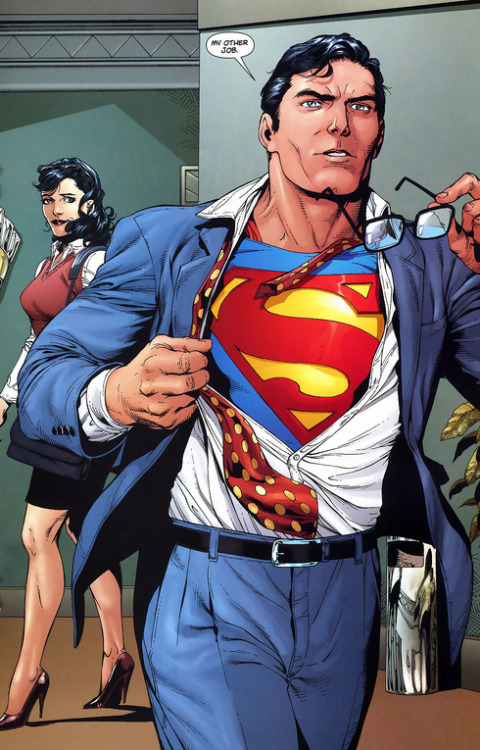
Superman: The Movie is essentially the gold standard for any superhero movie to follow; it establishes solidly the "formula" of the genre, and it does so with fresh-faced aplomb. The film follows Clark Kent through the important phases of his growth as a hero without feeling that Charlie and the Chocolate Factory feeling of "These are the story beats we need to hit, so let's keep moving. Though there's no underlying motivation for heroics - i.e., guilt (Iron Man), vengeance (Batman), thrills (Kick-Ass) - the movie aptly demonstrates that Superman is a hero simply because it's in his nature; he never lies, he believes in the innate goodness of humanity, and he has an unprecedented capacity for compassion. On this count, it's not difficult to see why Reeve is so closely associated with this role, and why artists like Gary Frank still draw the character in Reeve's likeness more than 30 years later (seriously, it's uncanny); Reeve does a first-rate job of embodying the unequivocal good nature of the character, but he also succeeds by leaps and bounds as the klutzy but similarly kind-hearted alter ego Clark Kent, who is in many ways the harder of the two to play. Anyone can don the spandex and be a hero, but any actor who tackles Superman has to also pull off an intentionally putzy performance as Clark Kent; Reeve does both, admirably.

The other performers are in good form, and they deserve mention because several of them (as bigger stars in the day, and perhaps still now) got billing over Reeve (crazy, right?). Surprisingly, Brando doesn't phone it in here, though I was expecting him to since his lines were written on baby Kal-El's diaper as he refused to memorize them; he's surprisingly convincing as Jor-El, with genuine affection for his son and lethargic disdain for the stubborn councilmen of Krypton. Kidder is fantastically funny as Lois Lane, capturing all of the character's comedic sensibilities from her pronounced problems with spelling to her flirtatious interview style. And Hackman is unique here because his Lex Luthor is entirely unlike the source material; he's not quite the bald super-scientist, nor is he the portly capitalist (who, admittedly, appeared in the comics nearly a decade after this film), nor the Superman's-buddy-gone-bad (which, if you ask me, is the only worthwhile contribution Smallville has made to the canon in nine years of television airtime, though even that appeared in comics as early as the 50s). Instead, sporting a bevy of outlandish wigs, he's something else altogether, a cocky would-be super-criminal surrounded by nincompoops (Ned Beatty and Valerie Perrine); he knows that what he's doing is wrong, but he enjoys it too much to develop a conscience - the measure of all good villains. It's not necessarily how evil they are that matters; the ultimate mark is whether or not they care about being evil.

Director Richard Donner is regarded as something of a god in the world of comic book films, probably because of the mistreatment he suffered surrounding Superman II (a review of his cut of that film, as well as the original, will forthcoming). But with Superman: The Movie, Donner cemented himself as a top-notch filmmaker at least of the genre (his version of The Omen was also first-rate). What's downright divine about Superman: The Movie is the way that Donner handles scenes of slapstick comedy, romantic tension, and heartrending drama - all with the same level of dexterity. One of my favorite sequences is Superman's first night on the job, in which he tackles several different crimes of unequal stature with the same dignified composure - an apt metaphor, I think, for Donner's abilities. I was also intrigued by Christological parallels: a father casts out an evildoer to a hellish dimension, then sends his son to earth to save us. Throw in Miss Teschmacher as Mary Magdalene, and we're looking at a pretty compelling allegory.

Overall I was impressed by this film. It's well-rounded, balancing low comedy and high action with some fantastically loyal performances grounding the whole affair in verisimilitude and dynamite fidelity to the source material. I'm looking forward to reviewing the others to see if they'll shake my faith that yes, a man really can fly. Statistically speaking, of course, it's still the safest way.
Superman: The Movie is rated PG "for peril, some mild sensuality and language." There's nothing the kiddies haven't seen on a Saturday morning cartoon here, although some of Miss Teschmacher's clothing is a titch revealing - but then again, it is a comic book movie.