This week, in anticipation of the Christmas season, we at
The Cinema King would like to bring you more than just your usual share of
recommendations. So we present to
you: this week’s Top 10 list. More specifically “The Top 10 Christmas
Season Movies.” Rather than fill the
list with “obvious” choices of Christmas-y movies, there are a few
“alternative” choices on the list – the overarching determining criterion is
whether or not this is a movie that I will watch beginning to end, especially
during (but not limited to) the Christmas season.
#4 – The Godfather
(1972)
Honestly, The
Godfather belongs on any Top 10 list this side of Hollywood, so it shouldn’t
come as a surprise that it landed here. When
I reviewed it back in April, I couldn’t say enough nice things about it, and my
most recent rewatch reminded me just how perfect this film is. So it meets the year-round requirement,
because there’s honestly never a day that I wouldn’t watch this movie if I had
the three hours to spare. But what makes
this movie seasonally appealing is that the end of the first act is set during
the holiday seasons, a detail most might not remember. To be fair, there’s so much about this film
that’s unforgettable, and Christmas is perhaps a small detail on which to
fixate. But when the Don is shot by
Sollozzo’s goons, Tom Hagen (Robert Duvall) is out Christmas shopping, Michael
(Al Pacino) is at a holiday matinee with his girl Kay (Diane Keaton), and snow
falls amid the Christmas lights adorning the hospital where the Don lays in
state. Although Sollozzo is insincere when
he bids Tom “Merry Christmas!” the cheer the film brings is a fine fit for the
festive season.
#3 – The Nightmare
Before Christmas (1993)
Tim Burton for the hat-trick! Though he didn’t direct The Nightmare Before Christmas (Henry Selick did), his influence as
producer and story-writer is acutely felt in this holiday double-dipper,
suitable for Halloween and for Christmas.
Be honest, you already know all the lines by heart, and there’s a little
part of you that can’t help but sing “What’s This?” every time you see the
first snowfall of the season (which, up in my neck of the woods, still has yet
to be). As the spooky setting of
Halloween Town gives way to the cheery bliss of Christmas Town, share in the sense
of magic and wonder as Jack Skellington (voiced by Chris Sarandon and Danny
Elfman) rediscovers all that is charming about the December holiday. Even though the residents of Halloween Town
(spoilers?) get it wrong in the end, the spirit of Christmas – embodied by
Santa Claus – reminds them that their hearts were in the right place, and the
sweetness of the film is matched only by its infectious enthusiasm for its own
unique concept.
Come back tomorrow for the epic conclusion: Movies #2-1! Place your bets now, ladies and gentlemen...
Showing posts with label The Godfather. Show all posts
Thursday, December 20, 2012
Monday, May 28, 2012
Monday at the Movies - May 28, 2012
Welcome to Week Twenty of “Monday at the Movies.” On tap this week: a few threequels, nostalgia, and Gary Cooper’s
Cinema King debut.
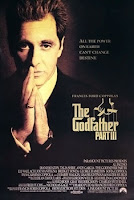
The Godfather: Part
III (1990) – Part III has become
a kind of punchline, shorthand for the unnecessary and subpar sequel. Even Francis Ford Coppola has tried to
distance himself by labeling this merely an “epilogue.” To be sure, Part III has its flaws – first, it is not the brilliance of The Godfather, nor does it enhance the
original as Part II did. Second, Robert Duvall is absent, courtesy of
a contract dispute. Third, Sofia Coppola
as Michael’s daughter... well, you’ve heard all the jokes, and they’re all
accurate. But the film has its
positives, too, often neglected in the dead faint to insult the film. Seeing Michael make good on his promises to
legitimize is satisfying, and Andy Garcia’s role as Vincent Mancini (the
illegitimate son of Sonny Corleone) ought to have been a star-making one, since
his work is compelling and entertaining with a respectful dash of James Caan
thrown in for appropriate measure. I had
said that Part II was a sequel to a
film that didn’t need one, but Part III
is a sequel – pardon, epilogue – that doesn’t quite fit with the rest of the
franchise. Al Pacino in particular,
genius that he was in the earlier films, seems inconsistent; he’s more bluster
a la Devil’s Advocate than the quiet
man we last saw on the park bench at the end of Part II. Where Talia Shire
successfully navigates the interim to portray Connie as, at last, her father’s
daughter, it’s difficult to see a more happy-go-lucky Michael with only
glimpses of how tortured he ought to be.
Part III isn’t enjoyable in
the way that the first two are, although it’s fun to see the way that it
reflects and refracts its predecessors; we have a mass execution of the dons, a
romantic confession in a kitchen, a trip to Italy, a passing of the torch
complete with ring kissing, and Diane Keaton still left in the doorframe, but
they mean different things here and serve as fun nods to those in the
know. Ultimately, the film concludes as
every Godfather film ought to – a
bloody settling of accounts – and Pacino all but redeems himself at the tragic
opera finale. Forget Fredo – it was you,
Al; you broke my heart. Required
viewing, if only to conclude the saga, but there’s a reason it never stands
shoulder to shoulder with its older, more sophisticated brothers.
Midnight in Paris
(2011) – It surprises me that this is the first Woody Allen film I’ve
reviewed on this blog, since I’ve practically lived the movie Annie Hall (right down to the awkward
primary school education of a precocious bespectacled redhead) and love a whole
host of his other films (especially Play
It Again, Sam; The Purple Rose of Cairo;
and Match Point). And on the advice of so many of my colleagues
who know literature like I do, I checked out Midnight in Paris on the strength of the premise: Owen Wilson plays the stock Woody Allen
character who roams the streets of Paris and slips through time into the 1920s
to meet literary icons like F. Scott Fitzgerald (Tom “Loki” Hiddleston), Ernest
Hemingway (a spot-on Corey Stoll), and Gertrude Stein (Kathy Bates). Unfortunately, Midnight in Paris is a film that never quite lives up to its
conceit; it’s a fantastic idea, don’t get me wrong, but it’s mismanaged and
underutilized. I’d much rather see a
Hiddleston/Stoll buddy biopic of Fitzgerald and Hemingway than the Owen Wilson
movie we get. Premise aside, there’s not
much original here: Wilson plays the
same Woody Allen character we’ve seen a million times, Rachel McAdams is Regina
George, all grown up; Michael Sheen plays the cuckolding academic, another
Allen-trope; and Wilson’s life-changing revelation is as plain as... well, the
nose on his face. The best parts of the
movie are the scenes when the writers take center stage, but these moments are
not frequent enough, and indeed not all of them work (although Adrien Brody as
Salvador Dalí is quite entertaining); all told, Midnight in Paris is a bit like an episode of Saturday Night Live – a few good sketches worth rewatching but
overall less than enjoyable.
Mr. Deeds Goes to
Town (1936) – The combination of Frank Capra and Gary Cooper is enough to
get my butt in the seat. I’ve long been
nostalgic for the simpler world Capra’s films present, and I’ve made holiday
traditions out of It’s a Wonderful Life
and Arsenic and Old Lace. And after High
Noon and especially The Fountainhead,
Gary Cooper can do no wrong in my eyes. Here
Cooper plays simple man Longfellow Deeds, an aspirant poet who inherits $20
million (upwards of $311 million today) and finds that all that glitters isn’t
quite golden. Like later Capra/Cooper
joint Meet John Doe (1941), Deeds becomes
the center of a media frenzy, courtesy of romantic interest and newspaper spy
Babe Bennett (Jean Arthur). In the final
analysis, Mr. Deeds isn’t my favorite
Capra film (Arsenic and Old Lace
takes that cake, meaning I should probably get around to reviewing it on here). There are parts that take a bit too long for
anything to happen, and the slapstick comedy isn’t as prevalent here as I might
have liked on a Sunday evening.
Moreover, almost all of the characters in the film are extremely
unlikeable, even Bennett, who doesn’t atone for her sins until the very end of
the picture. Fortunately, though, Cooper
is one of those actors who’s so charismatic that his hard work redeems many of
a film’s flaws; his performance here is consistently and satisfactorily
compelling, charmingly entertaining and touchingly empathetic. To paraphrase former dean of American pop
culture Tony Soprano, “Whatever happened to Gary Cooper?”
Superman III (1983)
– First things first, this is not a Superman movie. Unlike the two films that preceded it, Superman III doesn’t star Christopher
Reeve as the Man of Steel, even though he finally gets top billing. Rather, this is a Richard Pryor movie in
which his character, Gus Gorman, attempts to pull one over on Superman by
manipulating computers, weather satellites, and giant foam cowboy hats. The greatest compliment I paid the RichardDonner cut of Superman II was that it
excised a lot of Richard Lester’s slapstick inclinations; unfortunately, those
inclinations are given full rein here, most egregiously in the moment when
Pryor skis down the side of a skyscraper while wearing a pink tablecloth as a
cape. It’s a real shame, because there’s
a great Superman movie in here somewhere.
Reeve is doing continually solid work as the Last Son of Krypton,
especially when defective Kryptonite transforms him into a dark reflection of
himself. What’s more, his scenes
opposite Annette O’Toole as former flame Lana Lang are a fulfilling fill-in for
his relationship with the absent Lois Lane (a shame, since Margot Kidder’s
portrayal is definitive). But Lester’s
priorities are clear; he’s more interested in Pryor’s twitchy brand of humor
than in superheroics, more in the villains than in the film’s ostensible hero. Worse, the villains on which the film focuses
are nowhere near as interesting as the posthuman-converting computer, an
apparent riff on the comics’ Brainiac; I’d much rather have seen Superman
square off against an army of robot people than the would-be moguls
herein. When the chips are down, color
me a Donner fan. It’ll take a lot of
work out of Zack Snyder next year to make me a true believer.
The Godfather: Part
III (1990) – Part III has become
a kind of punchline, shorthand for the unnecessary and subpar sequel. Even Francis Ford Coppola has tried to
distance himself by labeling this merely an “epilogue.” To be sure, Part III has its flaws – first, it is not the brilliance of The Godfather, nor does it enhance the
original as Part II did. Second, Robert Duvall is absent, courtesy of
a contract dispute. Third, Sofia Coppola
as Michael’s daughter... well, you’ve heard all the jokes, and they’re all
accurate. But the film has its
positives, too, often neglected in the dead faint to insult the film. Seeing Michael make good on his promises to
legitimize is satisfying, and Andy Garcia’s role as Vincent Mancini (the
illegitimate son of Sonny Corleone) ought to have been a star-making one, since
his work is compelling and entertaining with a respectful dash of James Caan
thrown in for appropriate measure. I had
said that Part II was a sequel to a
film that didn’t need one, but Part III
is a sequel – pardon, epilogue – that doesn’t quite fit with the rest of the
franchise. Al Pacino in particular,
genius that he was in the earlier films, seems inconsistent; he’s more bluster
a la Devil’s Advocate than the quiet
man we last saw on the park bench at the end of Part II. Where Talia Shire
successfully navigates the interim to portray Connie as, at last, her father’s
daughter, it’s difficult to see a more happy-go-lucky Michael with only
glimpses of how tortured he ought to be.
Part III isn’t enjoyable in
the way that the first two are, although it’s fun to see the way that it
reflects and refracts its predecessors; we have a mass execution of the dons, a
romantic confession in a kitchen, a trip to Italy, a passing of the torch
complete with ring kissing, and Diane Keaton still left in the doorframe, but
they mean different things here and serve as fun nods to those in the
know. Ultimately, the film concludes as
every Godfather film ought to – a
bloody settling of accounts – and Pacino all but redeems himself at the tragic
opera finale. Forget Fredo – it was you,
Al; you broke my heart. Required
viewing, if only to conclude the saga, but there’s a reason it never stands
shoulder to shoulder with its older, more sophisticated brothers.
Midnight in Paris
(2011) – It surprises me that this is the first Woody Allen film I’ve
reviewed on this blog, since I’ve practically lived the movie Annie Hall (right down to the awkward
primary school education of a precocious bespectacled redhead) and love a whole
host of his other films (especially Play
It Again, Sam; The Purple Rose of Cairo;
and Match Point). And on the advice of so many of my colleagues
who know literature like I do, I checked out Midnight in Paris on the strength of the premise: Owen Wilson plays the stock Woody Allen
character who roams the streets of Paris and slips through time into the 1920s
to meet literary icons like F. Scott Fitzgerald (Tom “Loki” Hiddleston), Ernest
Hemingway (a spot-on Corey Stoll), and Gertrude Stein (Kathy Bates). Unfortunately, Midnight in Paris is a film that never quite lives up to its
conceit; it’s a fantastic idea, don’t get me wrong, but it’s mismanaged and
underutilized. I’d much rather see a
Hiddleston/Stoll buddy biopic of Fitzgerald and Hemingway than the Owen Wilson
movie we get. Premise aside, there’s not
much original here: Wilson plays the
same Woody Allen character we’ve seen a million times, Rachel McAdams is Regina
George, all grown up; Michael Sheen plays the cuckolding academic, another
Allen-trope; and Wilson’s life-changing revelation is as plain as... well, the
nose on his face. The best parts of the
movie are the scenes when the writers take center stage, but these moments are
not frequent enough, and indeed not all of them work (although Adrien Brody as
Salvador Dalí is quite entertaining); all told, Midnight in Paris is a bit like an episode of Saturday Night Live – a few good sketches worth rewatching but
overall less than enjoyable.
Mr. Deeds Goes to
Town (1936) – The combination of Frank Capra and Gary Cooper is enough to
get my butt in the seat. I’ve long been
nostalgic for the simpler world Capra’s films present, and I’ve made holiday
traditions out of It’s a Wonderful Life
and Arsenic and Old Lace. And after High
Noon and especially The Fountainhead,
Gary Cooper can do no wrong in my eyes. Here
Cooper plays simple man Longfellow Deeds, an aspirant poet who inherits $20
million (upwards of $311 million today) and finds that all that glitters isn’t
quite golden. Like later Capra/Cooper
joint Meet John Doe (1941), Deeds becomes
the center of a media frenzy, courtesy of romantic interest and newspaper spy
Babe Bennett (Jean Arthur). In the final
analysis, Mr. Deeds isn’t my favorite
Capra film (Arsenic and Old Lace
takes that cake, meaning I should probably get around to reviewing it on here). There are parts that take a bit too long for
anything to happen, and the slapstick comedy isn’t as prevalent here as I might
have liked on a Sunday evening.
Moreover, almost all of the characters in the film are extremely
unlikeable, even Bennett, who doesn’t atone for her sins until the very end of
the picture. Fortunately, though, Cooper
is one of those actors who’s so charismatic that his hard work redeems many of
a film’s flaws; his performance here is consistently and satisfactorily
compelling, charmingly entertaining and touchingly empathetic. To paraphrase former dean of American pop
culture Tony Soprano, “Whatever happened to Gary Cooper?”
Superman III (1983)
– First things first, this is not a Superman movie. Unlike the two films that preceded it, Superman III doesn’t star Christopher
Reeve as the Man of Steel, even though he finally gets top billing. Rather, this is a Richard Pryor movie in
which his character, Gus Gorman, attempts to pull one over on Superman by
manipulating computers, weather satellites, and giant foam cowboy hats. The greatest compliment I paid the RichardDonner cut of Superman II was that it
excised a lot of Richard Lester’s slapstick inclinations; unfortunately, those
inclinations are given full rein here, most egregiously in the moment when
Pryor skis down the side of a skyscraper while wearing a pink tablecloth as a
cape. It’s a real shame, because there’s
a great Superman movie in here somewhere.
Reeve is doing continually solid work as the Last Son of Krypton,
especially when defective Kryptonite transforms him into a dark reflection of
himself. What’s more, his scenes
opposite Annette O’Toole as former flame Lana Lang are a fulfilling fill-in for
his relationship with the absent Lois Lane (a shame, since Margot Kidder’s
portrayal is definitive). But Lester’s
priorities are clear; he’s more interested in Pryor’s twitchy brand of humor
than in superheroics, more in the villains than in the film’s ostensible hero. Worse, the villains on which the film focuses
are nowhere near as interesting as the posthuman-converting computer, an
apparent riff on the comics’ Brainiac; I’d much rather have seen Superman
square off against an army of robot people than the would-be moguls
herein. When the chips are down, color
me a Donner fan. It’ll take a lot of
work out of Zack Snyder next year to make me a true believer.
That does it for this week’s edition of “Monday at the
Movies.” We’ll see you here next week!
And stay tuned, because later this week I’ll be bringing you a full
review of yet another threequel – this time, it’s Men In Black III!
Monday, April 30, 2012
Monday at the Movies - April 30, 2012
Welcome to Week Eighteen of “Monday at the Movies.” Just when you thought we were out, we’re pulled back in to the world of The Godfather!
The Godfather: Part II (1974) – There are those who say the sequel is better than the 1972 original. I don’t know about all that (I’m incredibly fond of the first Godfather), but Part II is every bit as good as the film that preceded it. Simultaneously a prequel and a sequel, Part II juxtaposes the rise of immigrant Vito Corleone (Robert De Niro) with the tenure of his son Michael (Al Pacino) as he contends with moves for legitimacy in the Vegas casino industry, an assassination attempt facilitated by a betrayal from within, a Congressional inquisition, and a smiling enemy (Lee Strasberg as Hyman Roth) attempting to slide a knife in his back. For my money, the Vito chapters are stronger, although I appreciate the Michael scenes more each time I see the film for two reasons: one, I enjoy the difficult plot the more I understand it and recognize the subtlety; and two, Al Pacino’s performance here is likely his all-time career best. (Take, for example, the exchange between him and his wife when Kay tells him she’s taking the children.) As before, the supporting cast excels: Robert Duvall’s work as Tom Hagen reminds me how empty that part of Part III felt, De Niro and Bruno Kirby are spot-on as Vito and Clemenza without feeling slavishly bound to the original actors, and John Cazale absolutely steals the movie as the malleable brother Fredo. In fact, Pacino and Cazale have what I maintain is the best scene of the film, a boathouse confessional which should have netted an Oscar for both; theirs is the relationship which anchors the film, for which I find myself, as I get older, returning to the film more than for the Vito plotline, which is amusing and entertaining, a lighter counterpart to the heavy burden with which Michael finds himself saddled by the film’s end. The first film needed no sequel, but the second proved how much more could be added to the saga; having only seen the third installment once, I’ll be curious to see if it transcends this film’s sense of completion.
Stay tuned for the final Godfather review. But for now, that does it for this week’s edition of “Monday at the Movies.” We’ll see you here next week!
The Godfather: Part II (1974) – There are those who say the sequel is better than the 1972 original. I don’t know about all that (I’m incredibly fond of the first Godfather), but Part II is every bit as good as the film that preceded it. Simultaneously a prequel and a sequel, Part II juxtaposes the rise of immigrant Vito Corleone (Robert De Niro) with the tenure of his son Michael (Al Pacino) as he contends with moves for legitimacy in the Vegas casino industry, an assassination attempt facilitated by a betrayal from within, a Congressional inquisition, and a smiling enemy (Lee Strasberg as Hyman Roth) attempting to slide a knife in his back. For my money, the Vito chapters are stronger, although I appreciate the Michael scenes more each time I see the film for two reasons: one, I enjoy the difficult plot the more I understand it and recognize the subtlety; and two, Al Pacino’s performance here is likely his all-time career best. (Take, for example, the exchange between him and his wife when Kay tells him she’s taking the children.) As before, the supporting cast excels: Robert Duvall’s work as Tom Hagen reminds me how empty that part of Part III felt, De Niro and Bruno Kirby are spot-on as Vito and Clemenza without feeling slavishly bound to the original actors, and John Cazale absolutely steals the movie as the malleable brother Fredo. In fact, Pacino and Cazale have what I maintain is the best scene of the film, a boathouse confessional which should have netted an Oscar for both; theirs is the relationship which anchors the film, for which I find myself, as I get older, returning to the film more than for the Vito plotline, which is amusing and entertaining, a lighter counterpart to the heavy burden with which Michael finds himself saddled by the film’s end. The first film needed no sequel, but the second proved how much more could be added to the saga; having only seen the third installment once, I’ll be curious to see if it transcends this film’s sense of completion.Stay tuned for the final Godfather review. But for now, that does it for this week’s edition of “Monday at the Movies.” We’ll see you here next week!
Monday, April 16, 2012
Monday at the Movies - April 16, 2012
Welcome to Week Sixteen of “Monday at the Movies.” Only one film this week, one that makes me think I really ought to put up a “Top 10 Movies” list.
The Godfather (1972) – Forty years and one month ago, a film widely regarded the best of all time opened in American cinemas. Based on the brutally popular Mario Puzo novel, The Godfather has achieved iconic status in global pop culture, rendering any comments I might add as mere kindling to the inferno. Everyone knows the story – Vito Corleone (Marlon Brando) runs one of New York’s top mob families, and as the film progresses we witness his son Michael (Al Pacino) move from war hero to father’s son. What struck me about this most recent rewatch was the way that every scene is memorable, with no moments of dry disinterest. We move from the wedding to the backroom deals to assassination plots, through a tour of Italy to rises and falls in the Corleone family, concluding with the often-imitated baptism montage and the film’s final moments, which imbue as much gravitas on a closing door as possible. The dialogue is snappy and eminently quotable, the performances are riveting, Nino Rota’s soundtrack is the ultimate in mafia music, and director Francis Ford Coppola set the standard for what every other mob movie now has to live up to. There's so much more that I could say about the film, so much that deserves mention - James Caan's hotheaded Sonny, Robert Duvall's perfectly collected Tom Hagen, Richard S. Castellano's lovable heavy Clemenza (who wouldn't want this guy at a wedding?), and even Abe Vigoda's work as Tessio, proving that he hasn't aged a day since 1972 because he's been 90 all his life. And in an era where we’re texting and multitasking to our brain’s fullest capacity, I was flabbergasted that the film’s three-hour runtime never bored me or forced me to grab my iPad to check e-mails or Facebook. So strong is the allure of this film after more than forty years that it’s as close to Italian wine as film has captured – improving with age and making us look forward to the next installment. My only regret is that I didn’t have time this week to return for the sequel, but reviewing the next films in the series is an offer I cannot refuse.
Stay tuned for more reviews of The Godfather franchise, but for now that does it for this week’s edition of “Monday at the Movies.” We’ll see you here next week!
The Godfather (1972) – Forty years and one month ago, a film widely regarded the best of all time opened in American cinemas. Based on the brutally popular Mario Puzo novel, The Godfather has achieved iconic status in global pop culture, rendering any comments I might add as mere kindling to the inferno. Everyone knows the story – Vito Corleone (Marlon Brando) runs one of New York’s top mob families, and as the film progresses we witness his son Michael (Al Pacino) move from war hero to father’s son. What struck me about this most recent rewatch was the way that every scene is memorable, with no moments of dry disinterest. We move from the wedding to the backroom deals to assassination plots, through a tour of Italy to rises and falls in the Corleone family, concluding with the often-imitated baptism montage and the film’s final moments, which imbue as much gravitas on a closing door as possible. The dialogue is snappy and eminently quotable, the performances are riveting, Nino Rota’s soundtrack is the ultimate in mafia music, and director Francis Ford Coppola set the standard for what every other mob movie now has to live up to. There's so much more that I could say about the film, so much that deserves mention - James Caan's hotheaded Sonny, Robert Duvall's perfectly collected Tom Hagen, Richard S. Castellano's lovable heavy Clemenza (who wouldn't want this guy at a wedding?), and even Abe Vigoda's work as Tessio, proving that he hasn't aged a day since 1972 because he's been 90 all his life. And in an era where we’re texting and multitasking to our brain’s fullest capacity, I was flabbergasted that the film’s three-hour runtime never bored me or forced me to grab my iPad to check e-mails or Facebook. So strong is the allure of this film after more than forty years that it’s as close to Italian wine as film has captured – improving with age and making us look forward to the next installment. My only regret is that I didn’t have time this week to return for the sequel, but reviewing the next films in the series is an offer I cannot refuse.Stay tuned for more reviews of The Godfather franchise, but for now that does it for this week’s edition of “Monday at the Movies.” We’ll see you here next week!
Subscribe to:
Posts (Atom)

