
I've had problems lately with movies which either weren't what I thought they'd be or which somehow transmuted themselves into something different around the second act.
Zodiac marks another in that popular "gotcha" genre, in that it proposes to be a true crime mystery story but ends up telling more about the kinds of people who solve mysteries. And since it's David Fincher (
Fight Club,
Se7en, and
The Game, as well as
Benjamin Button) at the helm, it's a success.
Zodiac is the true story of the serial killings that terrorized California during the late 60s and early 70s, but it's more concerned with three of the main "investigators" on the case - cartoonist and amateur sleuth Robert Graysmith (Jake Gyllenhaal), world-weary detective David Toschi (Mark Ruffalo), and driven yet tortured journalist Paul Avery (Robert Downey, Jr.). As the Zodiac steps up his offensive and mounts a disturbing letter-writing campaign, the investigators step up their defensive, sacrificing personal and professional committments in pursuit of the killer.
I hadn't realized before watching
Zodiac just how many David Fincher movies I've seen - six out of seven, and all of them quite good (though I've made no bones about
Fight Club's notorious twist being extremely predictable due to ample evidence in the film's early minutes) - but I recognized an unconscious lure each of his movies possesses. They're all very dark cerebral thrillers with driven protagonists facing unseen evils. (Well, except for
Benjamin Button.) In this regard,
Zodiac is more of the same, but it's a good more. Where
Se7en drives its protagonists to ultimate madness and psychological collapse,
Zodiac is much more plausible and therefore inherently more palatable and artistically deft; our characters here don't all lose everything, though they come very close.
The characters are all very fully realized in
Zodiac, a credit to the actors filling the shoes. Though I've admitted that Gyllenhaal is not a spectacularly gifted actor, Fincher seems to do for him what Sidney Lumet did for Vin Diesel in
Find Me Guilty - that is, elicit a good performance from someone who shouldn't have had it in them. As Graysmith, Gyllenhaal is a fine Everyman, with whom the audience can thoroughly relate, though it takes some getting used to as the character perennially "looms" (RDJ's word) on the periphery of the action for the first third of the movie. Ruffalo is solid as the only real law enforcement represented beginning to end; his story arc falls just short of tragic, which separates him from the third name on our list - RDJ. RDJ seems to be making a career of playing well-meaning but tragically flawed characters with substance abuse problems, and I'd have a problem with it if he weren't fantastically consistent (and, as his turn in
Tropic Thunder indicates, versatile beyond this character type). Paul Avery is the most compelling, the most personable, and the most fascinating character in the film, since the quest for Zodiac takes its most drastic and most personal toll on him. It's a shame that his critical character change comes behind a "X Years Later" title card, since RDJ could have worked wonders with that.
Zodiac is filled with other great character actors in supporting roles, who must be enumerated briefly. Brian Cox is celebrity attorney Melvin Belli, who's called in when Zodiac phones into a morning talk show to speak with him; this character is underused in the film, especially in light of what a fantastic actor Cox is, but I suppose that's a casualty of adhering to the historical facts of the case. Anthony Edwards of
ER fame appears as Toschi's partner Bill Armstrong, a man whom I was apparently alone in suspecting to be the killer back when I thought the movie was about that sort of thing. Chloe Sevigny is Graysmith's put-out wife, and Sevigny does her usual good job of flitting in and out of the film when needed; Philip Baker Hall ("Joe Bookman" on
Seinfeld) plays a handwriting expert whose credentials become suspect, and if anyone's perfected the surly professional type, it's Hall. John Carroll Lynch almost steals the show (but doesn't - remember, that's RDJ's job) as prime suspect Arthur Leigh Allen, straddling a line that makes even the most damning evidence seem uncertain, such that perhaps not every audience member will be as convinced of his guilt as some characters in this highly ambiguous movie.
The ambiguity may sound off-putting, but it is in fact one of
Zodiac's best traits. The Zodiac killer inspired Scorpio in
Dirty Harry (a fact alluded to in the film), but the real-life case didn't have such a clear ID on its perp. Consequently, the film never actually reveals who the killer was; there's strong circumstantial evidence, but with none of it beyond a reasonable doubt and with overtures to an arrest preceded by the could-be killer's fatal heart attack, it's up to the viewer to decide. But Fincher directs a few great scenes which overcome and indeed exploit the ambiguity of the film. The most memorable scene in the film comes when Graysmith realizes he may have stumbled upon the Zodiac killer's identity; the suspect claims a positive handwriting sample as his own, advances a strong theory for what the killer's signature logo means, and reveals that he owns a basement (a rare feature in California homes) - something the killer admitted to, as well. The slow burn of this epiphany, the gloomy lighting and ambient noises, and a taut performance by Gyllenhaal all make this a powerfully engaging moment in the film, a key example of why Fincher's such a well-regarded (and rightfully so) director.
Zodiac landed on a lot of "Best of 2007" lists, and while I'm not quite sure if it's THAT good, I'm ready to say it was a fabulous ride.

Finally,
Zodiac is rated R "for some strong killings, language, drug material and brief sexual images." As a movie about a serial killer, the murder scenes are quite graphic. F-bombs litter the dialogue, and alcohol and some stronger drugs make negligible appearances, as do unrevealing covers to pornographic magazines.
 Nightcrawler (2014)
– Nightcrawler is one of those
critically acclaimed films that I missed during last year’s Oscar season,
something that never registered high on my radar but always felt like I’d get
around to it eventually. I finally did, on a very small television in the
middle of the night, and I’d venture to say that that’s the perfect way to view
this film. As Louis Bloom, Jake Gyllenhaal is supremely creepy as a
videographer turned ambulance chaser who sells his footage to morning news
programs. Think Taxi Driver meets Blow-Up by way of American Psycho; it’s a captivating performance, Gyllenhaal with
his lean wolfish appearance and relentlessly unsettling efforts at charisma,
that doesn’t quite let you forget who’s underneath the character but allows you
to look at him askance as you ponder just how bad it’s going to get. And oh my,
does it get bad – bad in the sense of morally transgressive, never unwatchable
but ethically uncomfortable for how compelling the movie ends up being. You’d
be forgiven for not knowing this was director Dan Gilroy’s first outing behind
the camera, for the tension he creates as Louis slips further into amorality is
absolutely palpable, literally placing me on the edge of my seat as Louis’s
master stroke unfolds. Indeed, the metaphor of a car crash is particularly apt,
since Louis frequently films those, but it’s also gripping in the way that a
moment of brutality is, prompting the viewer to wonder just how complicit we
are in these actions. We watch the news, but how often do we turn away when
that salivating teaser of “graphic footage” is intoned? How much guilt can be
placed solely at the feet of Louis and his ambitions? And what’s Gilroy going
to direct next? This is one to watch, folks.
Nightcrawler (2014)
– Nightcrawler is one of those
critically acclaimed films that I missed during last year’s Oscar season,
something that never registered high on my radar but always felt like I’d get
around to it eventually. I finally did, on a very small television in the
middle of the night, and I’d venture to say that that’s the perfect way to view
this film. As Louis Bloom, Jake Gyllenhaal is supremely creepy as a
videographer turned ambulance chaser who sells his footage to morning news
programs. Think Taxi Driver meets Blow-Up by way of American Psycho; it’s a captivating performance, Gyllenhaal with
his lean wolfish appearance and relentlessly unsettling efforts at charisma,
that doesn’t quite let you forget who’s underneath the character but allows you
to look at him askance as you ponder just how bad it’s going to get. And oh my,
does it get bad – bad in the sense of morally transgressive, never unwatchable
but ethically uncomfortable for how compelling the movie ends up being. You’d
be forgiven for not knowing this was director Dan Gilroy’s first outing behind
the camera, for the tension he creates as Louis slips further into amorality is
absolutely palpable, literally placing me on the edge of my seat as Louis’s
master stroke unfolds. Indeed, the metaphor of a car crash is particularly apt,
since Louis frequently films those, but it’s also gripping in the way that a
moment of brutality is, prompting the viewer to wonder just how complicit we
are in these actions. We watch the news, but how often do we turn away when
that salivating teaser of “graphic footage” is intoned? How much guilt can be
placed solely at the feet of Louis and his ambitions? And what’s Gilroy going
to direct next? This is one to watch, folks.


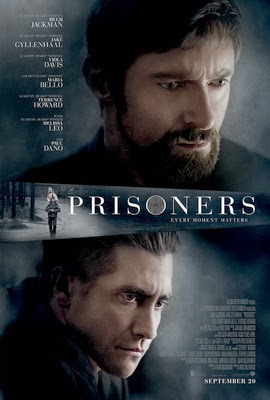

 I'm still not quite sure what to make of Ang Lee's critically lauded Brokeback Mountain. At the insistence of a few friends and the confidence in Heath Ledger's acting ability that I acquired like a booster shot thanks to the trailers for The Dark Knight (in which Ledger plays the best damn Joker, period), I finally gave the movie a try.