Showing posts with label Denis Villeneuve. Show all posts

Monday, October 25, 2021

Dune (2021)

There’s a moment in Denis Villeneuve’s long-anticipated Dune that will take your breath away. However, I can’t tell you what that moment is – not because it’d be a spoiler to do so, but because there are so many of these moments in Dune that it’s impossible to predict which one will do it for you. It isn’t likely to be the next Star Wars as its marketing declares, but Dune is majestic in its enormity, and even with its simultaneous release on HBO Max it demands to be seen in the largest, loudest auditorium available. 

Paul Atreides (Timothée Chalamet) reckons with his destiny as an ersatz “chosen one” when his father, Duke Leto of House Atreides (Oscar Isaac), is assigned custody of the unforgiving desert world Arrakis – a planet populated by colossal sandworms, the native Fremen people, and the hallucinogenic drug known as spice. While Paul and his mother Lady Jessica (Rebecca Ferguson) study his prophetic dreams, the corpulent Baron Harkonnen (Stellan Skarsgård) schemes against House Atreides in his quest to retake Arrakis. 


These are only some of the things that happen in Dune, and there are so many more characters who don’t fit into a brief plot synopsis. The scope of the film is compounded by the fact that Villeneuve is consciously adapting only half of Frank Herbert’s dense 600-page novel, with a fairly logical if abrupt breaking point midway through the story. I say “abrupt” only because by that point Dune is so resolutely in its groove and the audience is well and truly vibing with the film that any stopping point would feel jarring; put another way, I would have been just as content to see another two hours and thirty-six minutes. It’s not that the movie is unsatisfying, but rather that it’s too satisfying to stop, like a theme park dark ride you don’t want to get off.


Perhaps appropriate for a movie set largely on a desert planet, Denis Villeneuve is on a real hot streak. I haven’t seen his 2013 Enemy yet, but every other film since that year – Prisoners, Sicario, Arrival, and Blade Runner 2049 – has been a winner. Particularly in the latter two, both science fiction films, Villeneuve is finding his niche: speculative futures of overwhelmingly immense scale, where humanity is both dwarfed and magnified in the shadow of the profound. Amy Adams had to reckon with an expanding sense of the cosmos in Arrival, while Blade Runner 2049 was Ryan Gosling’s confrontation with his own ebbing humanity in a foreboding neon cityscape. Here, in the year 10191, everything is enormous – the worms, the spacecraft, the political maneuvering, and the veritable heft of destiny (manufactured or genuine) – and no filmmaker is better equipped than Villeneuve to carry those weights.


An IMAX screen so perfectly befits the size of Dune, but its speaker system is perhaps even better suited for the task. Throughout the film your bones will rattle, thanks to Hans Zimmer, who turns in the Hans Zimmer-iest score imaginable. (Equally Zimmer is the sprawling release of the score, which spans three albums and nearly five hours of orchestration.) It’s atonal, lingering, and eclectic, perhaps the only film score in recent memory to include both an electric guitar, bagpipes, and a didgeridoo. The bass shakes to the point where it’s unclear whether you’re hearing a spaceship in flight or Hans Zimmer in action; either way, the sound design is so meticulous and acute that it becomes a character in and of itself. See also the moments when Paul and his mother use “the voice,” a kind of Jedi mind trick that erases free will; the first time we heard “the voice,” its bass shattering eardrums before the words make it to our auditory canals, everyone in my theater sat up a little straighter.


I think diehard fans of the novel will enjoy what Villeneuve has built, and it seems that more casual filmgoers are digging it, too. I came to Dune from the unique position of having just read the book – or, at least, half of it; I had wanted to finish the novel entire before seeing the movie, but as it stood I got within twenty pages of the film’s chosen ending. (I promise I’ll finish before Dune Part II, the sequel which seems inevitable now.) In the process of translation, some of the characters got flattened, particularly and disappointingly the Duke himself. Duke Leto is a terrific character in the novel, torn between his duty, political machinations beyond his control, and his personal loyalty to his bloodline; he’s heroic, chivalric, and gracious, but the film seems content to let Oscar Isaac’s natural charisma do most of the character work. Conversely, Timothée Chalamet’s Paul is more human and accessible than the novel’s distant and aloof protagonist, perhaps because of his increased self-consciousness of his place as the manufactured messiah of Arrakis. 


Instead of diving deep into the characters, it seems that Villeneuve has gone the more unconventional route of letting his visual design do the character work. There are some lines about backstory, and there’s a clever narrative device in the form of Paul’s talking schoolbooks, but largely Villeneuve lets the images do the talking. It’s a mode of storytelling that seems to have fallen out of favor of late, trusting your set designers and cinematographer to do their job well. The Harkonnens are the villains because of their unfathomable ugliness, their unlit home and grotesque bodies belying the depravity of their souls; save for his distinctive voice, it’s almost impossible to recognize Stellan Skarsgård beneath the mass of flesh that is Baron Vladimir. Likewise, the Atreides are the heroes because of how gosh-darn pretty they are, warm and human. They’re also the only ones who seem to be having any fun, especially Jason Momoa as the swashbuckling (and brilliantly named) Duncan Idaho, about whom I would surely watch a miniseries or two. 


Dune is a movie into which you can easily sink, like a hot bath or a deep hill of shifting sand (both of which figure prominently in striking images within the film). It’s as much an atmosphere as a narrative, like the moodier bits of Blade Runner 2049 dialed up to eleven. Most importantly, Dune is like a dream, as in the best cinema can be, from which one does not want to awaken. Maybe it’s a little obtuse, maybe it’s bigger and more ambitious than it ought to be, but Denis Villeneuve has earned the right to make idiosyncratic science fiction. Dune is an event, a kind of heraldic “welcome back” moment for moviegoers who may have forgotten (as indeed I did) what kind of narrative spectacle best belongs in the cinema. 


Dune is rated PG-13 for “sequences of strong violence, some disturbing images, and suggestive material.” Directed by Denis Villeneuve. Written by Jon Spaihts, Denis Villeneuve, and Eric Roth. Based on the novel by Frank Herbert. Starring Timothée Chalamet, Rebecca Ferguson, Oscar Isaac, Josh Brolin, Stellan Skarsgård, Dave Bautista, Zendaya, Charlotte Rampling, Jason Momoa, and Javier Bardem.

Monday, March 12, 2018

Monday at the Movies - March 12, 2018

Welcome to another installment of “Monday at the Movies.” Today’s installment is one of those “how’d he miss that?” reviews.

Sicario (2015) – If Denis Villeneuve isn’t already one of my favorite working directors, Sicario ought to cement that reputation. I’ve loved Prisoners and Arrival and Blade Runner 2049, so Sicario fills in a gap with a movie that combines the seat-edge tension of Prisoners with, well, Blade Runner 2049’s fascination with dust. Emily Blunt plays an FBI agent whose safehouse raid goes wrong, leading her to take a new role in the war on drugs alongside two Department of Justice operatives (Josh Brolin and Benicio del Toro) who redefine playing their cards close to the chest by keeping her in the dark about their ambiguous, ultra-violent mission. From the film’s opening scene, which takes several brutally unexpected turns, Villeneuve and screenwriter Taylor Sheridan (he of Hell or High Water) keep the audience guessing as Blunt’s Kate Macer tries to find her own footing in a plot that is never quite transparent about its goals. Indeed, for a film that doles out its cards so slowly, it’s almost alchemical how Villeneuve keeps the audience on his side for the duration of the film; he’s helped ably, one should note, by cinematographer Roger Deakins, who has been the cinematographer for many of the most gorgeous films of the last twenty years (favorites: Skyfall and No Country for Old Men, whose visual influence is acute here). Points also to Benicio del Toro, who gives a riveting, largely silent performance as Alejandro, the man who “If he says to do somethin’, just do it” – and you buy it from del Toro’s quiet intensity. Hours after watching Sicario, I was elated to learn that there’s a sequel, Soldado, due in June of this year. And as a moviegoer, I don’t know if there’s a better feeling than discovering a delight you’d missed along your way, only to be told that there’s more coming just around the corner.

That does it for this week’s edition of “Monday at the Movies.” We’ll see you next week!

Monday, October 9, 2017

Blade Runner 2049 (2017)

I’ve had a roller coaster of prerelease emotions when it comes to Blade Runner 2049, from skeptical that we needed to revisit the 1982 classic to nervous that Ridley Scott might direct (after he’d done the Alien franchise a disservice with Prometheus); from cautiously optimistic that Harrison Ford was involved to exuberant upon hearing that Denis Villeneuve would ultimately helm the film. Now that I’ve actually seen it, I can attest that Blade Runner 2049 is the success it needed to be, another strong science fiction outing from the man who brought us Arrival and a potent reengagement with the central questions that the original Blade Runner continues to pose.

Ryan Gosling stars as K, a blade runner thirty years after the events of the original film. On a routine “retirement” of one of a new breed of replicants, K discovers a mystery that sets him on a new case, one that will lead him to seek out Rick Deckard (Harrison Ford).

That’s about all I’d like to say about the plot of Blade Runner 2049 – indeed, I almost wish that the marketing hadn’t revealed that Harrison Ford was returning, because the film unfolds at such a deliberate and methodical pace that each of its reveals feels carefully measured and deployed at just the right moment. At two hours, forty minutes, and then some, 2049 is long – not slow but disciplined, walking through the world of Blade Runner without failing to stop and take notice of the sprawling landscapes, the colossal neon billboards, and the depth of the imagined future world. There’s so much content in the film that I would have appreciated being surprised by Ford’s inclusion, but then again, I recognize that Deckard is something of an elephant in the Blade Runner room, and so his presence does feel like a legitimizing agent to plant 2049 solidly in place.

I had the opportunity to rewatch the original Blade Runner the night before seeing 2049, and it’s an arrangement I’d highly recommend for an optimal viewing experience. (Back to back might numb the bum, to say nothing of the back!) Blade Runner 2049 does rely on parts of its predecessor, picking up plot elements and referencing iconic visuals, but by the same token I do think the film works well enough as a standalone that develops in a new but consistent direction, in that sense reminding me a great deal of Tron Legacy. Indeed, there’s been a trend lately of dusting off these classics from decades past – Harrison Ford himself had already done it in The Force Awakens – and seeing what they have to say these years later. By and large, these efforts have to my eyes been roundly successful, resisting the impulse to reboot (and the creative liberties that might come therein) but rather working within the confines of the established universe and layering in new roads, not unlike the way The Godfather Part II filled in the world of the first Godfather and extended its lifespan in gripping ways.

You have, of course, the continuing saga of Rick Deckard, who’s as striking when he’s absent as when he’s present; where has he gone, but more importantly why’s he gone away? (Here Ford is both the returning Han Solo and the vanished Luke Skywalker.) But aside from extending the narrative of Blade Runner (melding nicely with whichever of the umpteen cuts you prize), 2049 looks for new opportunities; Jared Leto plays the erstwhile heir to the Tyrell replicant empire, while Dave Bautista plays a surprisingly graceful farmer, a far cry from either Drax or Mr. Hinx. Gosling is solid as always, a well-deserved heir to Harrison Ford’s remarkably deft career, but I was surprised that it’s Ana de Armas who steals more than her fair share of the film, playing K’s holographic companion Joi (think a slinky, autonomous Alexa). Joi allows the film to continue to probe the question of the lines between simulation and reality in ways related to, but also quite distinct from, the mystery posed by Roy Batty (Rutger Hauer) in the original.

Simply put, Blade Runner 2049 is one of the better sequels in recent memory. Early in production, Christopher Nolan had been bounced around as a possible director, but – while I’ll never say no to more Nolan (particularly since his frequent collaborator, Hans Zimmer, appears to have discovered the vuvuzela with his follow-up to Vangelis) – I do think Villenueve is the ideal candidate here. As we saw with Arrival, Villeneuve has mastered the balance between wonder and revelation, in portraying immense scope with the weight of narrative to match. (Has anyone called him yet for a Star Wars film?) Villeneuve’s direction is capable and confident, taking its time but earning that extended runtime by doling out information and momentum to keep the audience right where he needs them to be.

I almost don’t want there to be a third Blade Runner, but then I didn’t know I wanted the second one, either. It’ll be exceedingly difficult to capture replicant lightning in a bottle once more, and though there’s a thread here and there left unknotted the film does seem to end in a place that feels whole and proper. If Villeneuve is in the driver’s seat once more, though, I’m confident we’ll be in a good place.

Blade Runner 2049 is rated R for “violence, some sexuality, nudity and language.” Directed by Denis Villenueve. Written by Hampton Fancher and Michael Green. Starring Ryan Gosling, Harrison Ford, Ana de Armas, Sylvia Hoeks, Robin Wright, and Jared Leto.

Monday, November 28, 2016

Arrival (2016)

You may have noticed that I have this tendency to compare compelling science fiction to Inception. In fact, in the case of Big Hero 6, Looper, and Transcendence, I usually draw a straight line back to 2010. This inclination, I admit, is somewhere between hagiography and tracking cultural influence, for few will deny that I am a disciple of Christopher Nolan and that the post-2010 science-fiction line-up does have a lot in common with Inception.

However, I’m not going to say that Arrival has much to do with Inception. (Nor am I going to spoil anything, promise.) Instead, I’m going to draw the connective tissue a little closer to the present, toward Nolan’s most recent film. Arrival is essentially a moody, Kubrickian Interstellar, without much in common with Inception beyond the same pleasant mental gymnastics as we follow along with the film’s very smart plot.

Amy Adams stars as Dr. Louise Banks, a linguistic professor whose loose affiliation with the United States government puts her at the top of the list when twelve alien spacecraft arrive on earth. Drafted to help translate an alien language in order to understand the spacecrafts’ purpose on our planet, Dr. Banks works with a theoretical physicist (Jeremy Renner) and a wary colonel (Forest Whitaker) to piece together the mystery of the arrival.

Not just because both films utilize Max Richter’s “On the Nature of Daylight” to great effect (and affect), there are parts of Arrival that feel very much like Martin Scorsese’s underrated Shutter Island (perhaps not coincidentally, also 2010, a real important year for me as a filmgoer). Somewhere between Arrival’s fog-bound aesthetic and its depiction of resilient optimism in the face of a crumbling world, a belief that ultimately things will make sense if we study them hard enough, I was reminded of Shutter Island and its similarly determined worldview. In both films, we have a “detective” of sorts, whose dogged pursuit of a graspable truth – in whose existence very few of the other characters actually believe – plays out amid dreary weather and mournful violin solos which suggest the intangibility of truth and the inherent sorrow therein. However, in Arrival as in Shutter Island, the truth is out there, if only we had eyes to see it.

In Arrival, those eyes belong to Louise Banks, and thank heavens we have Amy Adams to play the part. In a just world, Adams would be in the running for Best Actress, because her portrayal of the linguist is stunning and powerful, conveying much with a frown or a furrowed brow, and her earnest desire to understand the aliens is something that comes through even as we see just how scared she is of the possibilities presented by life beyond our little blue world. We have all these other dudes in the film – and yes, Adams is pretty much the only woman in the film, which can’t be accidental – but they take a backseat to Adams’s performance.

For as small and intimate as the film’s focus is on Louise Banks, the film has a simultaneous grandeur to it that recalls Stanley Kubrick’s 2001: A Space Odyssey (1968). The twelve alien ships, several stories high and hovering above the ground, recall Kubrick’s black monolith, suggesting perhaps shared common ground in both films’ treatment of mankind’s future and our place among the stars. There are moments in Arrival that feel a bit as though Stanley Kubrick is directing an adaptation of Wuthering Heights in which Heathcliff is an immense being at which we can only marvel, slack-jawed, while we attempt to comprehend. But where Brontë left Heathcliff somewhat inscrutable, where Kubrick might have left him to the dimension of the metaphorical, Arrival takes the occasion of immensity as a moment of contemplation. Louise begins in fear of the aliens, but track her evolution throughout the film.

Arrival isn’t a puzzle box like Inception, where we have to struggle mightily to keep up. Rather, it’s more akin to the scientific affect of Interstellar, in which mystery elements fit together thematically, not solely by virtue of their ability to clear up the plot. Rather than comprehend, we understand; we feel it. Arrival has a depth to it, a sense of truth and a very valuable point about geopolitics and the need for a utopian perspective. Louise Banks has that utopian vision, that belief that her work has purpose, direction, and possibility, where others see only futility and predetermination. It’s to the film’s credit that it convinces us to see things her way, and in a brilliant third-act reveal, teaches us how to do it, too.

Director Denis Villenueve – we at The Cinema King remember him fondly from Prisoners – is slated to direct the forthcoming Blade Runner 2049, and while I’ve never thought that film needed a sequel, seeing Villenueve at the helm of a compelling and grand science fiction film has me rethinking my tune.

Arrival is rated PG-13 for “brief strong language.” Directed by Denis Villenueve. Written by Eric Heisserer. Based on the short story “Story of Your Life” by Ted Chiang. Starring Amy Adams, Jeremy Renner, Forest Whitaker, Michael Stuhlbarg, and Tzi Ma.

Monday, March 3, 2014

Monday at the Movies - March 3, 2014

Welcome to another edition of “Monday at the Movies.” This week, a movie brutally snubbed at last night’s Oscars.

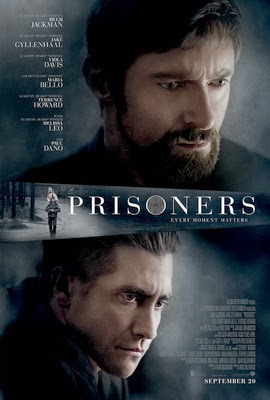
Prisoners (2013) – I could fill this review with 250 adjectives – breathless, intense, suffocating – but they all add up to one word.  Prisoners is fantastic, much darker and more intricate than the torture porn promised by the film’s one-note marketing.  Hugh Jackman and Terrence Howard star as fathers whose daughters disappear one Thanksgiving; displeased with the methods of Detective Loki (Jake Gyllenhaal), Jackman takes hostage a mentally challenged man (Paul Dano) who he believes abducted the girls.  Prisoners, though, is much more elaborate than that initial synopsis posits, weaving a number of plot threads together in unexpected ways that are best experienced as the film unfolds – especially because some of the most insignificant details acquire astonishing relevance in the third act.  I’d never heard of director Denis Villeneuve before, but he’s certainly on my watchlist now.  There are moments in Prisoners that recall the best scenes in David Fincher’s Zodiac, moments of intense claustrophobia that have little to do with the actual set design and much more to do with the sense that the plot is rapidly closing in on itself, that events are spiraling beyond the control of the protagonists.  (Jackman’s continual reminders of how long the girls have been missing further add a real-world tenseness to the proceedings.)  Though all in the cast do fantastic work, including Maria Bello and Viola Davis as the beleaguered mothers, a special tip of the hat goes to Paul Dano, who really deserved a Supporting Actor nod.  As the disabled Alex Jones, Dano masters the mental handicap without overplaying it and subtly convinces us that something is quite wrong about Alex even if we don’t know exactly what it is (and he keeps us guessing, too).  Disappointingly, Prisoners seemed to fall off the radar once it debuted in theaters – a real shame, since it’s one of the most gripping films I’ve seen in recent memory.

That does it for this week’s edition of “Monday at the Movies.” We’ll see you here next week, and don’t forget that this Friday is the Double-Oh-Seventh of the month (and Roger Moore’s swan song as James Bond)!