Monday, July 29, 2024
Deadpool & Wolverine (2024)
Monday, July 1, 2024
Cinemutants - Logan (2017)
- The man comes around. Logan is such a good movie that I was, I’ll confess, a little disappointed when I heard that Hugh Jackman was returning for Deadpool & Wolverine. Jackman and director James Mangold were explicit about Logan being the grand finale for the character, and as good as The Wolverine was, Logan is leaps better. It barely feels like a superhero movie, and you know I mean that without any sense of self-loathing; it feels like a film about these characters, what makes them tick, and what proves to be their undoing. Jackman embodies all the contradictions of an aging, dying Logan, still possessed of his compassion and his rage in equal parts. The movie Shane gets invoked, which might be too cute by half, but as a trilogy, we’ve seen Logan as superhero, ronin, and now gunslinger. Through it all, Jackman has always found something consistent in the character, some core emotional truth that made him one of the best there is at what he does.
- Something unspeakable. Logan is Jackman’s show, but it’s very nearly a two-hander with Patrick Stewart as Charles Xavier. (We also get Stephen Merchant as a very different Caliban from the one we met in Apocalypse.) Now in his nineties, this Xavier is heartbreaking, tortured by his failing body and the death of his dream for mutantkind. It’s also quite possibly Stewart’s best and most human performance as the erstwhile leader of the X-Men; no longer just a symbol, this Xavier is wholly mortal and deeply fallible, yet there’s still a glimmer of the school’s founder when he reminds Logan, “Someone has come along.” In another emotionally devastating beat, he refutes Logan’s overwhelming cynicism with a reminder, “It is [real] for Laura,” accidentally expressing one of my core beliefs about what empowers comic book readers (which Laura happens to be). It’s unclear whether this is the end of the First Class timeline, an older timeline, or a completely detached epilogue outside of continuity (a la The Dark Knight Returns) – but nor does it really matter; this is one end of the road for these characters.
- Both hunter and caregiver. Adding a kid sidekick can sometimes be the death knell for superhero stories, heralding the end of original stories or watering down the material for a younger generation. But Dafne Keen’s interpretation of Laura as part feral child, part lost childhood is so compelling that folks are still beating the drum for her to continue in the role of X-23. Possessing none of the pretentiousness or precociousness of many child performers, Keen holds her own opposite Jackman with a fully realized and deeply human presentation. She’s both denied and been cagey about reprising her role in Deadpool & Wolverine, but I think we’d all be tickled to see her don the yellow costume of her ersatz father. (The fact that she’s stayed close to the mouse’s fold, with a dynamite role in The Acolyte on Disney+, bodes well, I think.)
- I believe you knew my father. Raise your hand if you’d forgotten that Richard E. Grant plays the villain in one of the best X-Men films. I do recall that when his casting was announced, folks logically assumed he’d be playing Mister Sinister, following on from the Apocalypse post-credit scene. While he would have been fantastic as the vamping, besotted mutant geneticist (and is perhaps now sadly too old for the role), there’s something equally powerful in the banality of Grant playing Zander Rice, whose father was one of the nameless scientists who gave Wolverine his adamantium claws back in 1979. It’s a nice touch that ties together a trilogy of Wolverine movies with almost no connecting tissue, and Grant brings a certain snarl and menace to a role that requires him to believe he’s acting in humanity’s best interest. I’d speculate that we might see Grant in a different role, perhaps as a comics-accurate Reverend Stryker, but then I remembered we already have Richard E. Grant in the MCU as the time-lost Old Loki.
- Holding your own heart. I’m not breaking new ground with this one, and indeed apparently James Mangold has long since confirmed it. But watching Logan so close to The Wolverine alerted me to the truth in Yukio’s vision of Logan’s death: “I see you on your back. There’s blood everywhere. You’re holding your own heart in your hand.” Indeed, this Logan passes away, covered in blood, holding Laura’s hand, finally tasting something of the peace that Xavier had promised could come from having a family. It’s a perfect and fitting end for this character, and we all believed Hugh Jackman when he said it was the end of the road. Even with Patrick Stewart’s Doctor Strange cameo, I didn’t think a Wolverine variant was in the cards because of how well Jackman stuck the landing here, so now I’m more curious than ever to see what lured him out of retirement – and which Wolverine (and from whence) he’s bringing with him.
Monday, June 24, 2024
Cinemutants - X-Men: Apocalypse (2016)
- The third one’s always the worst. When Jean Grey speaks this line, ostensibly in reference to seeing Return of the Jedi, it’s clear that director Bryan Singer is taking one last dig at Brett Ratner’s The Last Stand. It’s only been a few weeks for us, but a decade later, Singer was still relitigating the old canon he wiped away in the previous film. It’s catty and distracting, especially because Apocalypse is more or less the third film in the First Class timeline, and it’s one of the franchise’s weaker outings. It’s less schizophrenic than The Last Stand, but it’s both undercooked and overbusy, with Oscar Isaac as a surprisingly unenthusiastic Apocalypse, who in another cinematic universe could very well be the biggest threat mutantkind has ever faced. But Isaac is clearly fatigued by the heavy prosthetics and needlessly dramatic dialogue (“You can fire your arrows from the Tower of Babel...”), and despite getting what should have been a fresh start from Days of Future Past, we seem to be treading the same boards all over again. If we get a mention in Deadpool & Wolverine, it’ll surely acknowledge the fact that Isaac has moved on with Marvel as Moon Knight.
- She’s barely aged a day. Curiously, Apocalypse is set in 1983, but you would scarcely know it’s been 20 years since First Class. There are a few throwaway lines about how well everyone is aging – the kind of lantern-hanging that Deadpool might do best – but I thought it then and I thought it now: it was a wild choice to set the primary X-Men films in the historical past and then leave them there. No one looks twenty years older, and the only good reason to leave the films in the past is to keep the rock-solid casting of James McAvoy and Michael Fassbender, who still play this trilogy like one long break-up. Jennifer Lawrence, meanwhile, has “contractual obligation” hanging over her head in a role that sees her discard her blue appearance for nominal plot reasons but more for her own professional clout. And with the reprise of so many supporting characters instead of the legion (pun intended) of options from the comics, it all feels a little claustrophobic.
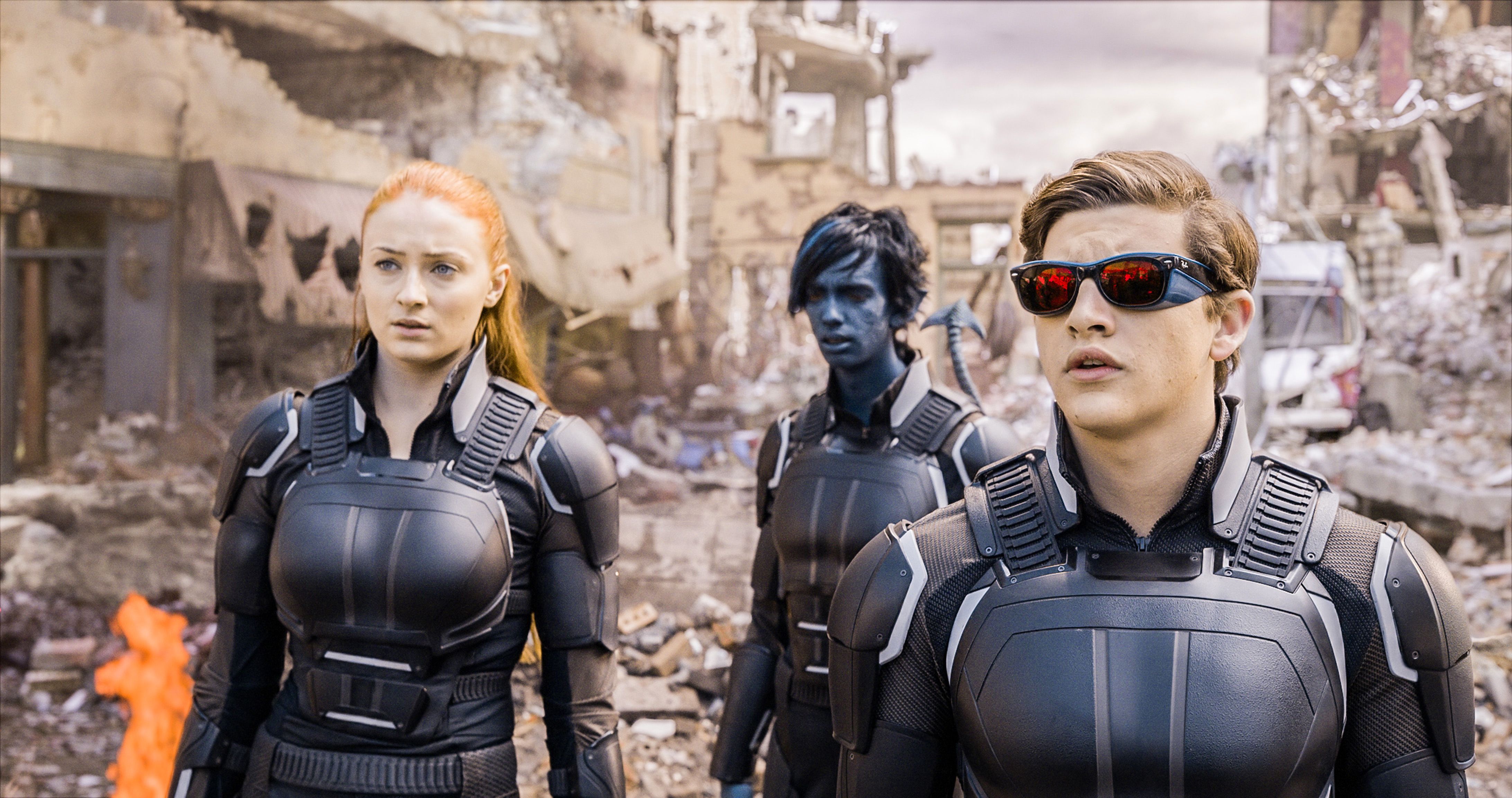
- The glory of what’s to come. As much as Apocalypse tries to chart a new path using the same old pieces from the original films, there is certainly a sense of awe when Jean Grey finally unleashes the Phoenix Force in the final battle against Apocalypse. Seeded throughout the film in a way that never quite feels like an echo of X2, it’s an implicit promise that the next film will do justice to the “Dark Phoenix Saga” of comics legend. Whether we strike gold is a subject for debate in three weeks’ time, but almost no one enjoyed Dark Phoenix. Will the third time be a charm if we see a Phoenix in Deadpool & Wolverine? Heck, as a living embodiment of reincarnation, the Phoenix could be just the thing to bridge timelines from the Fox films into the MCU, or perhaps it’ll just be Deadpool’s sheer force of fourth-wall breaking.
- Weapon X. After sixteen-plus years, Hugh Jackman had very nearly done it all with Wolverine, touching on virtually every one of the costumed hero’s most famous comic book stories. Yet his uncredited cameo (which I recall being a genuine surprise) brings to life Barry Windsor-Smith’s iconic “Weapon X” design, with Wolverine as a deprogrammed and feral Frankenstein’s monster. It’s the sort of visual shout-out that rewards comics readers, while looking breathlessly cool for the normies in the audience. It also gives us a peek at how Logan’s faring in the new timeline; last we saw him, Mystique-as-Stryker was fishing him out of the river, and now we see his origin story aligning away from what we learned in X-Men Origins: Wolverine, with his brief interaction with Jean Grey retroactively cueing up his romantic fixation on her. Will the Logan we meet in Hugh Jackman have gotten his adamantium from Danny Huston or this film’s Josh Helman? Which one grows up to be Brian Cox? We may find out in a month’s time.
- A sinister future. We’ve still got about four weeks left on this recap series, but believe me when I tell you the end is nigh. Case in point, this post-credits teaser that never materialized, despite a pitch-perfect opportunity for the next film to include Mister Sinister, a genetics-obsessed madman whose Essex Corporation is seen here recovering a vial of Logan’s blood. Sinister’s fixation with the Summers bloodline, too, might have made for an interesting film down the line. Still, I hope the MCU is holding Sinister in reserve, and not just for a passing cameo in Deadpool & Wolverine; lest we forget, Sinister’s comics debut found him leading the charge in the “Mutant Massacre” crossover, and his more flamboyant recent appearances would be a perfect fit for, say, David Tennant.
Monday, June 10, 2024
Cinemutants - X-Men: Days of Future Past (2014)
- Securing our future. We can argue about whether this is the best X-Men movie (it’s easily top three), but there’s no debating the fact that this is the most X-Men movie. Two casts, parallel timelines, ready-made comics inspiration, and a continuity fix that only muddles the waters even further: Days of Future Past has everything an X-fan could want. While the change-the-past plot was intended to smooth over any errors in the timeline (or, at least, provide a plausible excuse for them), it only exposes the gossamer of the plot to brutal scrutiny. By the end of the film, just how much of the past has Logan undone? (Director Bryan Singer is at least erasing The Last Stand, but there’s a wink toward expunging X-Men Origins: Wolverine, as well.) You might still need a chart to understand how all the films relate to each other, but I’ll argue next week that, as far as time travel and continuity are concerned, Days walked so Deadpool could run.
- Infinite outcomes. Along with being the apex X-Men movie, Days of Future Past provides something so unique that only the superhero genre can do. As incredible as Patrick Stewart and Ian McKellan were, James McAvoy and Michael Fassbender were equally inspired casting choices. And in virtually any other genre, you’d never have an opportunity to put them on-screen together; imagine a Godfather movie that saw Marlon Brando meet Robert De Niro, or a James Bond movie where Daniel Craig teams up with Pierce Brosnan. Another way Days cues up Deadpool is by implying that both versions exist out there somewhere, simultaneously; future films followed both Professors Xavier, and it’s inconceivable that Deadpool & Wolverine won’t see other iterations (or “variants,” in MCU-speak) of recognizable characters. Let’s hope the new castings are just as good.
- It all starts with her. In the comics, Kitty Pryde is the one traveling back in time to warn the X-Men about averting the future; here, though, it’s got to be Wolverine, both for the practical needs of the plot and for the fact that Hugh Jackman continues to be an audience favorite for his literal embodiment of the character. (The movie finds a creative way to keep Kitty relevant to the plot.) Meanwhile, the target of the future remains unchanged; it’s still Mystique, played by Jennifer Lawrence at the peak of her rising stardom. Two years after her Oscar for Silver Linings Playbook and a year before finishing her tenure in The Hunger Games, Lawrence makes a third-stringer background villain into a compelling and deeply human protagonist. It’s almost hard not to root for her, though Lawrence’s apparent fatigue with the role will become inescapable in the weeks to come. (A third woman, Anna Paquin’s Rogue, becomes an axis point in the “Rogue Cut,” which sees Rogue freed from a mutant prison to help Kitty Pryde save Wolverine.)
- In the future, do I make it? It feels like it’s been true for most of these movies, but Days of Future Past really illuminates the paradox of accurately and lovingly bringing characters to life and then giving them absolutely nothing to do. Bishop and Blink, for example, look like they stepped straight out of a comic book, but I’d be darned to tell you why, on the strength of this movie, any fan would care about them. Even Storm suffers from this paradox; as cool as it is to see Halle Berry rocking the closest thing to a mohawk we got from her, Storm’s presence in the film is barely consequential, and the film seems not to have noticed that she is essentially the last surviving faculty member at the Xavier Academy. The X-Men might have the deepest bench in comics, but the movies always seemed to focus on the same dozen or so; next week, we’ll see Deadpool do right by Colossus, who’s had less personality than window dressing in these films.
- Is the future truly set? Superhero storytelling is perpetually stuck in the second act; after you get through the first-act origin tales, most of these stories never truly end. (And when they do, like All-Star Superman or Old Man Logan, they’re in alternate realities.) Days of Future Past eats its cake and has it too by giving Logan a cheery send-off while also holding open the door for more stories in the First Class timeline. (Quite where Logan takes place, we’ll consider in a few weeks.) But it does seem a little suspicious – and possibly even sinister – that Bryan Singer’s happy ending seems to erase/retcon only the movies he didn’t direct. Of the beleaguered director’s many sins, this is far from the worst, but this film does seem to promise a new golden age that, more or less, never came to pass. Did the film that was meant to fix the franchise actually break it? The best films to come are the ones that play fastest and loosest with continuity...
Monday, June 3, 2024
Cinemutants - The Wolverine (2013)
This week, from 2013, it’s The Wolverine. Years after The Last Stand, Logan (Hugh Jackman) is in exile, alone and haunted by the ghost of Jean Grey (Famke Janssen). Invited to Japan by the ailing Ichiro Yashida (Haruhiko Yamanouchi), Logan finds himself entangled in a conspiracy involving Yashida’s son Shingen (Hiroyuki Sanada), his granddaughter Mariko (Tao Okamoto), and the precognitive mutant Yukio (Rila Fukushima).
- Eternity can be a curse. After thirteen years and six outings as Logan (counting his cameo last week), Hugh Jackman gives his best performance yet in The Wolverine. Wolverine has always been a creature of rage, and in this one we get to see that rage turned inward – for the first act, at least. Like any good soldier, Wolverine only needs a mission to turn himself around, something I suspect will come into play in Deadpool & Wolverine, when we meet another Logan broken by failure. But it’s not all heartbreak here, because Jackman also gives us some of the best action sequences with Wolverine, including a sensational fight on a bullet train and (in the extended cut) a lengthy battle with ninjas on motorbikes. And while Jackman is much taller than the Wolverine of the comics, he takes full advantage of that size difference and owns it in this movie.
- Kuzuri. In the comics, Wolverine has a long history with Japan, having trained there before his days with the X-Men and drifting back every so often to settle some bit of unfinished business. The Wolverine relocates Logan’s history with Japan into his present, tying him in an arresting opener to the bombing of Nagasaki before setting the bulk of the film in Japan. There’s some question about whether Logan is a kuzuri (an animal) or a ronin (a samurai without a master), and there’s some room to wonder whether Yukio’s gift is a mutation or just a spiritual connection to the future. In some ways, this movie anticipates Peach Momoko’s recent work in the Marvel Universe, which reimagines mutants as yokai (cf., Demon Days, Ultimate X-Men). Done carefully, this cultural crossover enriches the character and keeps him from growing stale.
- Everyone you love dies. The Wolverine plays with one of the most stalwart archetypal plots in superhero comics – take away everything recognizable about the hero, break him down to nothing, and build him back up. On a meta level, the film even acknowledges that The Last Stand and Origins didn’t go very well, and so we’re rooting for a redemption of the franchise and its erstwhile protagonist. First Class was a step in a new direction, but The Wolverine had the unenviable task of picking up from an unloved film and playing the X-ball where it lay. (Director James Mangold would tread a similar path with Indiana Jones and the Dial of Destiny a decade later, following on the unpopular Kingdom of the Crystal Skull.) So we have a Logan without a team, without a purpose, and even without his healing factor. Who, then, is the Wolverine? It’s immensely satisfying once Logan embraces the mantle that had been used to taunt and torment him.
- We don’t all have claws. While I don’t think too many people would thrill at the return of mutant poison mistress Viper (Svetlana Khodchenkova), I was reminded on this rewatch that we were really robbed of more Yukio. Rila Fukushima would get her superhero due playing Katana for a few years on Arrow, but The Wolverine set up a fun dynamic with Yukio as Logan’s backup, his confidant, and the closest thing to a friend he permits himself (almost reminiscent, incidentally, of the relationships Wolverine has had with young X-Men like Kitty Pryde and Jubilee). We meet a very different Yukio in Deadpool 2 – either due to time-travel shenanigans or just two people having the same name – and Days of Future Past will imply that this timeline doesn’t exist any longer. But since exiles from dead continuities are sort of the TVA’s whole thing, I’ll keep my fingers crossed that this Yukio makes a return; someone who can see the future might come in handy if the TVA are pruning timelines.
- Ghosts of future past. I had entirely forgotten that Famke Janssen plays a not-insubstantial role in The Wolverine, which makes me wonder if we might see her pop up in the new Deadpool movie as some multiversal variant of the Phoenix (she stands a better chance, at least, than Sophie Turner, whose Dark Phoenix is less than fondly remembered). There’s certainly a sense of the unresolved in the relationship with Logan, as well as the question of whether she’s just a memory or a spectral vision from beyond. What I hadn’t forgotten, however, was the first-rate post-credits scene which reintroduces Ian McKellen and Patrick Stewart into the mix; though we saw them three weeks ago, it had been seven years for moviegoers (not counting Stewart’s CGI cameo in Origins). This is one of those gold-standard teasers, and it had me wanting to cue up Days of Future Past immediately; we’ll have to wait a week for that one.
Monday, May 20, 2024
Cinemutants - X-Men Origins: Wolverine (2009)
- The best there is at what he does. I almost never rewatch Origins unless I’m doing a thorough rewatch, and it’s not exactly because this is a bad movie. It has a few things going for it, but by and large Origins is a colossal bore. Hugh Jackman is trying, he really is, and he’s got the persona of Logan down perfectly – certainly better than in The Last Stand, at least. But it turns out that the mysterious past of Wolverine is much more interesting when we don’t have all the answers; Origins takes the most boilerplate backstory and grafts it onto Wolverine like so much adamantium. Parental issues? Check. Tragic love story? Check. Hamfisted prequel references? See below. And as for those special effects, it’s hard to think of a movie with effects that have aged worse than this one; Logan’s claws are like floating cartoons, all the wrong size, and the third act is dodgy at best.
- The kitchen sink. Prequels shouldn’t feel like bullet points, and Act Two of this film reveals that nearly everything distinctive about Wolverine started on essentially the same day: he gets his claws, his dogtags, his motorcycle, and his leather jacket within the same 24-hour period. None of it’s very exciting, and Logan walks into the frame at one point carrying a literal sink in his hands, as if to say they’ve covered it all. But the storytellers have taken the path of least interest to get there, lining the cast with C- and D-list comic book characters as if to trick fanboys into liking the film because of its deep-cut casting. Folks took Solo to task for doing much the same thing, but the key difference was that Solo was fun; it turns out that X2 did Logan’s origins better by refusing to answer all the questions.
- Koo-koo-ka-choo got screwed. I’ve seen Origins a few times, but I still couldn’t remember all the mutants – their names or their powers. To be fair, this mish-mosh of characters feels like the detritus of who Fox had the rights to use. Kestrel, Bolt, Silver Fox, The Blob, and Agent Zero... were these never-rans selected to save the interesting mutants for non-prequel films? Perhaps not, given that the film also phenomenally squanders the character of Gambit (played by an uncharismatic Taylor Kitsch) who, let’s be real, you and I both forgot was in this movie. He’s mere set decoration in a third act that also throws Cyclops, Professor Xavier, and maybe/maybe not Emma Frost into the mix for what I can only assume to be their availability for the marketing. (We’ll start thinking about messy timelines next week, but despite playing fast and loose with its cast, Origins doesn’t actually break too many eggs.)
- We’re not like them! The one thing Origins has going for it is its casting. Jackman, naturally, isn’t making any missteps, but Liev Schreiber and Danny Huston are playing much better villains than this picture deserves. The film begins with an arresting credits sequence that shows Logan and Victor fighting in every war, the kind of time-skipping montage that Zack Snyder does so well, but that war sequence is the film I would rather have seen. Schreiber is having so much fun as Sabretooth, genuinely scary but also addictively fascinating to watch; it’s a genuine shame that we never saw this Sabretooth again (unless, fingers crossed, he turns up in Deadpool & Wolverine). Meanwhile, Huston plays a young(er) Stryker as the apex of sinister government banality, never quite trying to do a Brian Cox impression but still carrying that same weighty menace. Any time either one of these guys is on screen, Origins very nearly sings.
- Take a dip in the ’Pool. Since we’re gearing up for a new Deadpool movie, it’s worth thinking about how the Merc with a Mouth comes off in Origins... and the answer is, really quite badly. In the first act, it’s astonishing how fully formed Ryan Reynolds was as Wade Wilson, how recognizable his snarky charm remained seven years before his solo film proper. But as that third act ramps up, we find that Wade’s mouth has been sewn shut, his swords have been grafted into his arms, and he’s able to teleport and shoot laser beams out of his eyes. Deadpool, this ain’t, and it has a whiff of that mid-2000s self-loathing that comic book adaptations often indulged, pretending that the source material was much too silly for the big screen. Fans hated it, Reynolds kept pushing to do it right, and now fifteen years later Deadpool isn’t a punchline. Well, not like that, at least, but it does become a memorable gag in Deadpool 2, when our Deadpool travels back in time to shoot this Deadpool in the head (and a few other places).
Monday, May 13, 2024
Cinemutants - X-Men: The Last Stand (2006)
This week, from 2006, it’s X-Men: The Last Stand. The mutant world faces its greatest threat when a cure for mutation is developed. Wolverine (Hugh Jackman) and Professor Xavier (Patrick Stewart) have their hands – and claws – full when Jean Grey (Famke Janssen) returns from the dead and allies herself with Magneto (Ian McKellen), who is leading the mutant resistance against the cure.
- An age of darkness. It’s generally been agreed that The Last Stand is where the X-Men franchise begins to drop the ball, and in some ways you might say it never fully recovers. At least three of the subsequent films reckon with the legacy of this one, with a snide joke in Apocalypse acknowledging that third films in trilogies don’t always work. After nearly twenty years, this one is strikingly grim, killing off [SPOILERS!] both Cyclops and Professor X before spinning its wheels until a third act that looks staggeringly like a television soundstage. Meanwhile, amid a host of dark plotlines, the film is littered with jokes of an astonishingly dated sensibility, giving one the distinct impression that The Last Stand is a cartoon brought to life by an edgy teenager.
- Dark Phoenix rising. Last week I called the Dark Phoenix Saga “the franchise’s Everest summit,” and The Last Stand is a spectacular failure of an adaptation. Where the comics were a sober meditation on absolute power and the ethics of mutantkind’s response to genocide, this film recasts the Phoenix as Jean Grey’s uncontrollable power… only for her to stand around not doing very much with that power. It’s a classic “show, don’t tell” failure, compounded by the confusing decision to subordinate her abilities to Magneto’s will. We’ll see the franchise take one more swing at Dark Phoenix in the film of the same name, which finds entirely new ways to drop the ball, while Jean’s ultimate fate will haunt Hugh Jackman’s Logan for much of the rest of his tenure.
- Pyro mania. I was pretty surprised that the Deadpool & Wolverine trailer announced that Aaron Stanford would be returning as Pyro, but that’s because I’d forgotten how the Pyro/Iceman rivalry became weirdly central to this trilogy. After Pyro threw his lot in with Magneto in X2, The Last Stand spends a not-insignificant amount of time teasing his inevitable showdown with Iceman, whose pure ice form is reserved for the pinnacle moment of their big fight sequence. The movie even clears Mystique (Rebecca Romijn) from the deck to make room for Pyro. While I’m sure that there will be no shortage of recognizable faces in the new Deadpool trailer, using Pyro feels like leaning into the idiosyncrasies of dead continuity – which, to be fair, is on brand for Deadpool.
- Too much of a good thing. At an hour and forty-four minutes (the exact length of X-Men, mind you), The Last Stand has way too much going on for a coherent story. Its three antagonists – Magneto, Phoenix, and the cure – feel packed together, bulging with superglue to hide the storytelling seams, while new characters like Angel, Beast, Juggernaut, and Kid Omega (in name only) barely get anything to do because almost the entire cast has returned from the last two films. It’s a critical mass of screenplay elements, compounded by the fact that almost nothing interesting happens with any of these new toys (with one exception, below); Kitty Pryde does more running but gets hardly any plot action, while The Juggernaut quotes YouTube videos from the mid-2000s. It almost feels as though director Brett Ratner cut ten minutes from each of 10 different X-Men movies and tried to frankenstein them together here; your mileage may vary on which of the ten you’d have rather seen.
- Oh, my stars and garters. The one thing The Last Stand did unequivocally right was casting Kelsey Grammer as a note-perfect Hank “Beast” McCoy. Grammar leans fully into the role, spot-on casting for a mutant of above average intelligence with a supercilious command over the English language. Kudos to Grammer, too, for submitting to the full-body makeup required for his beastly transformation. And in a film that tries to its detriment to cram everything into its abbreviated runtime, there’s a certain thrill in hearing Grammer deliver Beast’s ostensible catchphrase just before leaping into battle. It’s little wonder that, after Patrick Stewart in Doctor Strange in the Multiverse of Madness, Grammer was the second Fox-era mutant retained for the MCU, in a post-credits cameo from The Marvels. We all know what they say about broken clocks.
Monday, May 6, 2024
Cinemutants - X2: X-Men United (2003)
At a time when superhero movies are starting to lose their stranglehold on pop culture, there are really only two options: go back and watch old movies, or kill off an entire cinematic universe in spectacular fashion. This July, Marvel’s taking the latter approach with Deadpool & Wolverine, which seems primed to seal off the 20th Century Fox film universe. And while director Shawn Levy promises, “This movie is built [...] with no obligation to come prepared with prior research,” skipping the research has never really been my strong suit when it comes to franchises. It’s a perfect excuse, then, to go through the last 24 years (and 13 movies) with everyone’s favorite mutants, the X-Men.
- Empire state of mind. You can take a few different tacks with a sequel, but X2 wears its influence on its sleeve when it comes to The Empire Strikes Back. Like Empire, X2 lets the villains win in the first act, separates our heroes for their own journeys, and then reconvenes the cast for a life-and-death third act. It’s also like its sci-fi forerunner in that it’s arguably better than its predecessor, but while you could make a reasonable case for Star Wars over Empire, it’s hard to say X2 isn’t an improvement in nearly every way from the already-strong X-Men. As immediate sequels go, X2 is in fantastic company, setting the bar in a way that nearly every second MCU installment (Winter Soldier aside) misses.
- We’re not as alone as you think. The X-Men comics have one of the deepest benches of characters, with so many distinctive faces and abilities across what was then forty years of storytelling. A standout feature of the comics has always been their delightfully soapy quality, with long-running storylines that feel at times more like daytime television. X2 continues the masterful juggling act from the first film and adds in the likes of Colossus, Nightcrawler, Pyro, Lady Deathstrike, and (after a fashion) Mastermind, with expanded roles for Iceman and Mystique. Surprisingly, the film never quite plays favorites; while some performances are stronger than others, there’s an incredibly balanced approach to the disparate plot threads. (Excepting, I think, Colossus, though his inclusion feels a bit like living scenery for the mansion. We’ll see him get his due in surprising fashion in a few weeks.)
- The war has begun. While Ian McKellen is pretty safely the best villain the X-Franchise has ever had, Brian Cox is a very close second as William Stryker. In the seminal comic God Loves, Man Kills, Stryker was a televangelist with a rabid anti-mutant agenda; here, he’s the military scientist attempting to exterminate mutantkind, with the added backstory of being the architect of the project that turned Wolverine into Weapon X. Stryker will end up being a subplot that weaves through nearly all of the X-films (often unsuccessfully, as Wolverine’s mysterious origins tend to disappoint the more we tug on that thread). But when you want to anchor a franchise to Hugh Jackman’s performance, it’s helpful to have Brian Cox’s quiet menace lurking in the background, pulling the strings while McKellen gets to have all the snarling, snarky fun befitting a Shakespearean actor of his stature.
- Have you tried not being a mutant? While everyone’s suddenly upset of late that the X-Men “went woke” (which incoming comics editor Tom Brevoort recently and smartly dismissed as a meaningless "infinitely adaptable scarlet letter" these days), those of us who have been paying attention know that the X-Men have always had a progressive bent, with mutants standing in as a sliding signifier for any tyrannized minority. Stan Lee occasionally claimed not to have intended the subtext, but it’s hard not to read the series without seeing any myriad of political controversies at play. At roughly the same time that Grant Morrison was exploring mutants as queer allegory, X2 is overt with its gay reading of mutants; Bobby Drake’s conversation with his parents reads inescapably like a “coming out” scene, replete with his mother’s tone-deaf “Have you tried not being a mutant?” At every turn, mutants are persecuted, hunted, and enslaved, and X2 is unflinching in allying itself with the oppressed.
- Something bad is supposed to happen. If X2 is the franchise’s Empire moment, the good guys can’t win outright at the end; Magneto gets away, with an X-recruit in tow, and the whole thing concludes with an invocation of “The Dark Phoenix Saga,” arguably the comics’ most iconic and expansive storyline. In it, Jean Grey succumbs to her repressed powers, becoming a cosmic force of unspeakable strength and annihilating an entire solar system. Nearly all of us knew that the first time Jean’s powers malfunction, X2 was promising that the Phoenix was going to rise. It’s tremendously confident to tease the Phoenix in the film’s final frames (a moment that might probably be a post-credits scene today), but we’ll see that the Phoenix often becomes the franchise’s Everest summit, tempting to approach but perilous to scale.
Sound off in the comments, true believers: is X2 still one of the best superhero sequels ever made? Or has it aged poorly in the wake of its paler imitators? Join us next week for X-Men: The Last Stand (and it very nearly was).
Monday, April 29, 2024
Cinemutants - X-Men (2000)
- One hundred minutes and counting. I’ve seen this movie more times than I can count, but I was floored this time to realize/remember that the film is under two hours long. At 01:44, X-Men is incredibly lean and astonishingly well-paced. Some of the expositional dialogue is a little didactic, but the bevy of (uncredited) screenwriters balance a cast of no fewer than ten named mutants with a plot that forces all of them together fairly swiftly. Whatever Marvel does next with the mutants, it’s hard to imagine the storytelling being as efficient and economical as it is here.
- What a cast of characters. Last time I did one of these, I mused that Raiders of the Lost Ark had one of the all-time best casts in movie history. X-Men, quietly, might also be in that running. From their first scene together, Patrick Stewart and Ian McKellen positively crackle, and I’d even argue that the whole thing succeeds on their lofty pedigrees. The rest of the mutants are no slouch; Hugh Jackman might be a foot too tall for Wolverine, but he’s got the attitude and the walk. This time out, I was impressed by James Marsden as Cyclops, playing the unenviable straight man but nailing the boy-scout leadership that makes the comics character such a stalwart soldier. Even Bruce Davison as the smarmy Senator Kelly feels uncomfortably prescient in his role as a fear-mongering politician.
- Evolution leaps forward. Even back in 2000, I was aware that X-Men felt like a sea change in superhero cinema. It felt serious, but more importantly it was earnest – it didn’t treat the source material with suspicion or derision. Instead, it mined nearly forty years of rich storytelling for an equally pointed take on issues that have never really left us. Prejudice, political mobilization, and the kinship of found families: these elements have been present in X-Men comics since the beginning, and a one-two punch with Spider-Man two years solidified the new superhero milieu. Put another way, these movies walked so the MCU could run.
- What would you prefer, yellow spandex? While X-Men taught us the virtues of treating the source material with reverence, the film had a little less patience for the superficial trappings of superhero comics. Having just gotten over the Day-Glo disaster that was Batman & Robin, perhaps moviegoers weren’t ready for comics-accurate costuming from the X-Men, who notoriously don’t always look like they all belong in the same book. The 1992 animated series crystallized the Jim Lee costumes for a generation, but the movies went for a more subdued black leather palette, leaning into the post-Matrix cool aesthetic. (The comics, as ever, would follow suit the next year, with Grant Morrison’s New X-Men positing a fashion-forward vision of mutantkind.) Having said that, the leather suits are perhaps trying a little too hard, but darned if they don’t look cool, and it’s no wonder that I hoarded the action figures (and still do).
- The war is still coming. I remember sitting in a theater in 2000 feeling like everything had changed, but also that everything was just beginning. Part of the success of X-Men must have been its terrific ending, which cues up a number of really interesting ideas for the franchise to come. Best of all, unlike most superhero movies, it leaves its chief villain (and his shapeshifting lieutenant) alive for the sequel, and that image of Magneto jailed in a plastic prison is such a resplendent final tableau. We also get teases regarding Logan’s mysterious past and Rogue’s new life at the mansion, and we’ll see each of those blown into one of the best superhero sequels ever.
Monday, March 6, 2017
Logan (2017)
Does anyone else feel old when we consider that Fox has been
making X-Men movies for seventeen years? I haven’t missed a one among the ten –
and yes, Logan brings us squarely
into double digits (the Marvel Cinematic Universe, incidentally, hit that
milestone in six years and will double it by 2018). But fortunately it’s only
the characters who are showing their age, as director James Mangold, his
performers, and the story are as fresh and vibrant as can be, sending out Hugh
Jackman’s Wolverine with what is undoubtedly his strongest solo outing yet.In the year 2029, the world has seen the last of the mutants, with only Logan (Hugh Jackman), the ailing Charles Xavier (Patrick Stewart), and his caretaker Caliban (Stephen Merchant) left. Though Logan is looking to rest as his healing factor shows signs of slowing down, the arrival of a mysterious child (newcomer Dafne Keen) forces him to unsheathe his claws to protect her from the forces pursuing her.
Logan is not a film that is likely to leave you cheering in your seats, eagerly awaiting for a post-credits tease for the next chapter in the story. (Indeed, there’s nothing after the credits.) Instead, it’s a complete package that left me stuck in my seat for a little bit as I processed what I’d just seen. It’s a film, and I say that as someone who loves the popcorn movie installments of the X-Men franchise just as well (well, maybe not all of – or even much of – The Last Stand). Whether it’s the best of the X-Men films makes me wonder if critics have forgotten the masterful X2: X-Men United, certainly the best movie about the X-Men as such, but Logan is certainly the best of the Wolverine trilogy and the best work done with the character.
I’m not, then, terribly interested in ranking this film among the X-Men canon, nor do I care much for whether the comparison to The Dark Knight is an apt one. (For my money, Nolan’s middle Bat-film is such a slick piece of work that I think we can safely enjoy one without comparison to the other.) What I care about are the characters, which is something I haven’t often felt about the X-Men movies; sure, it’s been a hoot to see Jean Grey and Beast alongside Magneto and Jubilee, but the X-films have always leaned perhaps a little too heavily on the benefit of fifty years of source material without doing the yeoman’s work of characterization on film. “Whoa, I care about this,” I remarked to myself near the end of the film’s second act, due in large part to the careful precision of character development on display in Logan. Rather than rely on the previous films’ relationship dynamics – or worse, their messy continuity – Logan takes that all as prologue to (re)introduce Logan and Charles as caretaker and curmudgeon.
Jackman and Stewart are doing what is demonstrably their best and most interesting work as these characters, in part because of how different they are from the Wolverine and Professor X we know, but also because of how deftly they manage to convey that difference without losing the core of the characters – the sublimated pain and rage of one, and the desperate need to nurture of the other. Fitting so comfortably into this dynamic is Dafne Keen, who’s so compelling as the girl who would be X-23 (and currently the All-New Wolverine) that I’m genuinely excited to see her grow into the role. That Keen’s role is largely silent speaks volumes (pun intended) for her dexterity as a performer.
I had worried that those who cried “Too dark!” at Batman v Superman might prove the dominating voice in the conversation about the evolution of superhero film as a genre, but between Logan and Deadpool I am gladdened to see a contingent of directors who, in very different ways, are challenging what superhero movies can be by allowing the characters, not the merchandise, to dictate the tenor of the narrative. The fact is that Logan is brutally violent, unflinching in its use of profanity to illustrate the frustrations of our protagonists, and it earns its R-rating with that breathless “wow” feeling.
We’ve got at least five more superhero movies coming this year, but the bar’s been set pretty high by Logan. It’s also a crying shame that Jackman and Stewart are signing off with this one, because one does leave the theater with the acute sense of loss at the X-Men movies that could have been if only they’d been this good from the start. In that sense, Logan is like The Dark Knight, in that it shows us what’s possible when a filmmaker is allowed to take these characters in fresh directions. Sayonara, bub. We hardly knew ye.
Logan is rated R for “strong brutal violence and language throughout, and for brief nudity.” Directed by James Mangold. Written by James Mangold, Scott Frank, and Michael Green. Starring Hugh Jackman, Patrick Stewart, Boyd Holbrook, Stephen Merchant, Richard E. Grant, Eriq La Salle, and introducing Dafne Keen.