Showing posts with label Zac Efron. Show all posts

Monday, June 19, 2017

Monday at the Movies - June 19, 2017

Welcome to another installment of “Monday at the Movies.” This week, it’s another classic case of “57 Channels And Nothin’ On.”

Mike and Dave Need Wedding Dates (2016) – Back in April, I had a soul-crushing experience with Dirty Grandpa, an utterly unbearable nightmare of a movie, and so I’m not quite sure why I stayed in my seat when Mike and Dave Need Wedding Dates appeared on my television screen. Actually, I know why – Dirty Grandpa has been like a bad stomach flu that I just can’t shake, and I wanted to remind myself that Zac Efron and Aubrey Plaza weren’t to blame. But the bad news is that Mike and Dave, starring Adam DeVine and Efron as the titular brothers, is almost exactly the same film as Dirty Grandpa, with essentially the same grisly randy plot, though it is significantly less viscerally offensive and has quantitatively more chuckles and even the occasional laugh. The good news is that, in those moments of levity, it’s Efron and Plaza to blame, because they’re much improved from Dirty Grandpa, if only by dint of working from a script that doesn’t aim to offend every single decent sensibility. This is not, however, to say that Mike and Dave is squeaky clean, with at least two staggeringly racist jokes and a few more revolting bouts of physical comedy, to say nothing of the jokes that fall flat on a purely technical level. Then there’s DeVine, who seems to be trying much too hard and has never met a joke he couldn’t mug his way through, while Anna Kendrick really looks to be slumming it in scenes where she’s alternately depressed or doped up. But every once in a while, Efron and especially Plaza land a solid snicker or two, and while the film is overall a louse, the dingy light from Dirty Grandpa won’t reach it for a million years – that’s how far from polite civilization Dirty Grandpa resides – and Mike and Dave does pass a “five laughs” test, though it’s not memorable enough for me to repeat most of them.

That does it for this week’s edition of “Monday at the Movies.” We’ll see you next week!

Monday, April 17, 2017

Dirty Grandpa (2016)

Oh, the things I do for you people. As I looked for a movie to review this weekend, I found this gem “on demand,” which is a cruel joke for implying that anyone might ask for, let alone demand, the execrable piece of work. At the risk of sounding like someone’s grandfather, I should have known better. Everyone in this movie should have known better. But perhaps I should have actually acted like someone’s grandfather and just gone to bed early because Dirty Grandpa is utterly unbearable.

Robert De Niro stars as the eponymous grandpa, who cons his rising lawyer grandson (Zac Efron) into driving him to Florida for spring break, to grieve the loss of his wife in the arms of as many college girls as he can (including Zoey Deutch, doing her best Isla Fisher, and Aubrey Plaza, trying her hardest – and occasionally succeeding – to sell an R-rated April Ludgate).

You know I’m reticent to offer any kind of spoilers, but if I tell you any more of the plot you’ll see the film’s dénouement coming down the street in a cab. If I mention that Zac Efron’s character is a highstrung lawyer with an impending marriage to a real harpy of a bride, it won’t take Robert McKee to predict that he’ll find a more freespirited girl before the credits roll. If I acknowledge the drug dealer (Jason Mantzoukas, who I can honestly say has never made me laugh in anything) who has an overly chummy relationship with the police, you’ll probably assume that’s important in the third act. If I tee up any of the film’s ostensible jokes, however, you’ll probably come up with a funnier punchline than screenwriter John Phillips manages. If nothing else, you’d likely never come up with two versions of the same Terminator joke within five minutes, which Phillips accomplishes with all the grace of a first draft.

One thing about Dirty Grandpa is undeniable – Robert De Niro, an Academy Award winner and recipient of the Presidential Medal of Freedom, agreed to make this film and speak this dialogue, which is a free association mélange of smut, homophobia, and casual racism. The film’s vomitous vulgarity is married to a male gaze so leery that even Mr. Magoo can make it out. About an hour in, the film tries to moralize about the ills of homophobia while inquiring whether it’s acceptable for De Niro to use the N-word, but rather than feel at all self-aware, the film comes off as essentially mean-spirited in addition to its crude search for the absolute bottom of the barrel.

Had I seen that Dirty Grandpa was directed by Dan Mazer, I might not have watched it at all, for Mazer is a case study in the law of diminishing returns. Mazer had a hand in the hilarious Borat, the chuckle-worthy Brüno, and the unwatchable The Dictator. Now this. Perhaps Mazer would be better suited to a sitcom, because one feels that much of Dirty Grandpa is staged in such a way that Mazer is pointing to the joke and pausing, waiting for a laugh from the audience. The truth is that he’d be better off anticipating the arrival of Godot, because we certainly won’t be providing our own laugh track. Dirty Grandpa is Mazer’s second directorial feature, and we can only hope it’s his last.

At one point, Danny Glover appears for a “surprise” cameo as De Niro’s army buddy Stinky (and some jokes write themselves). “It’s all over for me,” Glover laments, to which I have to say, out of the mouths of degenerate septuagenarians, eh? Or as Efron’s character succinctly notes fairly early on, “I want to throw up.”

Dirty Grandpa is rated R for “crude sexual content throughout, graphic nudity, and for language and drug use.” Directed by Dan Mazer. Written by John Phillips. Starring Robert De Niro, Zac Efron, Zoey Deutch, and Aubrey Plaza.

Monday, February 3, 2014

Monday at the Movies - February 3, 2014

Welcome to another edition of “Monday at the Movies.” This week, we are (as The Beatles would put it) fixing a hole in our coverage of a very special trilogy.

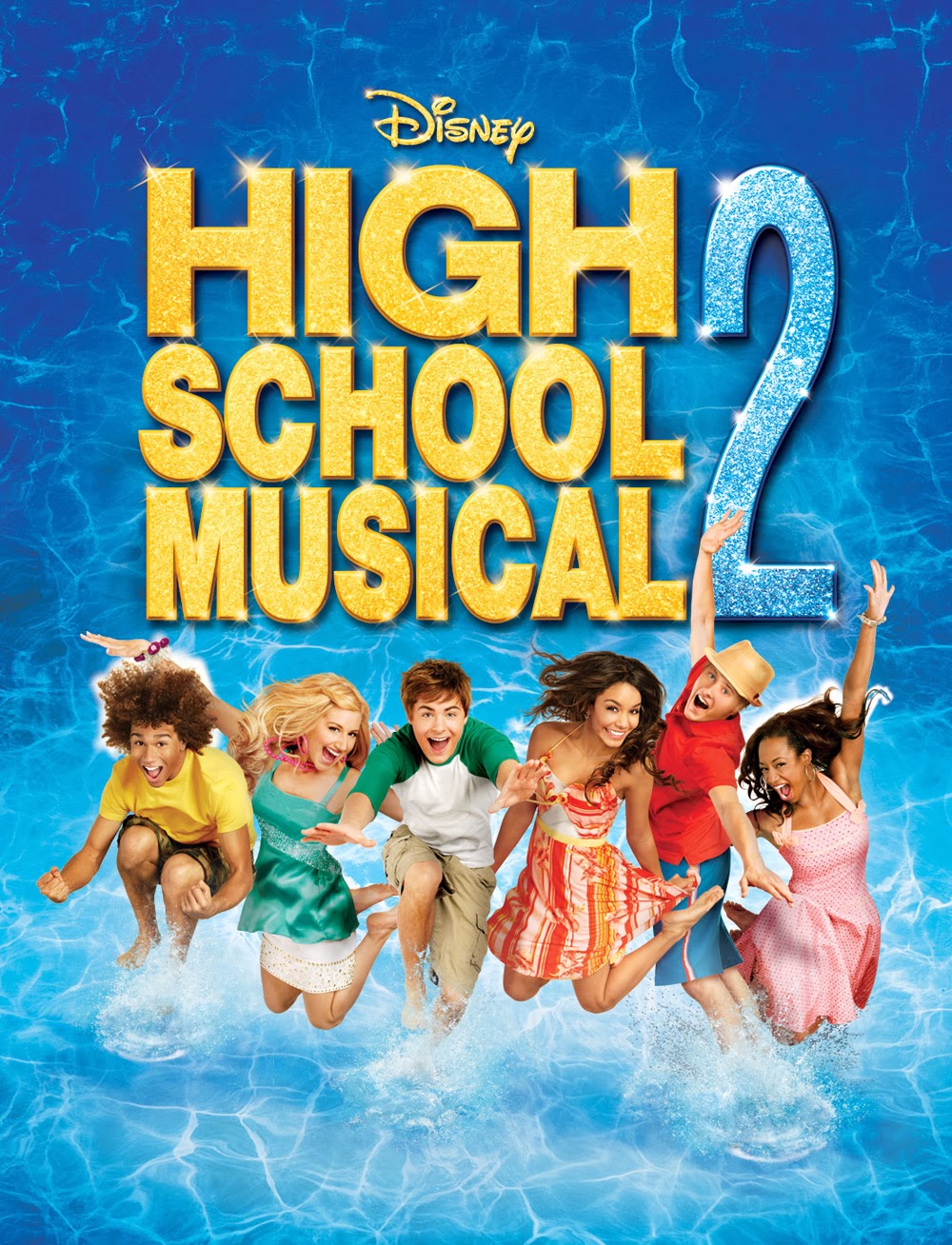
High School Musical 2 (2007) – It’s quite surprising that I never formally reviewed this film, as it’s my personal favorite in the trilogy.  The summer after High School Musical finds the Wildcats working at Lava Springs Country Club; Troy (Zac Efron) and Chad (Corbin Bleu) are on kitchen duty, while Gabriella (Vanessa Hudgens) lifeguards for pampered twins Sharpay (Ashley Tisdale) and Ryan (Lucas Grabeel).  What I like best about this film is the way it deepens the character relationships significant.  Troy and Chad get a trial-by-fire when the former’s future calls, and Ryan gains some self-confidence by stepping out of his sister’s shadow (indeed, Grabeel steals the show with a layered performance).  It’s not that you’re looking at Oscar-caliber performances, but after the first film the crew clearly know the strengths of their cast and play to those strengths, as when Troy and Sharpay get the duet you didn’t know you wanted from the first film.  The songs, too, are catchier, capturing the exuberance of summer vacation balanced by a fear of an uncertain future.  Wisely, Disney keeps the angst at bay, never surrendering the zeitgeisty just-have-fun of the plot and maintaining a high-energy infectious enthusiasm.  If you’re not smiling during Troy’s “Bet on It” number (or, more likely, guffawing at the goofiness), then you’re likely too cool for the room, a resident of Hipster Central, Population: You.  The hallucinatory “Humuhumunukunukuapua’a” alone is worth the price of admission for that weird moment when Disney meets David Lynch.  More of the same, really, from the first film, just bigger and better, setting the stage for the third installment in the trilogy with, finally, a big kiss on the Lava Springs golf course.

That does it for this week’s edition of “Monday at the Movies.”  We’ll see you here next week, but don’t forget to tune in this Friday for the Double-Oh-Seventh of the month with a very special returning star!

Wednesday, August 11, 2010

Charlie St. Cloud (2010)

We interrupt your regularly scheduled Depp Week programming to bring you Charlie St. Cloud, Zac Efron's latest - and lightest - box office outing.

Efron plays the eponymous Charlie, taking off his dancing shoes and donning a winter coat of angst as the troubled teen who blames himself for the car crash that killed his younger brother Sam (Charlie Tahan). Charlie would have died too, were it not for the prayerful intercession of paramedic Florio Ferrente (Ray Liotta), but now that he's alive, Charlie has the unique ability to communicate with ghosts - particularly with Sam, with whom he had promised to practice baseball every day before college. But as Charlie wallows in his grief, working as a caretaker in a graveyard and throwing away his potential, he meets Tess Carroll (Amanda Crew), a spirited sailor who teaches Charlie the meaning of life - and letting go.

Allow me to first begin by saying that there is a very specific type of audience for whom this movie will hold almost unanimous appeal - and I'm not referring to the two old ladies I met this weekend who raved up and down about how "fantastic" and "spectacular" this picture was. For fans of the emotional catharsis, for Lifetime subscribers who can't get enough "life is for the living" morals, for people who just want to see Zac Efron take his shirt off - this movie offers all that in spades. But for more discerning viewers, I think Charlie St. Cloud comes up wanting.

Let me also add by way of preface that this isn't necessarily a bad movie. It's not terrible, but it's just not very good; on a scale of 1 to 10, it's probably a four or a five. The film itself is not very well-made, consisting mostly of fluffy emotions and hints of a story with more potential (potential perhaps lived up to in the Ben Sherwood novel on which the movie is based) than is acted upon. The biggest distraction in the film is Efron himself; I've admitted that I'm a fan of his career, and I think he's on his way to at least B-list stardom. But Charlie St. Cloud as a movie seems determined not to let him advance; for all the emoting and performing that Efron seems willing to do, the film spends far more time on shots that director Burr Steers (of 17 Again fame) must have consciously orchestrated in order to elicit maximum attractiveness out of Efron. There are a myriad of shots such as Charlie walking toward a window as soft light streams from the drapes and brings out the baby blue in his eyes; college students may one day craft a drinking game in which participants imbibe each time Efron takes his shirt off - two shots if the disrobing is not essential to the plot (which is, to say, always).

There are other people in the film, too; chief among them is Amanda Crew, who isn't asked to do very much in the film but who seems like she might be the next Jessica Biel if given the opportunity and a better haircut. Tahan is similarly unchallenging as ghostly Sam, but there's a sense of sibling chemistry between him and Efron which lends their scenes a genuine sense of authenticity and are some of the less improbable scenes in the film. As is often the case, Ray Liotta is criminally underused; though he makes the most of his two scenes in the film, the fact remains that he is only given two scenes in the film - hardly the stuff of a comeback, though he's an able caretaker of the film's "second chances" message, which is hammered repeatedly throughout the movie. Oh, yeah - and Kim Basinger's in here too, though I think the crew forgot about her during production as her character simply disappears with little more than an oblique "She moved" reference.

For a discerning viewer, a lot of the film will come off as very unsubtle. Dialogue consists mostly of characters shouting morals at each other - "Life is for the living!" and "You have to let go!" and "You were given a second chance for a reason!" among them. More notably, there's a plot twist borrowed wholesale from The Sixth Sense (no, Zac Efron's not actually dead, so I didn't spoil it... or maybe I did), but it's so blatantly obvious that the textbook foreshadowing barrels through the film like the freight train from Inception. But the most important lesson the film can teach us, it seems, is that Zac Efron has dreamy good looks that will plop ticketholders into seats faster than Dennis Miller can craft a metaphor.

If you've got a craving for eye candy, please see Charlie St. Cloud, if only to send a message that we're done with this whole Twilight business. Discerning moviegoers? You can still catch that Inception matinee.
Charlie St. Cloud is rated PG-13 "for language including some sexual references, an intense accident scene and some sensuality." I actually thought the innuendo was pretty tame, though parents might not like the "romantic interlude in a graveyard" scene, in which nothing but shadowplay is seen. The accident scene is startling but in a way that's been done to death; some mild blood accompanies this and another accident scene.

Stay tuned, folks, because your regularly scheduled programming for Depp Week continues next on The Cinema King as we go south of the border for Once Upon a Time in Mexico.

Thursday, July 2, 2009

They're All Wearing Red!: A Marxist Reading of High School Musical 2 (2007)

(This article has been seen in several forms over the years since its inception, so I present here a unified and re-conceived version of the Marxism argument.)

In preparation for a segment on my radio show, I had an opportunity to revisit High School Musical 2 and was struck by a few things - the overt sexual tension between the lines, the certain braveness behind wearing an argyle cap, and (of most importance to this article) the less than subtle Marxist influences. That this is a highly Marxist narrative shouldn't come as too much of a surprise; Newsies was nothing less than socialist propaganda, but that's not for here.

Essentially the film depicts the struggle between the bourgeoisie - represented by the Evans family and their country club 'means of production' - and the proletariat - as represented by the working-stiff Wildcats. That the Evanses are the upper class almost goes without saying; Sharpay and Ryan are the elitist of the elite, possessing flashy clothes and flashier cars. The Evans parents are no different as the holders of the means of production; Daddy's first appearance finds him landing on a golf course in a helicopter, bragging about having "built the course *and* hold(ing) the record," while Mom splits her time between yoga lessons and guacamole face wraps. As for controlling the means of production, Sharpay and her parents are in full control of the hiring and firing of the Wildcats working this summer, free to decide the fates of the working class on a whim.

The Wildcats, then, are the incontrovertible proletariat, working for a living. Yet the work experience is not as glorious as they may have anticipated. Before joining the working class, the Wildcats are free: Troy and Chad practice hoops, Gabriella has an array of self-improvement activities on the docket, and Kelsi is free to "grow, write music, grow." Once the proles join the workforce, things are ignominious. "How did we get from the top of the world to the bottom of the heap?" asks Chad in a crushing moment of class oppression. The work experience is hell, riddled with "rags instead of riches / and all these dirty dishes" and near-abductions to trippy musical numbers where the workers are captive to Sharpay's twisted imagination. Fulton attempts to persuade as many of them to quit as possible, at the behest of Sharpay.

Troy is the focal point through which Sharpay's oppression is channeled. Sharpay "has more moves than an octopus in a wrestling match," and she wraps her tentacles around the proletariat in a struggle to oppress. In an attempt to control Troy - her interests are decidedly not romantic - Sharpay is willing to press her stiletto heel firmly on the throat of the proletariat. And step she does; Sharpay tries to keep the staff and working class from participating in the Star Dazzle talent show by forcing them to labor in the kitchens as servants to the snobs who will attend the show.

Enter Ryan Evans, slowly coming around to the plight of the working class. Ryan, over the course of the second film, becomes marginalized by his sister's attempts to seduce Troy (it might be best to ignore Freudian suggestions of jealousy for this article, at least). Abandoned, Ryan sells his tiki warrior costume on the internet and so shirks the garishly sequined pizazz of the bourgeoisie. Now alone, a social outcast - shunned by his sister and eschewed by the proles who see him only as "Sharpay's poodle" - Ryan fortuitously comes across Gabriella and Taylor (the workers) in a golf cart. He dejectedly tells them he wasn't invited to the staff (worker) baseball game, but Gabriella bubbly declares, "Everyone's invited!" "We're all in this together" here begins to take on a socialist meaning. What exactly are we all in together? Answer: Opposition to - and revolution against - the tyranny of the bourgeoisie.

Slowly a class revolution is building. Ryan teaches the Wildcats a new dance number for use in the talent show (this is, of course, before Sharpay sabotages the show) and trains them to beat the upper class at their own game. The upper class is Sharpay here, certainly, but the upper class is also represented by Tina's "tap dancing epic" and her "tippity tappity toes," as well as a dismal sock puppet act. The bourgeoisie come off talentless, excepting of course Sharpay's acts, which always seem to be superlatively entertaining.

The ultimate class upheaval and demolition of the proletariat-betrayal propagated by Troy comes when he refuses to participate in Sharpay's 'duet.' Appearing in average casual wear - and not the bedazzling number worn by Sharpay - Troy highlights the class disparity between them, suggesting that such a match would not work and deciding that his "place is washing dishes" with the workers. Sharpay is devastated, and her act crumbles. The happily ever after ending comes when caddy Troy and lifeguard Gabriella are reunited in the song "Everyday," a celebration of the novel experience and of the workers who band together, arm in arm, to sing the chorus.

The film's final number, "All for One," is the pinnacle of class revolution; the club pool, limited only to the members of this creme-de-la-creme elitist country club, now bears a sign "Staff Pool Party - All In!" The Wildcats finally get to have their day in the sun, languishing not in the kitchen but living it up in lounge chairs. "Everybody jump in!" the song croons, "Everybody, one for all / And all for one!" The upper class club members are nowhere in sight; the proletariat has taken over the country club. Even the bourgeoisie Sharpay has come over to the side of the working class. There are no thoughts of making money or of class distinction; this is a worker's paradise. The means of production are controlled, the bourgeoisie is eradicated or assimiliated, and the workers rule the day.

A reasonable objection to this point has been raised: this is a proletariat pool party, not a proletariat pool. A temporary suspension of power does not a revolution make. This is a valid argument, one that I find difficult to counter. However, I do not feel that ownership of the swimming pool compromises my overall reading of the film as a Marxist critique of society. The pool party, though not a complete overthrow of the social system, still represents a significant overhaul of the status quo (which the first film has already taught us to reject). The staff, previously banned outright from the pool, now has some freedom to use the pool - exclusively so, with nary a bourgeoisie (save the Evans, who have already joined the proletariat revolution). The workers of the world - or at least Albuquerque - have united, but the full revolution is still imminent. Perhaps in a future film? With the support of the Evans twins and the power gained from the demi-coup of the second film, the future seems bright.

After all, "we're all in this together."

Thursday, June 25, 2009

High School Musical 3: Senior Year (2008)

When it comes to the subject of High School Musical 3: Senior Year, I have two confessions.

First confession: I saw this movie of my own volition. I wasn’t dragged, and I wasn’t sitting in the fourth row for any reasons but my own.

Second confession: I actually liked HSM 3 (to use ‘Wildcat’ shorthand).Coming from a guy whose favorite movie of all time is Christopher Nolan’s The Dark Knight (followed closely by Martin Scorsese’s The Departed), that may come as a bit of a shock. So I suppose a third confession is in order: I’m actually a fan of the franchise.

True, I don’t have posters of Zac Efron on my wall, nor do I own a single pink cap, but I do own the first movie on DVD, and I even know what a jazz square is.

Maybe I’m a little biased, then. But where the first two installments of the franchise were fluffy teeny-bopper schmaltz-fests, Senior Year is actually a movie in its own right.
Efron leads the ensemble cast (with six leads and scads of supporting characters) as the Wildcats are chugging through those last days of high school. There’s no senioritis here; Troy, Gabriella (Vanessa Hudgens), Sharpay (Ashley Tisdale) and Ryan (Lucas Grabeel, still my favorite) are all scrambling to stage their last musical at East High, a chronicle of their own experiences as they head off to college. Throw prom and separation anxiety - Gabriella’s moving to Stanford, exactly 1,053 miles away from her doe-eyed boyfriend - and three new sophomores into the mix, and you’ve got a $42 million opening weekend.

If the first two movies had catchy songs (who didn’t find themselves ready to “Bop to the Top” or ask “What Time Is It?” in the first two?), Senior Year plays the music to the hilt. I could walk through each of the film’s 12 musical sequences (two more than usual), but there’s really not a dud in the bunch.

“Now or Never” is a fun race against the clock as Troy and the basketball team have only 16 minutes to win a state championship. “I Want It All” will have you humming along as Sharpay and Ryan dream of star status. And “Just Wanna Be with You” is perhaps the most moving piece of the whole film, powerful in its simplicity.

Then there’s “Senior Year Spring Musical” itself, an eight minute track which features reprises of many of the movie’s most memorable tracks. This is unquestionably the best scene in the movie, in which all the characters get to shine, even the ridiculous show-off Jimmy “The Rocket” (newcomer Matt Prokop).

‘Ridiculous’ is probably a word I should use more frequently, both in relation to the movie itself and my enjoyment of it. Try to keep a straight face when Troy dances it out during “Scream” or when he and his best friend Chad inexplicably turn into little kids during “The Boys Are Back.”

Though the music is top notch here, catchy without being overtly bubblegum-ish, the acting isn’t slouching, either. Admittedly, the caliber of acting in a Disney movie isn’t something to analyze too closely, but there’s no question these six have graduated near-legitimacy. Grabeel’s got a part in Milk, the Sean Penn biopic of Harvey Milk, and Efron’s fronting a Footloose remake in 2010. [Alas, this has changed since I wrote this review. It seems Efron doppleganger Chace Crawford is now going to cut footloose.]

Here, the actors feel comfortable in their roles. Efron is all too believable as the confused Troy Bolton, torn between the basketball court and the stage. Hudgens will break your heart as she copes with leaving East High, and Tisdale is delightful as scheming queen bee Sharpay. Even Corbin Bleu fits perfectly as Chad, whose principal preoccupation is finding the perfect way to ask Taylor (Monique Coleman) to the prom.

I’m not a fan of the three newcomers - the aforementioned Jimmy “Rocketman” Zara, Tiara Gold (Jemma McKenzie-Brown) and Donny Dion (Justin Martin). I can understand Disney’s desire to spin these three off into a new trilogy, but it’s tough to get behind any of them. Instead of being interesting new characters, they seem only to be younger versions of Troy, Sharpay and Chad. Tiara is perhaps the worst offender, frustratingly uninspired and with little to no singing ability at all.

HSM 3 won’t win any awards - or hearts, for that matter - but I feel fairly confident I got my money’s worth here, an assertion I wouldn’t make for its box office competition, Saw V. In terms of pure (both unadulterated and innocent) fun, though, it’s difficult not to empathize with the movie’s cast. They’re clearly having a blast with this one.

I did, too.
High School Musical 3: Senior Year is rated G for being so gosh darn wholesome.

Monday, July 14, 2008

Trailer Park: High School Musical 3: Senior Year (2008)

The Dark Knight aside (and a legion of readers rejoice at the start of something new on this blog), if there's one other movie coming out this year that gets me into the theaters, this is probably it. But the trailer's not helping the case, because it seems like some of the magic is gone.

Note the hackneyed heartbeat accompanying a black screen and flashes of familiar locations, right up to the "This will get them excited" shot of the #14 jersey. Then we have a brief exchange that, upon further consideration, doesn't really make sense. What do you mean, Troy, when you ponder whether or not you'll be getting diplomas? Are you in danger of failing geometry (I thought Ryan might be held back because of his presumed illiteracy), or is this an inside joke about how Disney won't let you graduate?

Then quick flashes of the whole principal cast just to remind you which end is up. There's something about the aesthetics here that seems... off. The video seems slightly blurry, lacking some of the pristine color hemorrhaging the first two movies bore. Plus there's something squeakier about Ashley Tisdale's voice. Maybe it's the nose job or maybe it's a poor quality recording, but my ears are pretty good at discerning little differences and my Spidey Sense is definitely tingling here.

Plus there's a lot in this trailer that's laughable. Prom never looked so organized, despite the somewhat raunchy and too-PG-for-Disney-Channel dance moves sported by Ms. Hudgens. And what's up with the Troy/Chad duet... in a junkyard?! Then there's the embarassingly corny moment where Troy needs to make the game shot, and all he can see is his girlfriend in the stands, singing to him that she believes in him. I haven't seen this much camp since a certain Adam West donned a certain Batsuit in a certain decade.

I do, however, like what they've done with Sharpay. It seems they're moving away from making her the villain again and having her just be more of a self-absorbed senior ninny with a pretty dress on the brain. And her brother's taking a backseat again. Marvelous.

Then again, Jeff Garlin once said that there's no point in reviewing movies like The Dukes of Hazzard because "Of course it's going to be bad! It's The Dukes of Hazzard! If you like this kind of thing, you'll like the movie!" So I suppose the same is true here; I enjoyed the first two, and I'll probably have just as good a time with this one.

Then again, I'm getting too old for this sort of thing.

Tuesday, July 1, 2008

Hairspray (2007)

At the risk of sounding horribly dull and cliched, remakes are a tricky subject. A lot of people don't like talking about them. To be fair, we've had two great remakes - John Huston's 1941 film noir masterpiece The Maltese Falcon (a remake of two previous adaptations of Dashiell Hammett's eponymous novel) and Scorsese's 2006 Oscar-winning epic The Departed (a remake of Hong Kong mob story Infernal Affairs).

But for every good remake, we get thirty like Gus Van Sant's Psycho or The Ladykillers (from the Coen Bros. slump of the early 2000s) or - God forgive me for even invoking this film's name - Steve Martin's The Pink Panther. And lest we forget, Nic Cage's version of The Wicker Man, unintentionally hysterical with lines like "Step away from the bike!" and "HOW'D IT GET BURNED?!", was a remake of a British suspense/horror film with Christopher Lee (automatically superior by default).

So you can understand why I typically roll my eyes when word of a remake whispers around IMDb - case in point, the pointless Keanu Reeves starring in a pointless remake of The Day The Earth Stood Still. I get even more skeptical when a film purports itself to be a remake of an obscure 80s movie from a midnight movie director with a strong cult following and no possible way of being family friendly.

Then a movie called Hairspray comes along and completely reinvents my concept of what a remake should be. Though technically a second-degree remake (being a filmed version of the Broadway musical based on John Waters's original 1988 film), Adam Shankman's Hairspray is, in my opinion, the third best film of 2007 (landing behind There Will Be Blood and Sweeney Todd: The Demon Barber of Fleet Street).

And, as it turns out, the difference between second and third place is one dud song; where Sweeney had no songs worth fast-forwarding, Hairspray sadly has one right in the middle of the movie. So, since it's a musical and since I fear becoming formulaic, I'll walk through the plot synopsis song by song. "Good Morning Baltimore," a peppy number about the power of dreams and the need to follow them (lest, as Cherry Darling informed us in Planet Terror, "dreams become the thing you talk about instead of the thing you do"), introduces us to pleasantly plump Tracy Turnblad, played to bubbly perfection by newcomer Nikki Blonsky (who seems thus far to have been a one trick pony). Then it's time to meet "The Nicest Kids in Town," the twenty dancers on the Corny Collins Show, a TV dance program hosted by exaggeratedly swanky yet slightly exasperated host Corny Collins (James Marsden). Among the Kids are lead dancer Amber (Brittany Snow, who takes the catty blonde cliche and plays it to the hilt) and top heartthrob Link (Zac Efron, finally getting a chance to spread his wings away from the Mouse).
When Corny announces that Nicest Kid Brenda is taking a leave for "Just nine months," Tracy sees her chance and auditions for the show. But she comes up against Amber's stage-mom matriarch Velma (a delightfully wicked Michelle Pfeiffer), "Miss Baltimore Crabs," who's determined to keep anyone who's different off the show (sensing the message yet?). Later, Tracy's sent to detention, a paradise of dancing and diversity where the races mix and groove - and where Tracy finally meets Link and falls in love. "I Can Hear the Bells" - can you? Finally the "Ladies Choice" gets a song all to himself, giving Efron the opportunity for his vocals to shine and giving Tracy the opportunity to have her dance moves seen.

To the delight of best friend Penny (Amanda Bynes, who [it seems] can actually act!) and Tracy's parents Wilbur (Christopher Walken, a caricature of himself but a lovable one) Edna (John Travolta, who with a Baltimore accent and a LOT of makeup actually passes as slightly feminine), Tracy snags a spot on the Corny Collins Show, to the predicted chagrin of Velma and Amber who both loathe "The New Girl in Town." They also hate Negro Day, Corny's monthly episode featuring African-American dancers and crooners led by Motormouth Maybelle (Queen Latifah) and her son Seaweed (Elijah Kelley, whose talent and resemblance to Sammy Davis Jr. ought to land him a spot in a biopic).

Tracy has hit the big time, even scoring a spokesgirl spot for Mr. Pinky (a marvelous cameo from Jerry Stiller, who played Wilbur in the original movie) during "Welcome to the 60s," in which Edna gets her makeover. In terms of pure fun, it's tough to beat "Run and Tell That," Seaweed's ode to being different. Even Maybelle's "Big, Blonde, and Beautiful" is sweet as chocolate cake, which Maybelle and Edna ingest in mass quantities to make the Coneheads blush. A reprise of "BB&B" features Velma attempting (hysterically fruitlessly) to seduce Wilbur, while Edna gets dolled up for her man, who she catches in an apparently compromising position with Velma. The two women collide, and Edna forces Wilbur to move out.
Wilbur atones with Edna in a catchy duet of romance, "You're Timeless to Me," which couples dated references to the Sixties with slightly insulting professions of love ("You're like a fatal disease, babe / But there's no cure / So let this fever rage"). Then comes the aforementioned dud, "I Know Where I've Been," Maybelle's message of racial integration no matter the price, layered over a march on the racist practices of Velma's station WYZT.

But the best number comes after the protest march, when Tracy is imprisoned in Penny's basement awaiting a trip to "the big house," when Penny is similarly tethered to her bed via jump rope, while Link waits for Tracy to come home, and while Seaweed aims "to rescue the fair maiden" Penny - it's "Without Love," by far the standout song in terms of vocals, lyrics, even direction a la Shankman. The rest would be criminal for me to describe in any detail (even Corny's last number, "Hairspray," is a barrel of fun), but suffice it to say that Tracy succeeds in teaching the whole world that - no matter what repression society places - "You Can't Stop The Beat."

I didn't say much about the perfect casting choices made in this movie, because the real star of the film is the music, including a few new numbers by the songwriting team of Wittman & Shaiman, such as the end credits tune "Come So Far (Got So Far to Go)" which will make you sit through the entire credit sequence, something I hardly ever do. But the cast is perfect, too; from Bynes to Walken, from Snow to Marsden, it's impossible to find someone who isn't spot-on for their specific role. Even Paul Dooley, in a small role as Ultra-Clutch Hairspray's exec, simmers with frustration at "that chubby communist" Tracy. The film is also addicting; it's one of those works that whenever it's on cable I can't resist turning it on just to see where they're at - and then stay until the end.

The dialogue (and occasionally lyrics) is hilarious, allowing the anti-racism medicine to go down with more than a spoonful of sugar. A great deal of the laughs come from the impeccable delivery of campy lines such as "Plastic little spastic" or "I am now a checkerboard chick!" (both delivered by Bynes, a real comedic talent whose roles here and in She's the Man tell me she needs the right vehicle to shine) The problem with Waters's original is the deliberate pandering to an audience seeking camp; as Edna, Divine seemed awkwardly masculine while trying to hard, and the original ending featured a roach bomb in one character's beehive do. This new interpretation of the story is effortless, intentionally yet subtly cheesy without calling attention to itself.

If I had a complaint, it's that two of the stage production's songs, "Mama, I'm a Big Girl Now" and "Cooties," have been cut - the former a foot-stomping temper tantrum shared by Amber, Penny, and Tracy at their overbearing mothers, and the latter serving as Amber's "talent portion" at the Miss Teenage Hairspray Spectactular. Maybe I'm just a Brittany Snow fan (and I have been since her turn as white supremacist Ariel on Nip/Tuck) who wanted to see more of her in the movie, but it seems these two songs might have made up for "I Know Where I've Been" (which really could have been cut). Sure, it'd give the film an almost 2.5 hour runtime, but I'm asking more from Zack Snyder in his Watchmen adaptation. Come on, Shankman; it's not too late to film these scenes and put them in a director's cut! (Versions of the songs appear in the end credits, but they're somehow not as charming without accompanying visuals.)

At one point, Link tells Edna that he was "just at home, practicing my new twist on the twist." All too often, "new twists" don't go over so well; Catwoman, anyone? Thank heavens this movie does so well at polishing a somewhat slipshod original production into a Top Five movie.

Saturday, May 31, 2008

High School Musical (2006)

When director Kenny Ortega and crew decided to open High School Musical with a song entitled "Start of Something New," I don't think they knew how prophetic their words would be.

High School Musical is at the center of a Disney hypestorm the likes of which only Jack Sparrow has rivaled. And with the third installment in the widely popular series due out in October (and this being one of the films that I remember well enough to not have to re-view it before reviewing it), it seems an opportune moment to take a critical look at the Wildcat phenomenon. [For reasons of space, fluidity, and focus, I'll only examine the first film for now and take up the second one later. When I see the third film, Senior Year, I'll let you know what I think.]

I've argued that High School Musical (HSM for short) is basically a Disney-fied retread of Shakespeare's great tragedy Romeo and Juliet, so let me briefly explicate that one for anybody who hasn't heard my argument already. [The following is an excerpt from a critical writing of mine which examined the ways in which teen comedies modernize Shakespeare. The other two films under consideration, 10 Things I Hate About You and She's the Man, will probably be reviewed here later.]

Of the three, then, High School Musical is the most difficult to establish a line to Shakespeare. High School Musical is “loosely based on William Shakespeare's Romeo and Juliet and featuring a high school jock and a science nerd as star-cross'd lovers” (from the Sunday Territorian's 2/18/07 article “Tweens love School”). Specifically, High School Musical turns the basketball (and its star player Troy) and scholastic decathlon (and its star, Gabriella) teams into Montagues and Capulets, “[t]wo households, both alike in dignity,” attempting to prevent the “star-crossed lovers” from joining in the winter musicale (from Romeo and Juliet, 1.1.1, 6). Unlike the other two films under consideration, High School Musical dramatically alters the ending of its source material, by replacing Shakespeare’s double-suicide ending with a peppy song-and-dance number, “We’re All in This Together” (HSM). Where Shakespeare cautions about the problems inherent in bad blood, High School Musical offers a view of all the positives to be gleaned from working together to accomplish one goal. That Disney’s High School Musical soft-soaps Shakespeare’s original ending is no surprise; after all, this same studio, as Tony Howard notes, commercialized “Hamlet into The Lion King and politically corrected The Tempest in Pocahontas” (Howard 318, from Howard's “Shakespeare’s cinematic offshoots,” published in The Cambridge Companion to Shakespeare on Film, with editor Russell Jackson. Cambridge: Cambridge University Press, 2007).

Longest paragraph on this blog? Probably. Most scholarly/erudite? Definitely. Most well thought-out? Certainly.

By way of further plot summary, hunky basketball star Troy (Zac Efron, for whom we have this movie to thank) and geeky but still attractive brain child Gabriella (Vanessa Hudgens, a lass I have to commend for her scandal-rebound) meet by chance on Christmas vacation and sing a duet together. When it turns out that Gabriella and Troy go to the same high school, they decide to audition for the "winter musicale," Twinkle Towne. They land a callback - much to the chagrin of resident diva Sharpay (the laudable Ashley Tisdale) and her twin brother Ryan (Lucas Grabeel, who gets his chance to shine in the sequel). Singing, dancing, and - believe it or not - sabotage ensue as the school conspires to keep Troy and Gabriella from being together.

It's pretty much no secret that I'm a fan of this movie, but I didn't start this way. It took about three viewings before it grew on me. The first time I saw it, I watched it to find out what all the hubbub was about but gave up before the third song - a pity, since that's now one of my favorites - saying, "This is stupid. A bunch of kids running around singing. Lame, Disney, lame." The second time, I watched it with my grandmother as a sort of joke, mock singing a few of the songs afterwards.

Something happened in between the second and third viewing - perhaps the trip to Disney World, where I'm convinced there's something in the water - that the movie began to grow on me. It's infectiously fun, with catchy tunes and endearing characters. It's no secret why the under-20 crowd are getting hooked on HSM, but I think it's just as much fun for the over-20s as well. Heck, I'm over 20, and I still enjoy putting this movie in or catching it on cable. And I'd be lying if I said that these actors aren't any good in other roles (see Hairspray to watch Efron really blossom, or... well, that's about it for anyone else.)

The film hits a few sour notes which impede my viewing, but perhaps these are just my hang-ups. 1) I've studied this film in perhaps too much depth, so it's a challenge to enjoy it without overanalyzing it. 2) Efron doesn't do his own singing (Drew Seeley, a more trained vocalist, fills in), and it's a noticeable difference that I'm glad the sequel rectified. 3) The "villains" of the piece, the Evans twins, are in my mind more likeable than our protagonists. Their songs are catchier, their scenes are funnier, and for my money they're just prettier people. Shallow? Perhaps.

That being said, I don't want to be too positive at the risk of sounding like a starstruck tweeny-bopper. Oh, what the heck. The Mouse knows how to make a good movie. I credit the one-two punch of Jack Sparrow/Zac Efron (with a lot of Hannah Montana thrown in for good measure and great money) with saving Disney from a lackluster stock report, but there's something to be said for the good clean family fun that all three provide.

Before this review gets too much longer, I should point out that this is by no stretch of the imagination a perfect movie or even a great movie on the par of The Departed (also from 2006) or Casablanca. It is, however, a lot of fun and a great way to just let go for 90 minutes.

Just don't be surprised if you continue to "Bop to the Top" (by far the catchiest tune in the whole show) long after you've seen the movie.