Sunday, July 4, 2010

Iron Man (2008)

There are two kinds of comic books movies - the good and the bad. Within the division of "good" exist two subdivisions - the light-hearted and the heavy. Where The Dark Knight represents the pinnacle of what the heavy can accomplish in terms of cinematic excellence, Iron Man (released in the same year) is the finest example of a comic book movie high on thrills and - perhaps more importantly - unabashed fun.

Robert Downey, Jr. stars as weapons innovator Tony Stark, who's just debuted his new missile-within-a-missile project, the Jericho. After demo'ing the Jericho for armed forces contact James Rhodes (Terrence Howard), Stark is kidnapped by terrorists who demand that he build them a Jericho. Stark manages to turn the tables on his captors, creating a suit of forged iron in which he effects his escape. After returning to the States and much to the chagrin of business partner Obadiah Stane (Jeff Bridges), Tony Stark begins to rebuild his legacy by stripping his company of its weapons manufacturing arm and by suiting up to fight the bad guys as Iron Man.

Iron Man is an important entry in the comic book movie genre because it reminds us that comic book movies can be fun without being campy. Bye-bye, market pandering of Batman and Robin; au revoir, angst of Ang Lee's Hulk. Here's a movie whose director - and consequently its protagonist - is chiefly interested in high-flying fun and in turning out a high-quality superhero flick grounded in good spirits and verisimilitude. It's difficult not to feel a swell of breathtaking ecstasy while watching Iron Man swoop through the skies, and it's downright impossible to remain coolheaded while watching the scene in which Iron Man destroys a tank while simultaneously validating the "cool guys don't look at explosions" trope; it's a scene whose very purpose seems to be to elicit a "Wow, that's awesome" reaction - which it does.

And if anyone can watch this movie and remain stoic and humorless while watching RDJ's performance as Tony Stark - a role he was, essentially, born to play - is a soulless, lifeless zombie. RDJ wears the character like a second skin, completely comfortable as the character and yet entirely believable as a real person. We're introduced to the character first as a fun-loving wisecracker whose life turns topsy-turvy before the AC/DC guitar solo can end, but quickly we get a sense of the facets beneath the witty exterior - the son in his father's shadow, the inventor with the guilty conscience, the objectivist profiteer with a heart of gold. All of these suits RDJ wears with coolly composed sangfroid, a convincing performance that's among the most compelling in any comic book movie - or, indeed, in any film of 2008, right up there with Heath Ledger's Joker and Brad Pitt's Chad Feldheimer. The other performers are good, too; Bridges is pitch-perfect as Stane, the ostensible villain of the piece, and Howard is such a fantastic foil to RDJ that one very nearly regrets the sequel's decision to replace him with Don Cheadle. But this is unquestionably RDJ's show, and he more than rises to the occasion.

A few disconnected thoughts: The special effects are dazzling, fun in a way that might be surprising for viewers expecting run-of-the-mill men-in-metal-suits-whaling-on-each-other action scenes. The glossy sheen on Stark's Iron Man suit is dazzling, lending a preternatural twinkle to his action scenes, and the combat is punctuated with bits of physical humor that prevents a disconnect from forming between man and mask. Also present are the Randian echoes that critics have noted; a particularly salient moment comes when Stark is told, "You really think that just because you have an idea, it belongs to you?" And while I haven't heretofore read any Iron Man comics (I know, shame; I have an unread Masterworks on my bedroom floor, though), I can't imagine the film being any bit inaccurate as far as the hero's spirit is concerned.

If I could give Iron Man a more glowing review, I would. Suffice it to say that this is a phenomenal picture, at once an acccomplishment on celluloid and an exhilarating breeze of a picture - in total, the perfect summer blockbuster.
Iron Man is rated PG-13 "for some intense sequences of sci-fi action and violence, and brief suggestive content." A few quick shots of bloody violence occur, but most of the violence is directed at a metal battlesuit, which scuffs and chips but never totally breaks. Mild flirting occurs between RDJ and pretty much every female character in the film, a few of whom wake up in his bed the next morning without showing more than bare shoulders.

Tuesday, June 29, 2010

Superman II: The Richard Donner Cut (1980/2006)

The vote is in: I like Richard Donner's version better.

In several important ways, this will be less review and more analysis, comparative in a way that most every review on this blog is not. The film under inspection is Superman II, originally released in 1980 as directed by Richard Lester but re-released in 2006 as directed by Richard Donner. Having been fired from Superman II, Donner had already filmed most of his rendition of Superman II, initially intending both the first and the second films be shot simultaneously; after the studios vetoed this idea, Donner - with 75% or so of the sequel in the can already - halted his Superman II until 2006, when he finally edited his cut together.

Superman II: The Richard Donner Cut is, in broad strokes, very similar to Lester's Superman II. The overall plot is the same: Superman (Christopher Reeve) fends off a Kryptonian criminal invasion led by General Zod (Terence Stamp) in alliance with Lex Luthor (Gene Hackman) while dodging the suspicions of Lois Lane (Margot Kidder) that Clark Kent and Superman are one and the same. It's in the details that the two versions differ, and as the saying goes, the devil is in the details. I'm most pleased to say that all the things to which I objected in the Lester version are excised from Donner's cut, although Donner's version isn't entirely polished, leading to some distracting problems with the ending (which, inevitably, I'll have to spoil).

My aim here isn't to simply compare and contrast, to pick apart what's new and different between versions. Better reviewers than myself have had four years to do just that; for one, see DVD Verdict, who did a pretty good comparison job. Instead, my aim here is to look at the (in my eyes) most significant changes and whether or not they enrich the film. For starters, my favorite line - "Superman, thank God" - is untouched (and indeed plays out funnier, for reasons to be discussed below), so score one for Donner.

The Donner cut opens with Jor-El (Marlon Brando) sentencing Zod, Ursa, and Non to the Phantom Zone. This scene was added into the DVD version of Superman: The Movie, so it's nothing new in this reviewer's eyes; indeed, it's even a little distracting to see the same scene replayed again. But I fully understand and appreciate the Donner cut's aims in reinstating this scene: it clearly and finely restores Jor-El to the plot of Superman II, making more apparent the "son becomes the father" parallel I noted in the Lester cut. It also underscores a larger role for Jor-El to play, a role fulfilled by Superman's mother Lara (Susannah York) in the Lester cut in order to avoid paying Brando the exorbitant fees he commanded; bringing Jor-El back into the story creates a deeper connection with the first film and introduces a more compelling dynamic than the one with Lara. Donner leading Lester, 2-0.

I praised Lester's treatment of the growing dynamic between Clark and Lois, but Donner takes the advantage here for doing a better job with it. Donner's cut more subtly highlights Lois's growing suspicions, replacing the Parisian terrorist scene with a more successful scene at the Daily Planet, which introduces both Lois's cause for suspicion and the honeymoon racket expose; instead of throwing herself into Niagara Falls, Lois instead leaps from the Daily Planet offices. And instead of Clark clumsily tripping into the fireplace, Lois takes a more proactive approach, which would be criminal to spoil since it's undoubtedly the best "new" scene in the Donner cut. 3-0 now.

Donner's cut explains a lot of problematic plot holes in Lester's rendition, chief among them the connection between Lex Luthor and the Kryptonians, as well as the restoration of Superman's powers (which I thought was more a problem of audience members not interpreting correctly, but oh well). Here, when Lex breaks into the Fortress of Solitude with Miss Teschmacher, he's treated to a crystal projection of Jor-El explaining his role in Zod's imprisonment. By explaining the plot to Lex and by Hackman's perfect portrayal, it's apparent why Luthor feels he can reason with Zod & Co.; more importantly, this new scene explains how Lex knows that Superman is Kal-El, a fact that's not apparent in the Lester cut. Later, the restoration of Superman's powers is accomplished through a great scene between Brando and Reeve, who play off each other very well. It's a scene that cements Jor-El's compassion for his son, and the sad resignation on Brando's face is evidence enough for why Brando was considered one of the best actors of his generation. Donner's 4-love, for those playing the home game.

The greatest thing Richard Donner did for Superman II, however, is his judicious exorcism of all things slapstick from Lester's version of the story. Gone are the silly wind jokes during the battle for Metropolis; left by the wayside is the silly characterization of Non as an inept dullard with no grasp of his powers. Consequently the villains are entirely - finally - threatening, surrounded by only menace and dread, not the lurking suspicion that a gag is just around the corner. In Lester's cut, I got the idea that Zod was exasperated with the fact that he was the only particularly daunting figure in the trio, but in Donner's version I now feel - as Superman must - that all three Kryptonians present a viable threat. That isn't to say that Donner's cut is entirely humorless; rather, the laughs come from all the right places: Luthor's sly attitude, the Clark/Lois relationship, and Reeve's easygoing personality. 5-0 now.

But in the last quarter, Lester scores a point for a better ending. "Hang on," you say, "this is the guy who used cellophane super-shields and multiple Supermen to end his movie?" Well, yeah, and thank God those are gone. Donner's Fortress scenes are overall cleaner and truer to the spirit of Superman, but the actual ending of Superman II: The Richard Donner Cut is unpolished in very distracting ways. This newer version leaves entirely unanswered the fate of Lex Luthor, stranding him in the Fortress of Solitude - which, seconds later, is destroyed by Superman. Huh? And while Donner earns high marks for better handling Lois's conflicted feelings about knowing Clark's secret identity, he loses points for unoriginality. As much as I hated the amnesia kiss, I was even more let down by the way in which the Donner cut handles the problem of Lois knowing: reversing the rotation of the earth and going back in time. This ending worked in the first movie, but here it just feels like Donner ran out of ideas. For a film that feels so much fresher in the new cut, the ending doesn't do the rest of the film justice; as an added detriment, this time-traveling ending problematizes the last scene of the Donner cut, in which Clark returns to a diner to even the score with a burly trucker - which, if time had been undone, shouldn't need to be done if it didn't happen. So in that regard, Lester has the advantage, especially for his patriotic ending in which Superman restores the American flag to the White House. For a man who allegedly didn't understand the character, he sure hit the nail on the head with that one. Final score? 5-1.

So while the Donner cut isn't perfect, it's still leaps and bounds (over a tall building, most likely) better than the more pronounced-ly flawed Lester version. Some are complaining about the rough cut nature of the film; some effects shots are unfinished, and other scenes are drawn from screen tests plagued with continuity issues. But this is an iconic character whose very nature is based on the power of imagination. In the words of DC Comics marketing, "Just imagine." This is the version in which a man truly flies, the version I'll be watching again and again.
Superman II: The Richard Donner Cut is rated PG "for sequences of action violence, some language and brief mild sensuality." In terms of objectionable content, it's exactly identical to the original film, although the removal of comic relief may make the violence seem a little more unrelenting - which isn't a bad thing in my opinion. I doubt that Kryptonian criminals hot out of exile would stop to arm-wrestle a few yokels.

Superman II (1980)

I've always had the impression that Superman II is, with Spider-Man 2 and The Dark Knight, widely (perhaps almost universally) regarded as a comic book sequel that's better than its predecessor. I'm not entirely convinced by that statement, but only because I'm not certain that Superman II exceeds its predecessor. It certainly soars equally as high, but there are a few missteps which seem to be newcomer director Richard Lester's fault (I'll know more after I screen the Richard Donner cut). Don't get me wrong, though; Superman II is nevertheless fantastically compelling.

With Lex Luthor (Gene Hackman) safely behind bars, Superman (Christopher Reeve) is flying high, thwarting Parisian terrorists and saving children at Niagara Falls. His mild-mannered alter ego, reporter Clark Kent, is teamed on a honeymoon racket expose with tough-as-nails Lois Lane (Margot Kidder), who's growing suspicious of Clark's absence every time Superman appears. Meanwhile, a freak accident unleashes three Kryptonian criminals (Terence Stamp, Sarah Douglas, and Jack O'Halloran) from the prison dimension The Phantom Zone; these new foes seek to conquer Earth and take revenge on Superman, the son of their jailer Jor-El. Meanwhile, Superman wrestles with the decision between his superpowers and a mortal life with Lois.

Superman II picks up right where its predecessor left off and so feels more like a natural extension of the first than an actual sequel (where, for contrast's sake, The Empire Strikes Back felt more like a sequel to Star Wars, three years removed both in real time and narrative time). Consequently, much of what I praised about the first film still applies here; the action scenes are still rousing, the performances are still above-board, and the movie is just as fun as the one that kicked off the franchise. As all the best sequels do, Superman II builds upon and deepens material from Superman: The Movie without resting on its laurels and merely repeating more of the same (though I loved it, Iron Man 2 was guilty of this "more of the same" business, although that worked tonally for the movie, which needed only to be more than the first to be successful, which it was). Standout features here are the complex relationship between Clark Kent and Superman; this identity crisis, merely alluded to in the first film, takes one of three rings in this circus, fleshed out by riveting performances by Reeve and Kidder, between whom the chemistry is palpable.

Also developed is a throwaway line by Marlon Brando (who is noticeably missing here) in the first film: "The son becomes the father." Here, Superman is held culpable for his father's role as jailer of Stamp's General Zod and his compatriots Ursa and Non. Superman's acceptance of this responsibility is well-played by Reeve, who lets us see the conflicted nature of this choice. While we're on the subject, major points to Terence Stamp, who's absolutely dynamite as General Zod; Stamp never lets us remember that this is a comic book movie, because Zod is so three-dimensional and real that it's easy to forget his intricate sci-fi backstory. Underneath all his black leather and superpowered trappings, Zod still possesses very human sensibilities - the desire to conquer, the inevitable boredom in an arena without challenge, and a general contempt for lower creatures (which, in Zod's case, is anyone else). Stamp so fully inhabits the character that it's no surprise people are still to this day quoting his trademark "Kneel before Zod!" to the point where his current comics counterpart invokes the slogan every so often. Douglas and O'Halloran are serviceable but ultimately little more than window dressing to accentuate the degree to which Superman is outmatched.

As for the human villain, Hackman returns as Lex Luthor and does an even better job than he did before; in Superman: The Movie, Lex was fairly one-note - brilliant but disdainful of others - where here he gets a new dimension. With only his great criminal mind at his disposal after a quick jailbreak, Lex allies himself with the Kryptonian supercriminals in a bid for conquest and the destruction of mutual enemy Superman; this plan is a fairly poor one, though, and it's fascinatingly fun to watch Hackman struggle to play both sides against each other while ensuring that he's friends with the winner when the dust settles. Hackman gets bonus points for delivering my favorite line of the film - a simple "Superman, thank God," which he imbues with a mix of relieved desperation and pitch-perfect comedic timing. Other humans include Kidder, who takes her game to the next level, making Lois's burgeoning suspicions about Clark feel natural and not forced; comics readers wondered for decades why Lois couldn't figure it out, and Kidder reminds us why - the character is so razor-sharp that her discovery was inevitable, and if anyone could bring that intellect to life, it's Margot Kidder.

All this has been in praise of Superman II, but the film isn't entirely golden. Like its hero when exposed to Kryptonite, the film stumbles in a few places, and I'm inclined to blame director Richard Lester for these boo-boos. First and most apparent is the introduction of several unconventional and/or entirely unprecedented new superpowers exhibited by Superman, Zod, and the latter's compatriots. I'm inclined to pardon the film's depiction of Zod, Ursa, and Non as telepathically capable; although as Kryptonians they shouldn't have any powers Superman doesn't, tweaking the source material here isn't a dealbreaking travesty. More problematic, though, is the bevy of abilities Superman exhibits here: teleportation (which, if a Google search is any indication, is intended to be super-speed, though poorly rendered), self-duplication, cellophane S-shields, and amnesia kisses. It's been alleged that Lester knew nothing about the Superman mythos before joining the production team, and it's not unfathomable based on the outlandish disregard for the commonly accepted Superman mythology (the amnesia kiss was deployed once or twice in throwaway issues of the Silver Age). Other problems include an overreliance on distracting slapstick comedy; while Superman is intended to be a fun character, unburdened with the gravitas that dominates characters like Batman and The Hulk, the humor here borders on distracting, as when Zod deploys super-breath against Metropolis - and a dozen or so visual gags ensue. One or two would have sufficed, but it seems Lester didn't want to waste a single wind joke. Moments like this pepper - or rather, pollute - the film, taking away dramatic importance by shifting focus away from the growing threat of the Kryptonian conquerers and placing the spotlight instead on nitwit sheriffs in Houston or on bumbling bystanders.

None of this, fortunately, is severe enough to damage the movie irreparably. Indeed, their greatest offense in my book is to prevent Superman II from being altogether better than Superman: The Movie. Viewed back to back, these two films are a little like The Godfather and its sequel, The Godfather, Part II in that they're really one experience broken in half, with complementary but not competing qualities. It's difficult to identify a superior picture (between Superman flicks, not Godfather movies), so let's simply concede that both are well constructed depictions of America's greatest icon.
Like its forebearer, Superman II is rated PG, although without an explanatory note. It's on the whole very similar to the first film in terms of violence (that is, bloodlessly cartoonish), although this one introduces a snippet of bare-shouldered cuddling, the implications of which parents may not approve for their children.

Monday, June 28, 2010

Superman: The Movie (1978)

After hearing word that Christopher Nolan is godfathering a reboot of the Superman franchise, it occurred to me that I'd never actually seen the original Superman beginning to end in one sitting. I'd seen Superman II and knew most of the major twists in the first film, but watching it all in one go was a wild experience for me, an avowed comic book fan. Though Batman is still #1 for me, Superman: The Movie (redundant title aside; it's as though I titled this review "Superman: The Movie: The Review," which maybe I should have) is a movie that reminds us all what's iconic about the character - and faithfully and lovingly represents that on the screen.

Summary seems ridiculous here, since everyone knows the origin of Superman, and the origin story is the focal point of Superman: The Movie. The best retelling of Superman's origin came in Grant Morrison's All-Star Superman #1 (Jan. 2006), which I'll reprint here by way of summarizing the first half of Richard Donner's Superman film: "Doomed planet. Desperate scientists. Last hope. Kindly couple." Here, Marlon Brando and Susannah York open the film as Jor-El and Lara, the aforementioned scientists who place their young son Kal-El in a rocketship to escape the dying planet Krypton; Kal-El lands on earth and is adopted by Ma & Pa Kent of Smallville, who name the boy Clark Kent. After Pa dies, Clark (Christopher Reeve) moves to Metropolis, where he becomes a journalist at The Daily Planet under editor Perry White's (Jackie Cooper) wing before falling in love with Lois Lane (Margot Kidder). After making his debut as costumed superhero Superman - replete with flying, invulnerability, and super-strength - he finds himself tousling with his soon-to-be nemesis Lex Luthor (Gene Hackman).

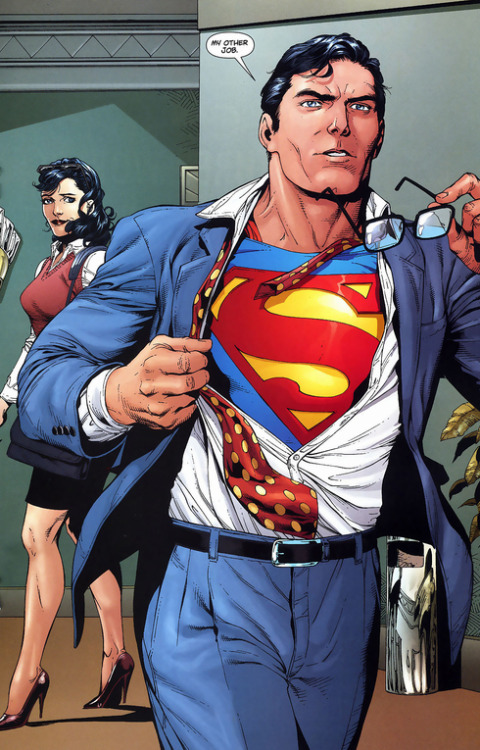
Superman: The Movie is essentially the gold standard for any superhero movie to follow; it establishes solidly the "formula" of the genre, and it does so with fresh-faced aplomb. The film follows Clark Kent through the important phases of his growth as a hero without feeling that Charlie and the Chocolate Factory feeling of "These are the story beats we need to hit, so let's keep moving. Though there's no underlying motivation for heroics - i.e., guilt (Iron Man), vengeance (Batman), thrills (Kick-Ass) - the movie aptly demonstrates that Superman is a hero simply because it's in his nature; he never lies, he believes in the innate goodness of humanity, and he has an unprecedented capacity for compassion. On this count, it's not difficult to see why Reeve is so closely associated with this role, and why artists like Gary Frank still draw the character in Reeve's likeness more than 30 years later (seriously, it's uncanny); Reeve does a first-rate job of embodying the unequivocal good nature of the character, but he also succeeds by leaps and bounds as the klutzy but similarly kind-hearted alter ego Clark Kent, who is in many ways the harder of the two to play. Anyone can don the spandex and be a hero, but any actor who tackles Superman has to also pull off an intentionally putzy performance as Clark Kent; Reeve does both, admirably.

The other performers are in good form, and they deserve mention because several of them (as bigger stars in the day, and perhaps still now) got billing over Reeve (crazy, right?). Surprisingly, Brando doesn't phone it in here, though I was expecting him to since his lines were written on baby Kal-El's diaper as he refused to memorize them; he's surprisingly convincing as Jor-El, with genuine affection for his son and lethargic disdain for the stubborn councilmen of Krypton. Kidder is fantastically funny as Lois Lane, capturing all of the character's comedic sensibilities from her pronounced problems with spelling to her flirtatious interview style. And Hackman is unique here because his Lex Luthor is entirely unlike the source material; he's not quite the bald super-scientist, nor is he the portly capitalist (who, admittedly, appeared in the comics nearly a decade after this film), nor the Superman's-buddy-gone-bad (which, if you ask me, is the only worthwhile contribution Smallville has made to the canon in nine years of television airtime, though even that appeared in comics as early as the 50s). Instead, sporting a bevy of outlandish wigs, he's something else altogether, a cocky would-be super-criminal surrounded by nincompoops (Ned Beatty and Valerie Perrine); he knows that what he's doing is wrong, but he enjoys it too much to develop a conscience - the measure of all good villains. It's not necessarily how evil they are that matters; the ultimate mark is whether or not they care about being evil.

Director Richard Donner is regarded as something of a god in the world of comic book films, probably because of the mistreatment he suffered surrounding Superman II (a review of his cut of that film, as well as the original, will forthcoming). But with Superman: The Movie, Donner cemented himself as a top-notch filmmaker at least of the genre (his version of The Omen was also first-rate). What's downright divine about Superman: The Movie is the way that Donner handles scenes of slapstick comedy, romantic tension, and heartrending drama - all with the same level of dexterity. One of my favorite sequences is Superman's first night on the job, in which he tackles several different crimes of unequal stature with the same dignified composure - an apt metaphor, I think, for Donner's abilities. I was also intrigued by Christological parallels: a father casts out an evildoer to a hellish dimension, then sends his son to earth to save us. Throw in Miss Teschmacher as Mary Magdalene, and we're looking at a pretty compelling allegory.

Overall I was impressed by this film. It's well-rounded, balancing low comedy and high action with some fantastically loyal performances grounding the whole affair in verisimilitude and dynamite fidelity to the source material. I'm looking forward to reviewing the others to see if they'll shake my faith that yes, a man really can fly. Statistically speaking, of course, it's still the safest way.
Superman: The Movie is rated PG "for peril, some mild sensuality and language." There's nothing the kiddies haven't seen on a Saturday morning cartoon here, although some of Miss Teschmacher's clothing is a titch revealing - but then again, it is a comic book movie.

Gangs of New York (2002)

Martin Scorsese ushered in the '00s with the start of a beautiful friendship - with Leonardo DiCaprio, who's been called Marty's new DeNiro - and this epic look at the birth of modern New York City set, like Casino (albeit in positive terms) against personal rise-and-fall stories.

Sixteen years after the murder of his father (Liam Neeson), young Amsterdam Vallon (DiCaprio) returns to New York and his old neighborhood, the Five Points. After meeting up with old friends and new acquaintances - chief among them the pickpocket prostitute Jenny Everdeane (Cameron Diaz) - Amsterdam finds himself falling in with a gang led by his father's murderer, the man he's vowed to kill: the merciless Bill "The Butcher" Cutting (the ever-riveting Daniel Day-Lewis). Meanwhile, Boss Tweed (Jim Broadbent) is coming to power, the Civil War rages, and an impending draft notice might just ignite the powderkeg that is New York City.

As with every Martin Scorsese movie reviewed here thus far (with the possible exception of Shutter Island), Gangs of New York is a mesmerizing epic, with characters and events representing larger forces and ideals of national consequence. On one side, Amsterdam and his immigrants; on the other, Bill the Butcher and his nativists. Already, then, the conflict becomes something more than just two men in battle. There are other issues at stake - what it means to be an American, what the nature of honor is, and even an examination of the political process. All of these plates Scorsese keeps spinning without ever losing sight of the immediate Amsterdam/Bill conflict, and in that respect the film succeeds.

Scorsese is like Sidney Lumet in that he reliably casts actors who turn in star performances, even if it wasn't quite expected of them (prime example for Lumet: Vin Diesel in Find Me Guilty). Gangs of New York begins a series of (to date) four films Scorsese has made with DiCaprio, and it's here that we get glimmers of the actor that DiCaprio has since become. While his performance isn't completely polished - his Irish accent slips in places - it's a giant leap forward from Titanic and a good start on the road to The Departed. Diaz, of whom I've never been a big fan, is decent here, her accent slightly more consistent and a hair/makeup job that almost lets you forget that this is the same actress responsible for Charlie's Angels. Bit players get chances to shine; Broadbent is mirthfully corrupt as Boss Tweed, Liam Neeson is a show-stealer in the film's brutal opening reel, and as an Irish cop John C. Reilly proves that he is, like all good comedians, a fine dramatic actor too. The greatest performance, unsurprisingly, is Daniel Day-Lewis's villainous turn as Bill the Butcher, a baddie of the highest order and the kind of man who could keep company with Deadwood's Al Swearengen and No Country for Old Men's Anton Chigurh; that Day-Lewis lost the Oscar that year is a travesty, though the early inklings one gets of his Daniel Plainview in There Will Be Blood suggest that this is an actor who builds on what he does until the majority sit up and take notice.

At nearly three hours, this sprawling epic might not be for everyone. Unlike the Kill Bill series, which was a non-stop wham/bam "roaring rampage of revenge," Gangs of New York is more deliberate in its pacing. After a showstopping opening (successfully ignoring Rip Torn's advice from The Larry Sanders Show, "Never open with a showstopper"), Amsterdam encounters Bill almost immediately upon returning to New York, simmering and gathering information before he makes his play for vengeance - which promptly pans out completely unpredictably, leaving Amsterdam to slink back, lick his wounds, and restrategize. And so the film contains three action pieces - beginning, first climax, and second climax - with little "action" in between; instead, the focus is on character (story vs. plot, as Scorsese would put it) and scenery - downright gorgeous scenery, with Scorsese's trademark meticulous attention to detail and a high degree of historical accuracy as far as capturing a bygone era on film.

While it's not Scorsese's absolute finest work (that honor, in my humble opinion, belongs to The Departed), Gangs of New York is arguably among his more polished pieces. If nothing else, Daniel Day-Lewis proves himself a first-rate actor as the terrifying villain of the piece.

Gangs of New York, like nearly everything else Scorsese makes, is rated R, this time "for intense strong violence, sexuality/nudity and language." There aren't really words to describe how unflinchingly brutal the violence is in this movie, as it's probably the most intensely violent of Scorsese's movies. Prostitutes are topless in three separate scenes, and the characters make brief but vulgar sexual remarks. As for language, there are more racial slurs than F-bombs, though the main justification for the R rating, I'm sure, is the downright savage violence.

Saturday, June 26, 2010

Year One (2009)

How the mighty have fallen. I watched Year One out of fidelity to Michael Cera and writer/director Harold Ramis, and I'm really sorry that I did.

In a riff of sorts on Mel Brooks's History of the World, Part I, Year One follows two tribal villagers - Zed (Jack Black) and Oh (Cera) - on a walking tour of the Old Testament after they eat from the tree of knowledge of good and evil, an action that results in their exile from the village. After meeting Cain and Abel (David Cross and Paul Rudd) and a brush with circumcision-happy Abraham and his son Isaac (Hank Azaria and Christopher "McLovin" Mintz-Plasse), the two wind up in Sodom & Gomorrah, trying to save the two caveladies they're sweet on.

Among the more distracting and ultimately distasteful aspects of the film is that it plays fast and loose with historical and textual accuracy. The film has us believe that cavemen, Israelites, Egyptians, and Romans existed at the same time, though any student in a 100-level history survey knows better. More problematic is the film's overreliance on established Old Testament narratives, which it disregards in favor of a vignette-style approach in which our cavepeople happen upon notable scenes. Yet Year One suggests that the murder of Abel (Genesis 4), the sacrifice of Isaac (Genesis 22), and the impending destruction of Sodom & Gomorrah (Genesis 19) all occurred within a few weeks of each other - an implication that diverts one's attention from the action on screen. The worst offense on this count is that Sodom & Gomorrah are saved at the end of the film, which is disappointing considering a special effects piece involving Michael Bay-style explosions might have redeemed at least a fraction of the movie for me.

Not that there's much action to watch. Black and Cera move from scene to scene without doing much; they make a few crude sexual jokes before some heavyhanded expositional dialogue signals a coming change of scenery. Black is perfectly cast as a caveman - just not this caveman; as a supposed "chosen one," Zed is responsible for enlightening civilization and ushering in a new era for mankind. This from a guy who in the next breath drops the ball on a fart joke? I've never understood Hollywood's love affair with Black (save for what I thought was a deent supporting role in Tropic Thunder), and Year One solidifies that. Similarly, Cera's underused here, though I doubt he would have done much more with Oh if he weren't; Cera plays the same socially awkward mumbler he always does, and while he's decent at this character type, his delivery trumps the poor dialogue he receives.

That's the biggest problem with Year One - it's a Harold Ramis film. The man who brought us Animal House, Ghostbusters, and Groundhog Day is responsible for this stinker. Knowing that Ramis is capable of so much more than this - cognizant of the potential that's being squandered in this movie - is almost as painful as sitting through the whole movie. As comedy scripts go, this is one of the unfunniest I've ever seen; the acting is weak, the jokes are humorless (even and especially when the film descends to the level of excrement jokes), and the ending fizzles out. Indeed, the only joy one can derive from this experience is celebrity spotting; for reasons I've yet to comprehend, Year One is populated with A-list stars slumming for a paycheck (either that or they simply want to say they were in a Harold Ramis movie). I felt most sorry for Oliver Platt, who's trapped in gaudy robes and one-note jokes about homosexuality; similar pathos goes out to Olivia Wilde, whose nascent career now has a dark smear on it.

Year One is also the name of one of my favorite Batman storylines. DC Comics followed up the popular storyline with Year Two and Year Three, though Harold Ramis would do better to move on and pretend that Year One never happened.
Year One is rated PG-13 "for crude and sexual content throughout, brief strong language and comic violence." The characters talk about sex and "laying with" in almost every scene, sometimes quite crudely; F-bombs crop up on occcasion, and there are a few goofy sword/fistfights that are as enjoyable as they are gory, which is to say not at all.

Thursday, June 24, 2010

The Adventures of Robin Hood (1938)

We interrupt the impromptu tour through the movies of Martin Scorsese to bring you this golden oldie from 1938 - Errol Flynn in the vivaciously colorful The Adventures of Robin Hood. And now for something completely different...

Having previously enjoyed the 2010 Ridley Scott/Russell Crowe rendition of the Robin Hood legend, I retreated to the vaults for a helping of one of the earliest film versions and indeed perhaps the definitive one (aside from that Disney one with the foxes). In this one, swashbuckler Errol Flynn is the titular robber hero, battling the evil Prince John (Claude Rains, with the world's worst haircut) and his lackey Sir Guy of Gisborne (Basil Rathbone) for the freedom of England and the hand of the beautiful Maid Marion (Olivia de Havilland).

I'm aware that I have readers out there who enjoy reading reviews of movies definitively established as classics, and so I will try to overcome the challenge of saying something new regarding a movie about which so much has been said already. The Adventures of Robin Hood is regarded as the definitive Robin Hood story, the standard against which all others are to be measured (yes, even the Disney version, which seems to have borrowed liberally from this one). Modern first-time viewers may feel a strong sense of deja vu, then, because there's much in this film that's been deployed by subsequent entries in pop culture. The motif of the film smacks of V for Vendetta, such that I'm surprised the latter film's director chose to use The Count of Monte Cristo instead of this one for the protagonist's favorite movie. Robin Hood's escape from the gallows is reminiscent of a similar getaway employed by one Jack Sparrow in the first Pirates of the Caribbean film. The green costume has become synonymous with Robin Hood, and the splitting-an-arrow trick has been used ad infinitum to indicate an archer's prowess.

Yet, remarkably, much about this movie feels fresh. Errol Flynn's vibrantly joyful performance is a welcome change-up from modern films, whose protagonists are often conflicted and bogged down by cultural ennui (I'm looking at you, Spotless Mind); thankfully, this Robin Hood is charming and confident in the rightness of his mission, unflinching in his devotion to his cause. More surprising are the rousing action scenes directed by Michael Curtiz and William Keighley; I've been bored before by action scenes that rely too heavily on quick cuts and special effects to grab an audience's attention, so imagine my surprise when the most entertaining action moments since The A-Team come retroactively, from a film more than 70 years old. These and other scenes in the film are entertaining beyond anticipation, with daring rescues and improvised ambushes takign up most of the movie's runtime.

And of course, the colors, Duke, the colors. (Anyone remember that ad?) The film is just gosh darn pretty. Though the colors are probably brutally anachronistic (I have a hard time believing Robin Hood had a pristine suit at all times while living in, of all places, a forest), they look astounding - particularly on the DVD, which is surprisingly cleaned up for such an old piece of work. Maid Marion's dresses quite literally sparkle, and there's not a band of the visual spectrum that goes unused here - the result being a visual spectacle that, if nothing else, gives your home entertainment system a workout.

But the standout feature of The Adventures of Robin Hood is the fact that it asks no heavy lifting from its audience: just sit back, relax, and enjoy the next hour and forty minutes. Good conquers over evil and has a good time doing it. The Adventures of Robin Hood, then, is pure, unadulterated, guilt- and angst-free fun, rousing escapism for all.
Finally rated in 2003 after being merely "Approved," The Adventures of Robin Hood now bears a PG rating "for adventure violence." I was actually surprised by the film's action; though there's very little blood, there is a surprising amount of arrow wounds and clubbings (most of which come off as comedic, even if that wasn't the initial intent). It's definitely more than appropriate, though.

Casino (1995)

The Martin Scorsese showcase continues here at The Cinema King with 1995's Casino, Marty's second and final collaboration with writer Nicholas Pileggi, his third and final with Joe Pesci, and his eighth and (to date) final with Robert DeNiro.

In many ways, the idea of this film being a "final" film is brutally apparent, as the film is another rise-and-fall story - albeit heavy on the "fall." When the film begins, Sam "Ace" Rothstein (DeNiro) has it all: a foolproof way to beat the odds whenever he bets, a kingdom in the form of the Tangiers Hotel and Casino, and a beautiful wife Ginger (Sharon Stone). His childhood friend Nicky Santoro (Pesci) doesn't have quite as much, but he comes to Las Vegas in order to take what he doesn't have. Ginger, meanwhile, has her jewelry, her former pimp (James Woods), and her problems with substance abuse. These three, against which is set the ultimate fall of Las Vegas from the Mafia's hands into the hands of corporate American tourism, have everything to lose, and their own personal ambitions make sure of it.

I've always thought of this film as the unofficial sequel to Goodfellas, both because of the DeNiro/Pesci/Scorsese reunion and because of blatant thematic similarities that make these two almost impossible to watch or review separately. Viewed almost back-to-back, I'm prepared to say that Goodfellas is the better of the two, but only in the same way that The Beatles are better than The Rolling Stones; that is, though both have undeniably epic qualities to them, there's something a little more polished about the former that makes the coarser qualities of the latter more difficult to appreciate. While Goodfellas is a 10 in my book, Casino hits closer to a 7 or an 8, for reasons to be discussed below. [Be warned that I'm going to begin discussing the film's main themes, which in turn involves some reveal of the film's ending. Though it pains me to do this for any who haven't seen the film, a) you already know my take on Casino, and b) Scorsese movies are always best discussed like Shakespearean tragedies instead of conventional Hollywood films - with full view of the ending, which is less about surprise and more about revelation.]

The atmosphere of finality pervades the entire film, so much so that its ending is entirely gloomy and perhaps unsettling for many viewers. Where Goodfellas ended on a sadly poignant note, marking one man's fall and the very personal toll it took upon him, Casino represents the end of an era - and not just in a metafictional kind of way, though this being Scorsese's final Italian Mafia picture counts, too. Casino is all about the ways that personal vice destroy lives, which are in turn interconnected with other lives. Sam, Nicky, and Ginger represent a precarious pyramid perched atop an even larger pyramid, and the actions of one could topple the whole thing like a house of cards. Nowhere is this more apparent than in a key scene in which one mob underling's grumbles in his family's deli end up on an FBI wiretap, which subsequently leads to increased federal scrutiny, which then leads to the fall of the mob's control of Las Vegas. Yet within this issue is the microcosm of Sam Rothstein and his own personal trials - very few of which he passes in the long run.

Not to mention that almost everyone ends up dead at the film's conclusion. Where prison and ignominy awaited the Goodfellas, almost all the characters in Casino who don't go to prison wind up buried in a hole in the desert - a denouement composed in montages of operatic brutality which reflect none of the lighthearted sensibilities that governed Goodfellas. Perhaps, then, my comparative favoring of Goodfellas over Casino stems from the degree to which the respective endings leave me feeling fuzzy; there is very little joy in Casino, which plays out much more like an epic tragedy than a personal narrative about individual consequences.

The performances aren't quite as good as in Goodfellas, due in part to the conspicuous absence of the uber-talented but perenially underused Ray Liotta. DeNiro isn't as strong here as previously, though he's a few steps above phoning it in; his portrayal of Rothstein is believable but not layered enough to be abundantly interesting. His character is one-note and a little predictable, making the film overall less enjoyable. Pesci, though, steps his game up a notch; where Tommy DeVito was unpredictable in terms of his violence in Goodfellas to the point of being surprising each time he lashed out, Nicky Santoro is a con man of the first order, never telling anyone but the audience what he thinks and what his angle is. Scenes where he tries to play Sam and Ginger against each other mark high points in his deception, and his cognizance of his own culpability in their collective fall is sterling - not to mention the fact that he's angrier here than ever. Don Rickles and James Woods turn in small parts, with Rickles revealing he's actually a talented dramatic actor while Woods is perfectly sleazy and entirely loathsome. And major props to Ms. Stone for making Ginger out to be a wholly repulsive character; she's a few levels above merely irritating because her acting allows us to understand her character (though we certainly shouldn't agree with her).

The camerawork by Scorsese is as stylized and stunning as before, with quirky camera angles, inventive use of freeze-frame (although one moment freezes almost too long, to the point where I actually got up and walked over to my DVD player to check for scratches), and helpful employment of multiple narrators to enrich moments on screen; though DeNiro and Pesci provide the bulk of narration, the most useful voiceover comes from Frank Vincent as Frankie Marino, who complements his own performance by letting us know why he's lying to his boss and informing us about the kinds of emotions that are being concealed by a suspiciously stony exterior. If I had a complaint about the direction of the film, it's that Casino is three hours long. The story sprawls (but never stalls), making itself into an epic (there's that word again) that feels complete. Consequently, though I'm griping about length, I'm not sure what I'd cut; Scorsese has kept everything essential in the film, and so all I'm left to grumble about is an abbreviated attention span. Good work, Scorsese, but I as a viewer will take the heat for the film's runtime.

This is starting to sound like a bad review, but it's really not. Casino has less to immediately enjoy and more to savor in the long run. With the end in sight, multiple viewings help the perspective and the focus become clearer. What's more, I think this movie lends itself more to thoughtfulness than to appreciation. Where it's easier for me to gush about the things in Goodfellas that I love, Casino makes me pause and reflect a bit more. In the moment, there aren't as many gut-busters - though there's no shortage of moments where you'll say, "Rock on, Scorsese" - and so I encourage you to go thoughtfully to Casino, ready to think before you can fully enjoy the filmic bouquet.

Though not quite as magical as Goodfellas and perhaps a bit too long for some viewers, Casino is nevertheless a fine outing for Scorsese and a more than adequate swan song for many of his collaborators.
No surprise, Casino is rated R "for strong brutal violence, pervasive strong language, drug use and some sexuality." This one is even more violent than Goodfellas, with incredibly violent and gruesome moments littered with more than 400 F-bombs (and a few C-bombs tossed in for good measure), as well as substantive abuse of drugs, alcohol, and chain-smoking. and several characters are depicted having sex though brief rear nudity is shown once out of focus.

Tuesday, June 22, 2010

Goodfellas (1990)

Every once in a while, I like to cleanse my palate by watching a really good movie, a tried-and-true classic, a flick that deserves to be on a "greatest movies of all time" list (a category so rare I don't have a tag for it, but I probably should). This time around, the entry is Martin Scorsese's Goodfellas.

The true story of the rise and fall of American mobster Henry Hill (Ray Liotta), Goodfellas is a biopic that borders on the epic. It begins with the simple declaration, "As far back as I can remember, I always wanted to be a gangster." Soon Hill's dream comes true: he finds himself a mobster in league with the legendary Jimmy Conway (Robert DeNiro) and the unbalanced heavy Tommy DeVito (Joe Pesci, in the role that rightfully earned him an Oscar). Life is glamorous, and times are good for Henry Hill - his suitable-for-a-romantic-comedy courtship with Karen (Lorraine Bracco) even results in an initially happy marriage. But soon the walls start closing in - financial and domestic pressure make him take bigger and bigger risks, Tommy's encounter with an old rival (Frank Vincent) culminates in disaster, and members of a significant heist start getting sloppy - and Henry begins to crack under the pressure of the crumbling Mafia institution.

The plot may seem formulaic by now, twenty years on, but that's because Goodfellas set the standard for what a gangster biopic needed to be in much the same way that The Godfather (another Greatest Movie) had defined what a Mafia epic looked like. As such, the only word I can think of to describe Goodfellas is "definitive." (Well, that's actually not true. I can think of many more superlative adjectives, so stay tuned.) Everything about this movie - the performances, the script, the direction, the soundtrack - just clicks, and the two-plus hours simply fly by. As with all of Scorsese's great movies, there's not a scene here that's wasted, not one moment where you think, "I could go to the bathroom here and not miss a thing." Though not every scene is of critical importance to the film's plot, there's something to enjoy in each moment; if the plot isn't at the forefront, it's a knockout performance or dynamite direction to hold your attention.

In praise of the performances, I can only say good things. Each actor/actress, big role or small walk-on (keep your eyes peeled for an early Sam Jackson), is incredible in his/her part. The three leads - DeNiro, Liotta, and Pesci - are all at the top of their respective games here. While I loved him in The Godfather, Part II, here DeNiro is at his best: mildly subdued but with a simmering don't-cross-me attitude that conveys menace with each insincere smile. Liotta, of course, is the undisputed star (despite what movie marketing might suggest), and he's explosively exciting; even his narration (a cinematic technique I often find heavyhanded and lazy) is entertaining in a way that propels the movie forward while often providing an ironic counterpoint to the events on-screen (as when he narrates about the respect and happiness his new career brings, while showing us his unique way of destroying a parking lot filled with cars). And if DeNiro and Liotta are "simmering" and "explosive," Pesci is downright nuclear, a full-on H-bomb on two legs; though small on stature, Pesci is big on energy and absolutely lethal if provoked. Each of his scenes is unforgettable, the very definition of a supporting character who almost steals the show. That much of the film's dialogue was improvised is an even greater testament to the skill of the actors at play.

But I've long contended that Scorsese is the real star of his movies, because all his films have an undeniable stamp of Scorsese-ness that's compelling in a way that isn't showy (I'm looking at you, Tony Scott). With Goodfellas in particular, I found myself sitting up straighter - even though I've seen this movie dozens of times - and saying to myself and to the fellow viewers who straggled in after being seduced by the film's siren-like magnetic allure, "Man, Scorsese is directing the daylights out of this picture." Goodfellas features one of my all-time favorite scenes of any movie ever: a three-minute take (with no cuts or tricks) in which Liotta and Bracco stroll through a nightclub's side entrance, mingling with gangsters and the kitchen staff before getting a front table at a Henny Youngman show. It's a mesmerizing scene, made all the more breathtaking once you realize midway through that all you see has been coordinated in one Steadicam shot. And the movie is littered with moments like this that prove what a stellar director Scorsese truly is and how brutally mistreated he was by an Academy that honored the snoozefest Dances with Wolves and its "director" Kevin Costner.

But if you're not up for all that aesthetic mumbo-jumbo -- if you're just looking to have a good time with a movie -- Goodfellas is a perfect choice, because it's a lot of fun. Even many viewings and several years down the road, the film is nuanced enough that there's still something to excavate, digest, and enjoy. The film has a strong sense of humor, balancing dramatic gravitas with comedic levity, the perfect hybrid of which comes in Pesci's iconic "How am I funny?" scene; here Pesci grills Liotta about a glib remark of "You're funny" and quickly takes a bawdy laugh fest from zero to "ruh-roh" with speed that'll give you whiplash. The scene rebounds and oscillates several more times before its end, which solidifies it as one of the most audacious examples of cinematic synecdoche, perfectly summing up the movie's attitude about its characters and about itself. But what separates this from any other mob movie is the moral compass which governs Goodfellas and its director Martin Scorsese; violence has consequences (guilt being the worst of all), and no one lives "happily ever after" in a world of all take and no give. So while we can laugh at absurdly violent moments like Henry Hill walking brusquely across a street to bludgeon a would-be rapist, the repeated violence and the recognition that this is part of a cycle makes the laughter uncomfortable, opening our eyes to the idea that this isn't all fun and games.

But it is still exuberantly fun. There's something funny in almost every scene - a discreet look, a clever delivery, an editing cut that punctuates with (often dark) irony - and if you're not enjoying yourself on a visceral (much less intellectual) level, the fault lies not in the film but in yourself.

Often readers disagree with my take on the movies I review here (most recently, Eternal Sunshine of the Spotless Mind sparked a bit of online and offline debate), but on this subject there can be no debate. Goodfellas is a fantastic film, one of the greatest ever made.
Goodfellas is rated R, undoubtedly for its nearly 300 uses of the F-word, grisly graphic violence, implied sexual (mis)conduct, and general not-appropriate-for-the-kiddies quality.

Monday, June 21, 2010

Eternal Sunshine of the Spotless Mind (2004)

I finally sat down to watch Eternal Sunshine of the Spotless Mind for three reasons: I'd run out of "must-see" movies, I personally know people who love this movie, and it's landing at the top of many "Best of 2000-2009" lists. And after seeing the movie, I can't fathom why people are saying this is the best film of the last decade.

I'm not being sarcastic. I'm not being glib. I'm not deliberately trying to be antagonistic by penning a negative review of one of the most critically-acclaimed movies of my lifetime. I wanted to like Eternal Sunshine. I really did, and I tried my darndest to do so. But in the final analysis, I switched off my television, took the DVD out of the player, and shrugged, "Meh."

Eternal Sunshine of the Spotless Mind represents the latest in an unintentional series of "boy-meets-girl" movies here at The Cinema King. Here, the boy is Joel (Jim Carrey), and the girl is Clementine (Kate Winslet with a "you won't believe she's British" voice). Following a nasty break-up, the two separately elect to undergo a memory erasure procedure pioneered by Dr. Howard Mierzwiak (an underused Tom Wilkinson). Though Clementine accepts the ignorance-is-bliss philosophy offered by Mierzwiak and his team (which includes Mark Ruffalo, Kirsten Dunst, and Elijah Wood), Joel begins to regret his decision midway through the procedure as he struggles to remember his time, however bitter, with Clementine.

Aside from the imaginative premise of memory erasure and the inventive ways that director Michel Gondry devises to depict the practice, the film is disappointingly formulaic but without any effort put into making the formula believable. I didn't detect very much chemistry between Joel and Clementine; indeed, it seems as though all they do is goof around before making each other miserable. Consequently, the film's basic throughline - Joel's quest not to forget Clementine - is shallow and uninspiring. Simply put, the only reason to root for these characters is because we're told to. Clementine is mildly endearing - thank the always-divine Winslet for that - though she barely develops beyond the "manic pixie dream girl" trope. Carrey develops even less; he mopes lethargically through the movie without the convincing ennui that JGL employed in (500) Days of Summer. The supporting cast is decent, though they float through the movie with little to do beyond advance the plot; Wood's character shows creepy promise, but it's as though Kaufman & Co. didn't quite know what to do with him. Disappointment ensues.

The other major grievance I have against Eternal Sunshine is that it's brutally slow-paced, and when all your characters are extremely depressed without providing any reason for us to sympathize with them this can be a painful experience. Combine this with the predictability quotient exhibited by this movie, and the only reason I finished the movie was because I'm just that kind of a guy.

But I guess I can see why so many people love this movie. It's innocuous, and it's uncomplicated; it's got neat visual effects, a narrative spine (albeit a misued one), and a hopeful ending that affirms an optimism in the human condition. But for a #1 movie of the last ten years, I need a little more than marshmallow fluff. I need something incisive and at least slightly subversive, a movie that either tells me something I didn't know or tells me something that feels like the truth - not a Hollywood version of the truth. (An uncompromised ending apparently suggested that patients of the memory-loss program were bound to repeat their mistakes and need the procedure several times; this might have been more intriguing and would have at least made the film feel inventive and not just lethargically and slavishly optimistic.) So for some this may be a divine movie, but for me it's just plain disappointing. But that's the point of reviews; I'm leaning toward The Departed being the best movie of the last ten years, but maybe Eternal Sunshine fans find it deplorable. Fine.

Let me conclude by clarifying that I don't think that Eternal Sunshine of the Spotless Mind is a terrible movie. It's not; it's certainly no Next. It may not be great, but moreover it's just not "to my liking," nor can I explain why so many people are saying it was the best film of the last ten years. Now I almost have to write my own list.
The MPAA rated Eternal Sunshine of the Spotless Mind R "for language, some drug and sexual content." F-bombs get dropped, there's some mild nuzzling/cuddling, all the girls end up in their underwear at some point in the movie, and a few characters smoke mariijuana. Language aside, this probably could have been a hard PG-13 if the filmmakers had aimed for it.